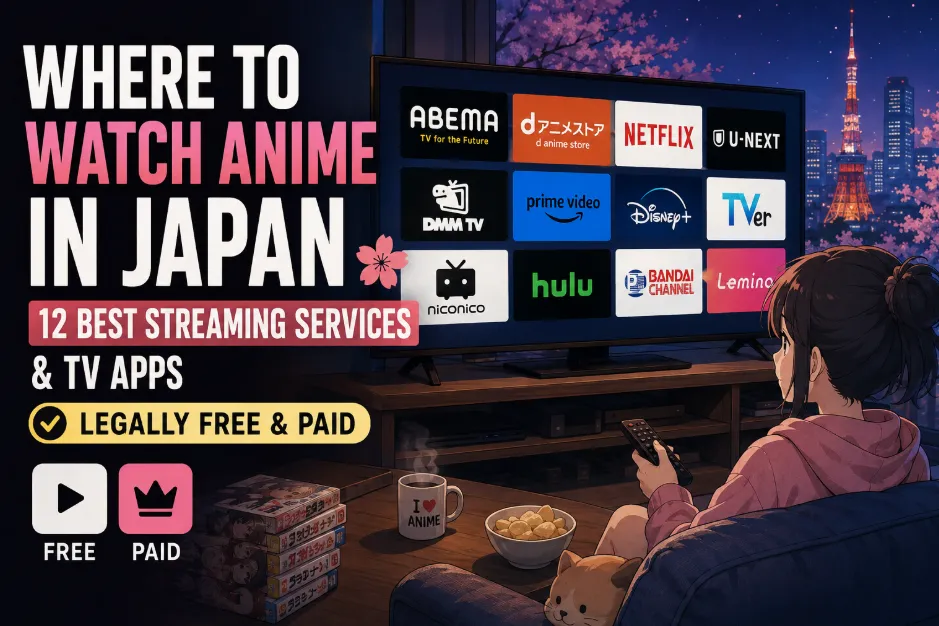
Watching anime in Japan sounds easy — but the reality is surprisingly complicated. Unlike overseas streaming markets dominated by platforms like Netflix or Crunchyroll, Japan has a completely different anime ecosystem. Some series air first on late-night TV before reaching streaming apps, while others are only available through limited-time catch-up services like TVer or simulcast platforms such as ABEMA.
Many Japanese anime services also have little or no English subtitle support, which often catches foreign viewers off guard. Even major international apps can behave differently in Japan due to regional licensing restrictions.
At the same time, Japan offers anime experiences you rarely find elsewhere — real-time seasonal simulcasts, live comment culture on Niconico, massive anime-focused libraries on d Anime Store, and niche services built specifically for hardcore otaku fans.
In this guide, we’ll break down the best anime streaming services and TV apps in Japan in 2026, including legal free platforms, paid subscriptions, English subtitle support, and the best apps for watching seasonal anime.
Quick Answer: Best Anime Streaming Services in Japan
If you want the short version, these are the best legal anime streaming services and TV apps in Japan in 2026.
| Service | Free Option | Monthly Fee | English Subs | Best For |
|---|---|---|---|---|
| ABEMA | Yes | ¥680 - ¥1,180 (Premium) | Rare | Seasonal anime & simulcasts |
| d Anime Store | Free trial | ¥660 | No | Hardcore anime fans |
| Netflix Japan | No | ¥890 - ¥2,290 | Partial | Foreigners & mainstream anime |
| U-NEXT | Free trial | ¥2,189 | Some | Massive anime library |
| DMM TV | Free trial | ¥550 | No | Budget-friendly anime streaming |
| Amazon Prime Video Japan | Free trial | ¥600 | Limited | Casual anime viewers |
| Disney+ Japan | No | ¥1,250 - ¥1,670 | Some | Exclusive anime titles |
| TVer | Yes | Free | No | Free TV catch-up anime |
| Niconico | Partial | ¥790 | No | Live anime comment culture |
| Hulu Japan | No | ¥1,026 | Partial | Anime + Japanese TV content |
Other notable platforms include Bandai Channel for dedicated franchise fans, Lemino as a growing alternative backed by Docomo.
Why Watching Anime in Japan Feels Completely Different
For many anime fans, moving to or visiting Japan comes with an unexpected surprise: Watching anime in Japan often feels completely different from streaming anime overseas. In countries outside Japan, anime is usually centered around a few global streaming platforms. But in Japan, the ecosystem is far more fragmented, TV-driven, and deeply connected to real-time broadcasting culture.
Anime in Japan Is Still Built Around TV Broadcasting
Even in 2026, late-night TV remains a major part of anime culture in Japan. Many seasonal anime series premiere first on channels like Tokyo MX, BS11, MBS, or Fuji TV before appearing on streaming platforms. In some cases, streaming releases may even arrive hours or days later depending on licensing agreements. Because of this, many Japanese viewers still follow anime through weekly TV schedules rather than binge-watching entire seasons at once.
Free Catch-Up Streaming Is Extremely Common
One of the biggest differences in Japan is the popularity of limited-time free streaming. Platforms like TVer and ABEMA often make newly aired episodes available for free for about a week after broadcast. Instead of paying for multiple subscriptions, many viewers simply keep up with anime through these rotating catch-up windows. This “watch before it expires” culture is much more common in Japan than in Western streaming markets.
Live Comment Culture Changes the Viewing Experience
Japan also has a unique live anime viewing culture that rarely exists overseas. On platforms like Niconico, viewers can watch anime while real-time comments scroll directly across the screen. Fans react to jokes, emotional scenes, openings, and plot twists together as episodes air live. For many longtime anime fans in Japan, these shared viewing experiences are part of the appeal.
English Subtitles Are Surprisingly Limited
One of the biggest challenges for foreign viewers is that many Japanese streaming services offer little or no English subtitle support. Platforms such as d Anime Store, DMM TV, and Bandai Channel are designed primarily for domestic Japanese audiences. Even when a series is globally popular, English subtitles are often unavailable inside Japan. As a result, services like Netflix Japan or Disney+ Japan are usually easier for international viewers to navigate.
Some Global Anime Apps Work Differently in Japan
Many foreign anime fans assume apps like Crunchyroll will work the same way in Japan as they do overseas. In reality, regional licensing restrictions often make their Japanese libraries far more limited — or unavailable altogether. Japan’s anime streaming market is heavily shaped by domestic licensing agreements, TV networks, production committees, and platform exclusivity deals, which creates a very different viewing environment compared to overseas anime streaming.
Best Mainstream Anime Streaming Services in Japan
If you plan to watch anime regularly in Japan, these are the platforms most viewers will encounter first. Some focus heavily on seasonal simulcasts, while others specialize in massive anime archives, mainstream accessibility, or budget-friendly subscriptions. Each service also targets a slightly different audience — from casual viewers and foreign residents to hardcore otaku following every seasonal release.
1. ABEMA — Best for Seasonal Anime & Free Simulcasts
Website: https://abema.tv/
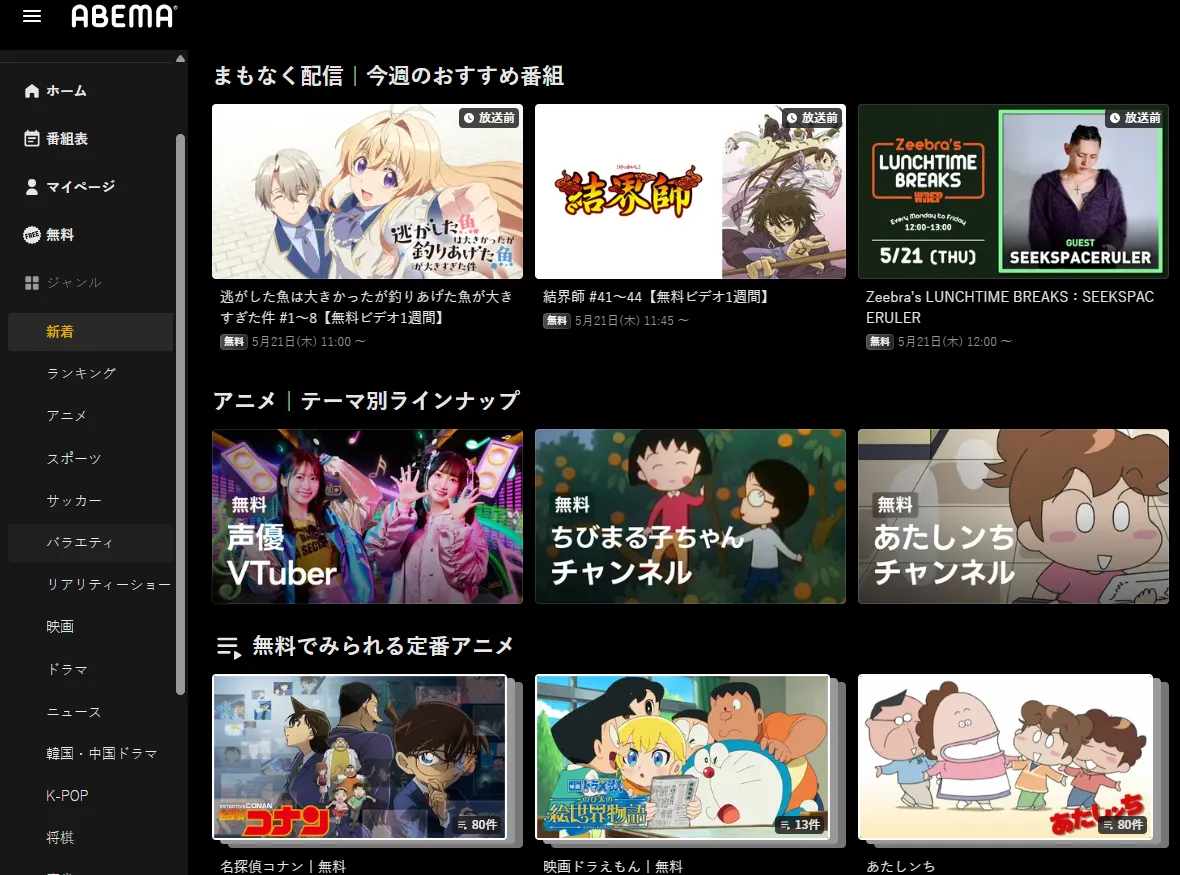
For many anime fans in Japan, ABEMA is one of the closest things to a modern anime TV channel. The platform is especially popular for seasonal anime because many shows stream shortly after their television broadcast, and some episodes are temporarily available for free without a subscription. Unlike traditional on-demand streaming services, ABEMA feels much more focused on real-time viewing and weekly anime culture. One of its biggest strengths is the dedicated anime channels that continuously stream anime throughout the day, creating an experience that feels closer to live television than binge streaming.
Pricing:
As of April 1, 2026, ABEMA has revised its pricing to support better content and features. Here is the current fee structure:
| Plan | Monthly Fee (Tax Incl.) | Best For... | Key Features |
| ABEMA Basic | ¥0 (Free) | Casual Viewers | Watch live channels; free "catch-up" for new episodes for 7 days (with ads). |
| Ad-supported Premium | ¥680 | Budget-conscious | Access to the full Premium library, but video ads still play during content. |
| ABEMA Premium | ¥1,180 | Serious Anime Fans | Ad-free; offline downloads; "Chase Play" (restart live shows from the beginning). |
Pros and Cons:
| Pros | Cons |
| Free simulcast-style streaming for many seasonal anime | English subtitles are rare |
| Strong focus on weekly broadcasting culture | Some anime become premium-only after the free viewing window expires |
| Live anime channels running 24/7 | Interface is designed mainly for Japanese users |
| Popular among younger Japanese viewers |
2. d Anime Store — Best for Hardcore Anime Fans
Website: https://animestore.docomo.ne.jp/animestore/tp/
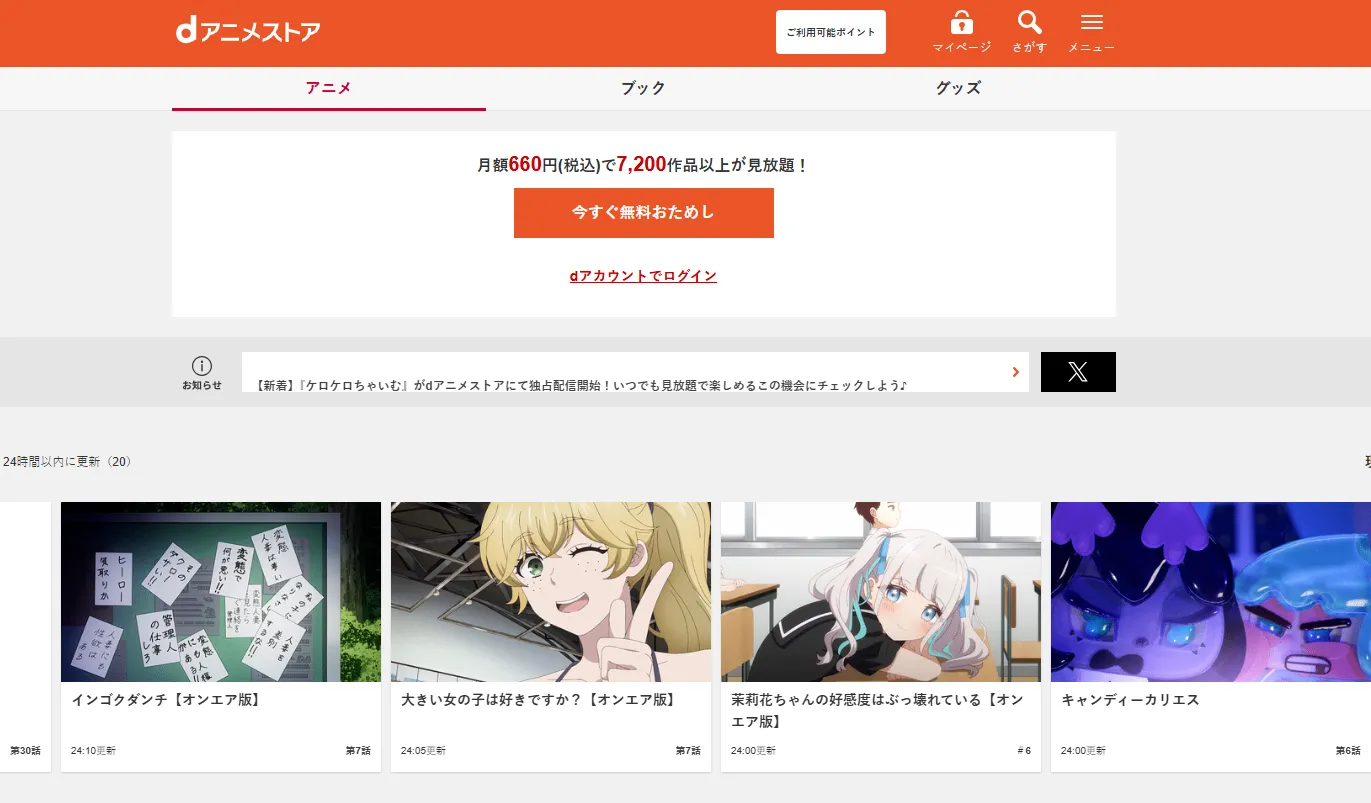
d Anime Store is widely considered one of the most important anime-specific streaming platforms in Japan. Unlike broader services like Netflix or Prime Video, d Anime Store focuses almost entirely on anime. Its library is enormous, covering everything from classic series and seasonal simulcasts to niche late-night titles that may not appear on international platforms. The service is also relatively inexpensive compared to many Japanese streaming subscriptions, which helps explain why it remains extremely popular among dedicated anime fans.
Pricing:
| Item | Web Browser / Official Site | App Store / Google Play |
| Monthly Fee | ¥660 (Tax Incl.) | ¥760 (Tax Incl.) |
| First-Time Trial | 31 Days FREE | 7 Days FREE |
| Catalog | 7,200+ Titles | 7,200+ Titles |
Pros and Cons:
| Pros | Cons |
| Massive anime-focused catalog | Almost no English subtitle support |
| Strong seasonal anime coverage | Japanese UI can be difficult for newcomers |
| One of the most affordable anime subscriptions in Japan | Some features may require a Japanese account ecosystem |
| Deep library of older and niche titles |
3. Netflix Japan — Best for Foreigners Living in Japan
Website: https://www.netflix.com/jp-en/
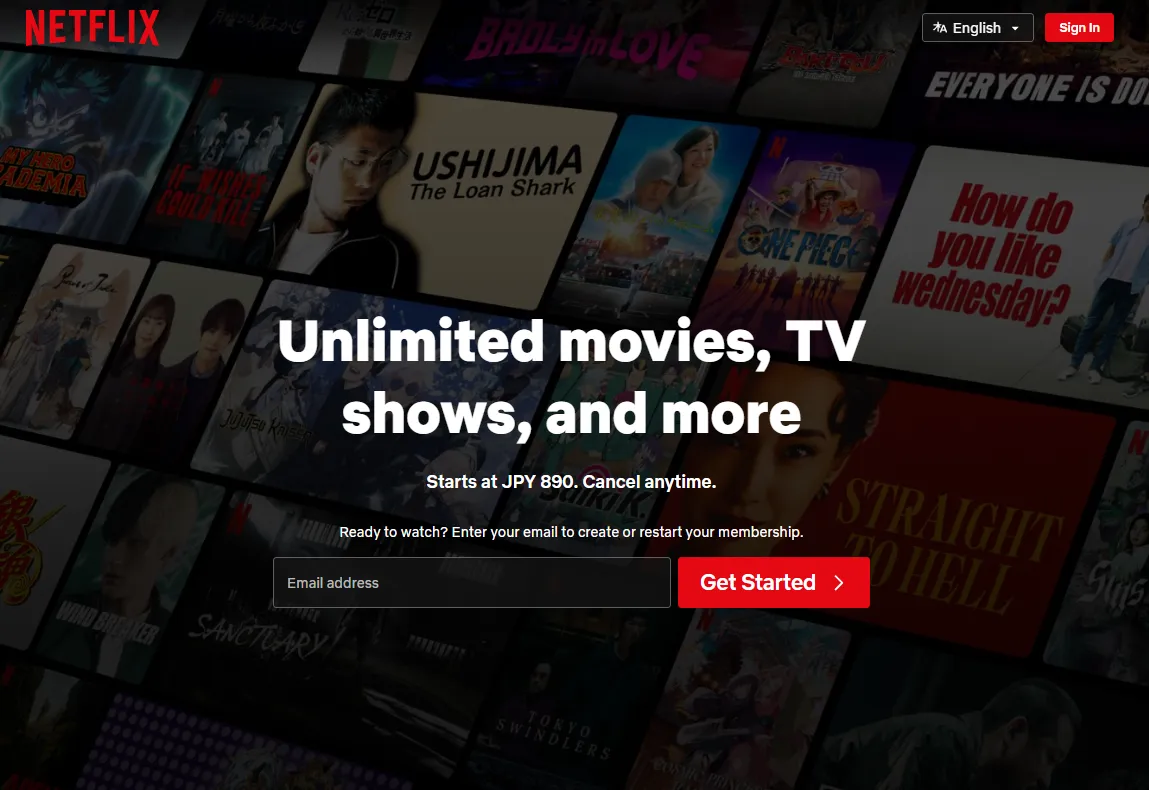
For international viewers, Netflix Japan is often the easiest anime platform to use. Compared to many Japanese domestic services, Netflix provides a far more accessible interface, multilingual subtitle support, and strong compatibility across devices. The Japanese Netflix library is also noticeably larger for anime than many overseas regions. In recent years, Netflix has continued investing heavily in anime production and exclusive streaming rights, making it one of the most important mainstream anime platforms globally.
Pricing:
Following the price adjustment in March 2026, Netflix Japan has updated its tiers. The legacy "Basic" plan is no longer available.
| Plan Tier | Monthly Fee (Tax Incl.) | Resolution | Simultaneous Streams | Ads |
| Standard with Ads | ¥890 | 1080p (Full HD) | 2 Devices | Yes |
| Standard | ¥1,590 | 1080p (Full HD) | 2 Devices | No |
| Premium | ¥2,290 | 4K (Ultra HD) + HDR | 4 Devices | No |
Pros and Cons:
| Pros | Cons |
| Better English subtitle support | Seasonal simulcasts are not always immediate |
| User-friendly for foreigners | Some anime arrive later than TV broadcasts |
| Strong mix of mainstream and exclusive anime | Anime library still changes due to licensing |
| Reliable app ecosystem across devices |
4. U-NEXT — Best Overall Anime Library
Website: https://video.unext.jp/
Among Japanese streaming services, U-NEXT is often considered one of the most complete entertainment platforms for anime fans. Its anime catalog is massive, but the service also includes movies, dramas, manga, and digital books within the same ecosystem. For viewers deeply invested in Japanese media culture, U-NEXT can feel more like an all-in-one entertainment hub than a standard anime app.
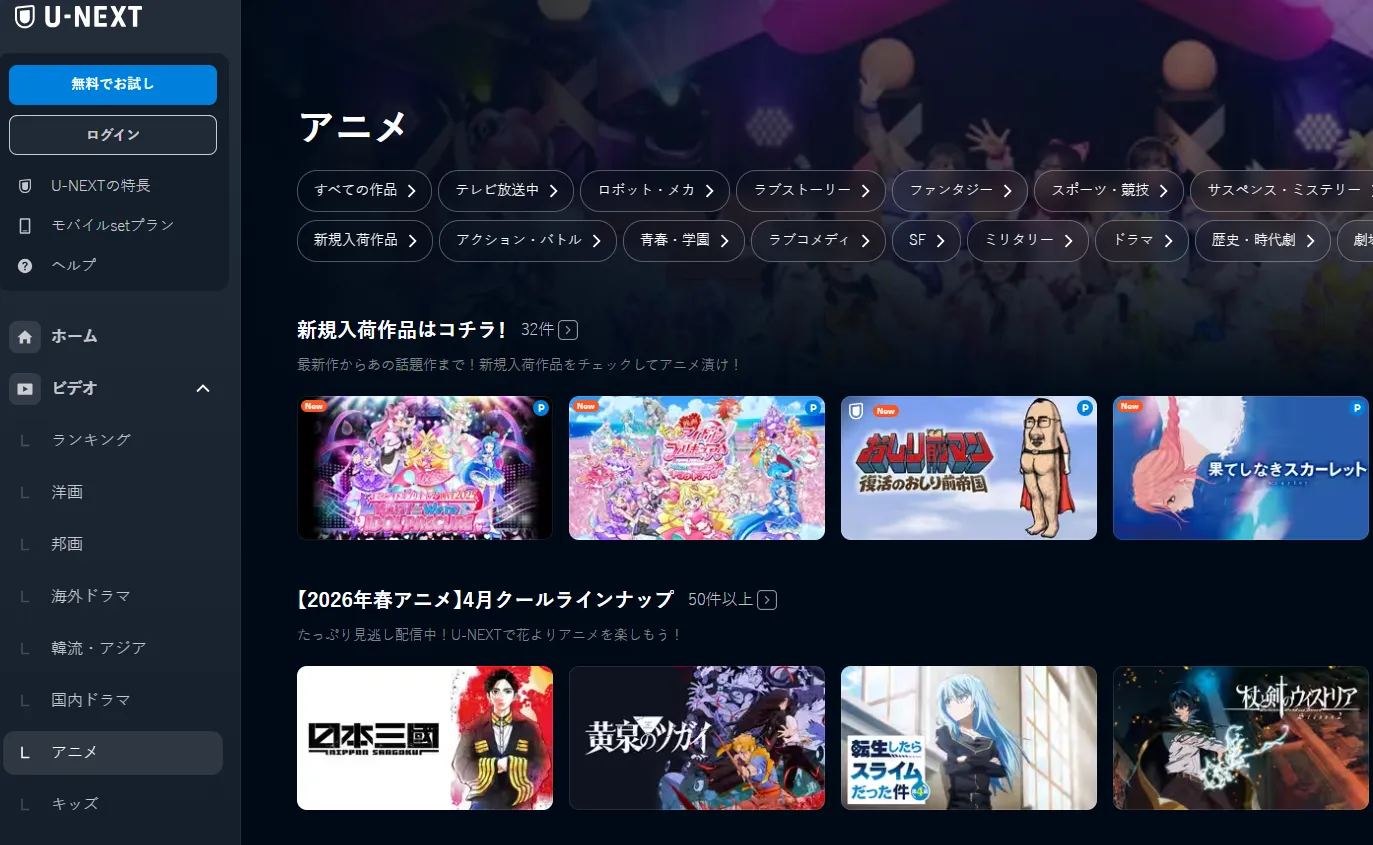
Pricing:
U-NEXT is a "Premium All-in-One" service that combines video streaming, magazines, and digital books into a single subscription.
| Item | Web Website Signup (Recommended) | In-App Signup (App Store/Google) |
| Monthly Fee | ¥2,189 (Tax Incl.) | ¥2,400 (Tax Incl.) |
| Monthly Points | 1,200 Points awarded every month | Same (1,200 Points) |
Pros and Cons:
| Pros | Cons |
| One of Japan’s largest anime libraries | More expensive than anime-only services |
| Includes manga and digital reading features | Interface may feel overwhelming for newcomers |
| Frequent bonus points and trial campaigns | Some premium content requires additional payment |
| Strong coverage of both classics and new releases |
5. DMM TV — Best Budget Anime Streaming Service
Website: https://tv.dmm.com
DMM TV has grown rapidly in Japan thanks to its low pricing and increasingly strong anime lineup. While it is still newer compared to giants like Netflix or d Anime Store, the platform has become attractive for viewers looking for a cheaper subscription without sacrificing too much anime content.
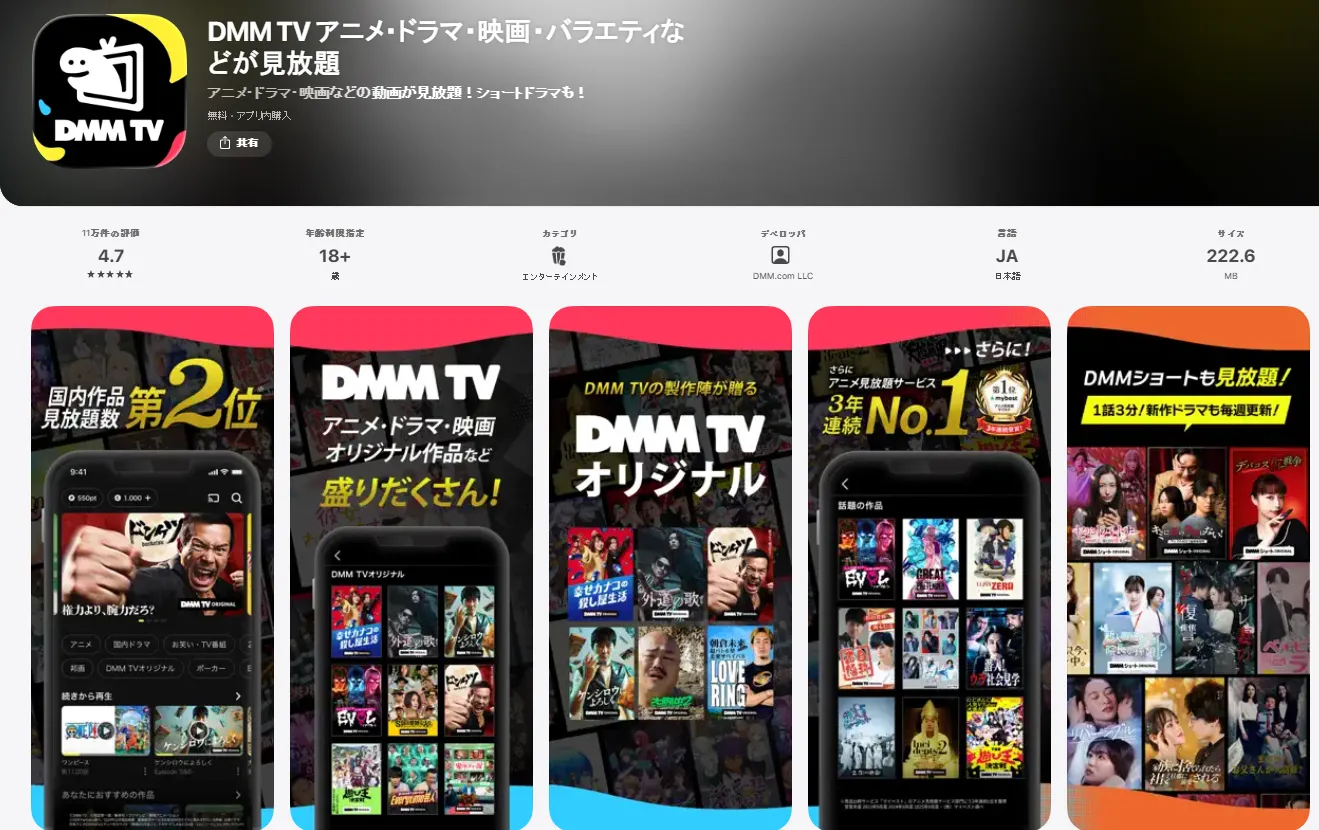
Pricing:
| Registration Channel | Monthly Fee (Tax Incl.) | Free Trial Period |
| Web Website (Recommended) | ¥550 | 14 Days |
| App Store / Google Play | ¥650 | 14 Days |
Pros and Cons:
| Pros | Cons |
| Budget-friendly pricing | Very limited English support |
| Strong seasonal anime coverage | Smaller international recognition |
| Growing popularity in Japan | Some content overlap with competitors |
| Connected to the wider DMM ecosystem |
6. Amazon Prime Video Japan — Best Casual Streaming Option
Website: https://www.amazon.co.jp/gp/video/collection/anime
Because so many people in Japan already subscribe to Prime for shopping benefits, Amazon Prime Video Japan often becomes a casual anime platform by default. While anime is not its primary focus, the service still carries a solid mix of mainstream titles, movies, and occasional exclusives.
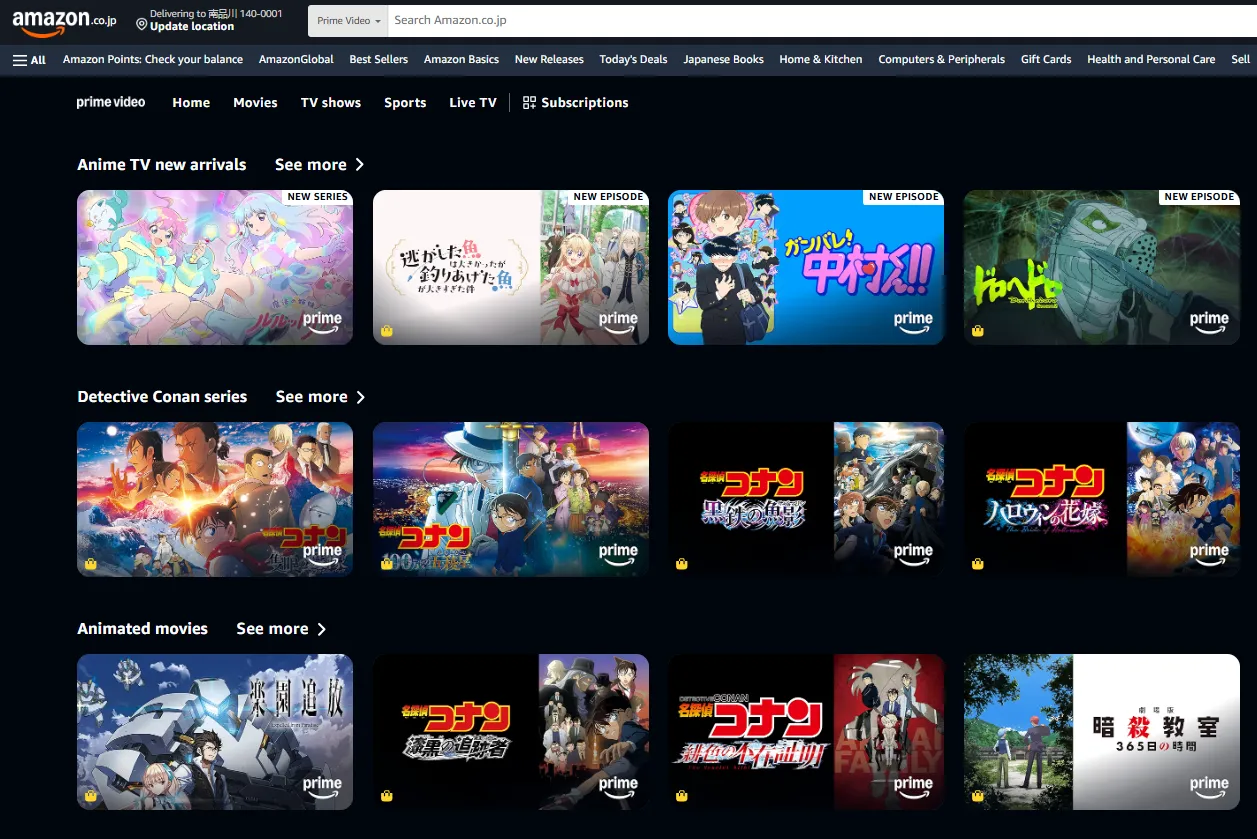
Pricing:
| Category | Standard Member (General) | Prime Student (Academic) |
| Monthly Fee | ¥600 (Tax Incl.) | ¥300 (Tax Incl.) |
| Annual Fee | ¥5,900 (Tax Incl.) | ¥2,950 (Tax Incl.) |
| Free Trial Duration | 30 Days | 6 Months (180 Days) |
| Video Quality | 1080p (Ad-supported) | 1080p (Ad-supported) |
| Concurrent Streams | Up to 3 devices | Up to 3 devices |
Pros and Cons:
| Pros | Cons |
| Included with the broader Amazon Prime membership | Anime is not the platform’s main focus |
| Strong mix of mainstream anime, movies, and popular classics | Seasonal simulcasts are less consistent than anime-specific services |
| Available on almost every major device | English subtitle support varies by title |
| Convenient for viewers who already use Amazon services |
7. Disney+ Japan — Best for Exclusive Anime Titles
Website: https://disneyplus.disney.co.jp/
Disney+ Japan has become increasingly important for anime fans due to its growing list of exclusive streaming deals. Several high-profile anime titles now launch exclusively through Disney’s platform in certain regions, making it more relevant to anime viewers than many fans initially expect.
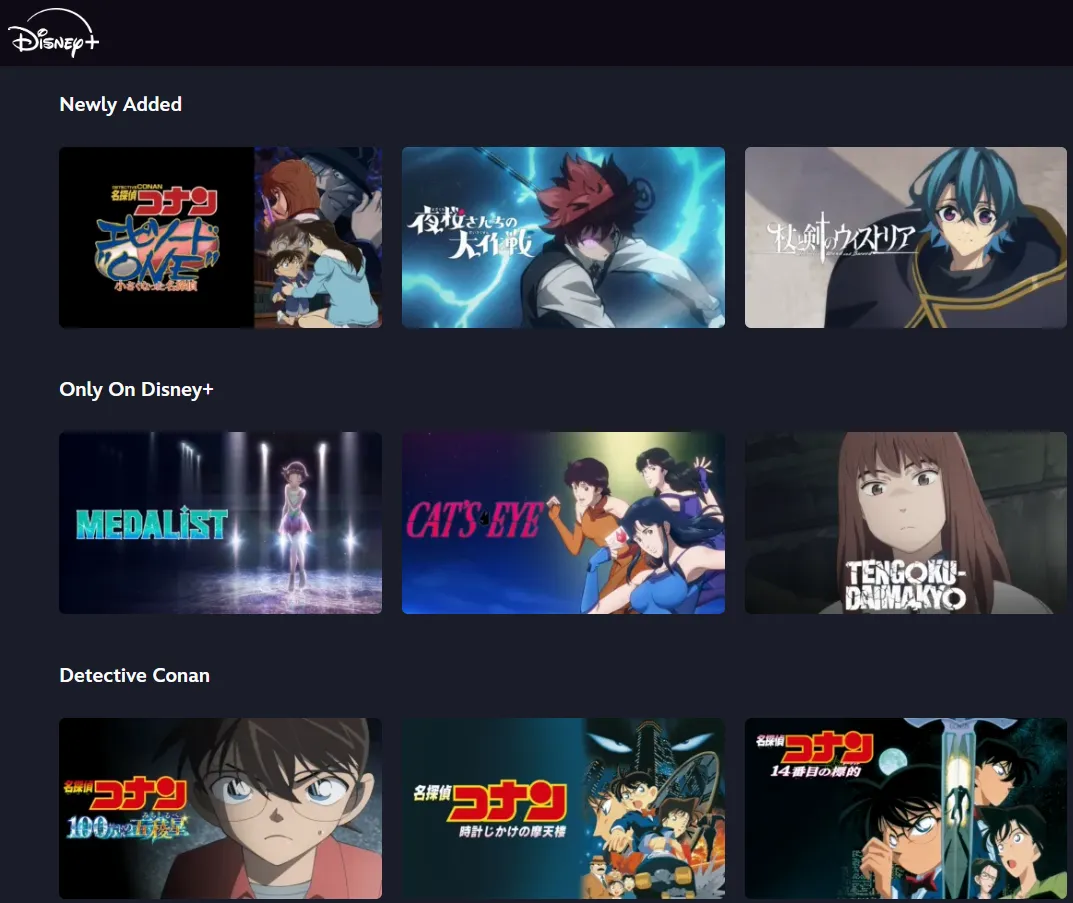
Pricing:
Disney+ Japan offers two main tiers. The prices listed below are for sign-ups via the Official Website, which is the most cost-effective method.
| Plan | Monthly Fee (Tax Incl.) | Annual Fee (Tax Incl.) | Best For... |
| Standard | ¥1,250 | ¥12,500 (Save ¥2,500) | Full HD (1080p) viewing on up to 2 devices. |
| Premium | ¥1,670 | ¥16,700 (Save ¥3,340) | 4K UHD, Dolby Atmos, and 4 concurrent devices. |
Pros and Cons:
| Pros | Cons |
| Growing lineup of anime exclusives and streaming partnerships | Anime library is smaller than dedicated anime platforms |
| Better multilingual subtitle support than many domestic Japanese services | Seasonal anime coverage is more selective |
| Strong app experience across smart TVs, mobile devices, and consoles | Some exclusives vary by region and licensing agreements |
| Includes both anime and major international entertainment franchises |
8. TVer — Best Free TV Catch-Up App for Anime
Website: https://tver.jp/
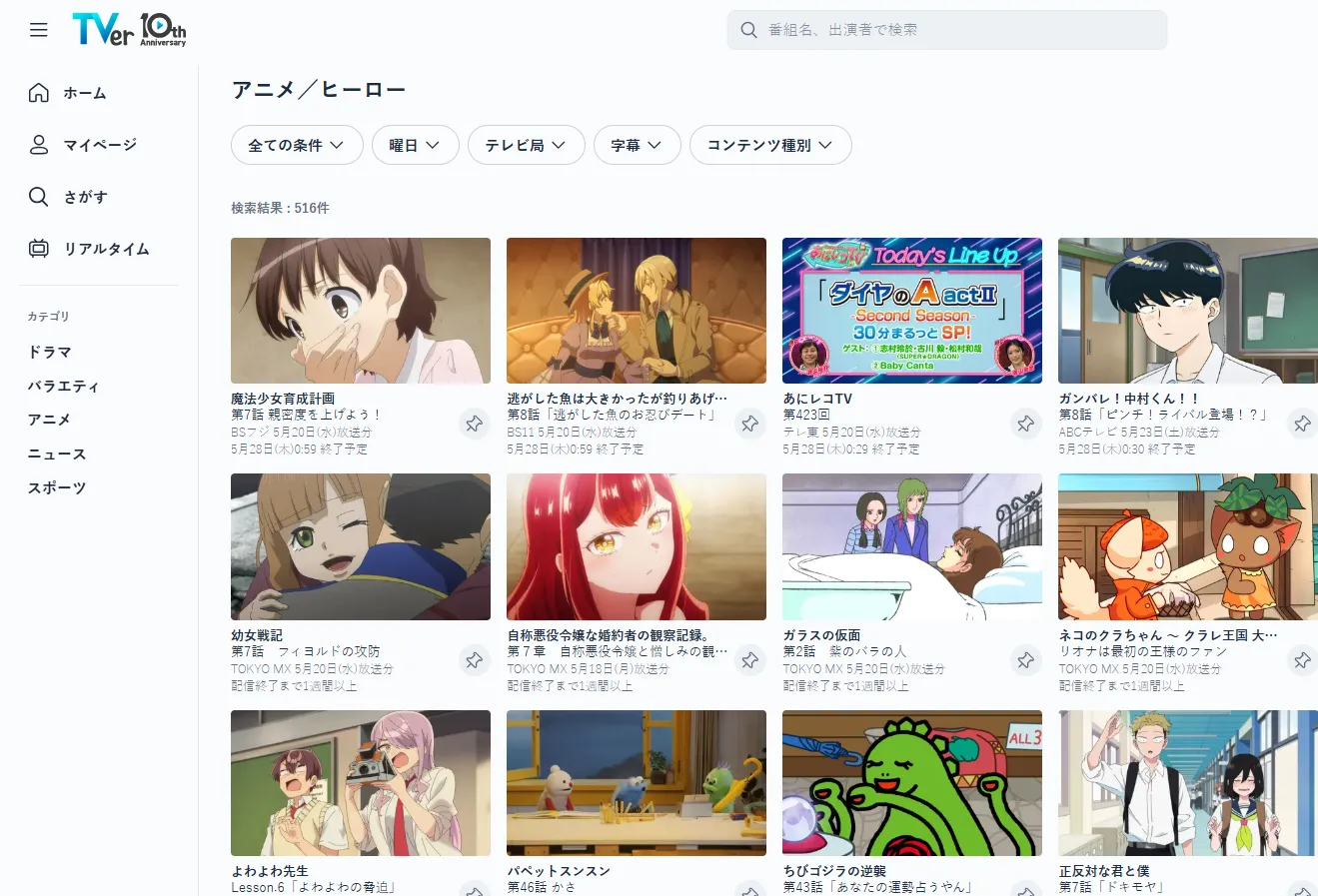
Unlike traditional subscription streaming services, TVer works more like a free TV catch-up platform for Japanese broadcasts. Many anime episodes become available shortly after airing on Japanese television and can usually be watched for free for about a week. Because of this, TVer has become one of the most common ways casual viewers in Japan keep up with seasonal anime without paying for multiple subscriptions. The platform is especially useful for viewers who primarily follow currently airing shows rather than building a permanent anime library.
Pricing:
Free with ads. No subscription required
Pros and Cons:
| Pros | Cons |
| Completely free to use |
Episodes are usually only available for a limited time |
| Fast catch-up access after TV broadcasts | English subtitles are extremely rare |
| One of the easiest ways to legally watch seasonal anime for free in Japan | Older anime libraries are very limited compared to paid services |
| Strong connection to Japanese television networks |
9. Niconico — Best for Live Anime Comment Culture
Website: https://www.nicovideo.jp/
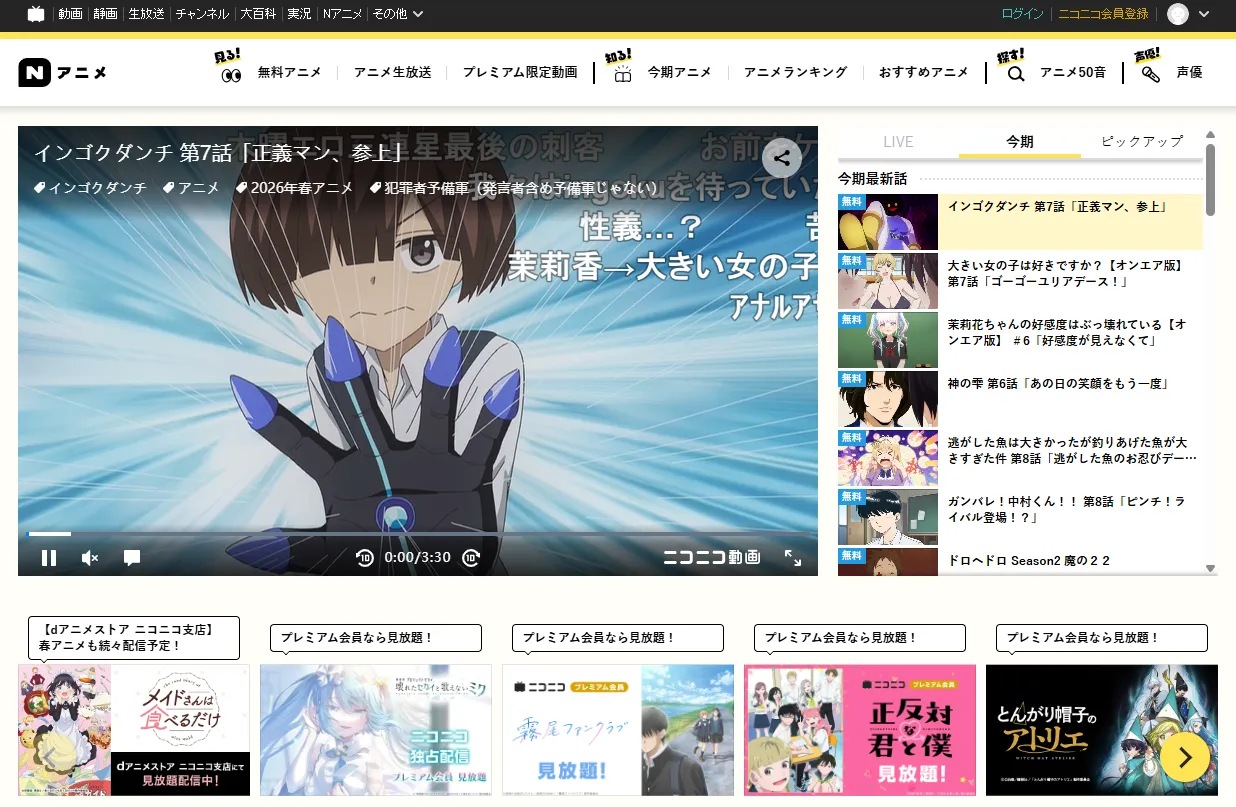
Niconico is one of the most unique anime platforms in Japan because the viewing experience is built around community interaction. Its signature feature is the live scrolling comment system, where viewer reactions appear directly on the video while episodes play. During major anime broadcasts, thousands of fans may react to jokes, emotional moments, openings, or plot twists in real time, creating an experience that feels closer to watching anime together with the entire internet. While Niconico is not the largest anime streaming service in Japan, it remains deeply connected to otaku culture and online anime fandom.
Pricing:
Niconico offers free viewing with optional Premium memberships for enhanced features and priority access.
| Plan | Current Price | New Price (From Aug 1, 2026) | Features |
|---|---|---|---|
| Free Plan | ¥0 | ¥0 | Limited free anime, live comments, ads, standard streaming |
| Monthly Premium | ¥790 | ¥990 | Higher quality streaming, reduced restrictions, priority access |
| Annual Premium | ¥7,900 | ¥9,900 | Same Premium benefits with discounted yearly pricing |
| 90-Day Pass | ¥2,370 | ¥2,970 | Short-term Premium access |
Pros and Cons:
| Pros | Cons |
| Iconic live comment (danmaku-style) viewing experience | Interface can feel overwhelming for new users |
| Strong connection to anime meme and fan culture | English subtitle support is extremely limited |
| Frequent live broadcasts and anime-related events | Anime library is smaller than dedicated streaming services |
| Some anime episodes available for free |
10. Hulu Japan — A Familiar Name with a Different Japanese Library
Website: https://www.hulu.jp/
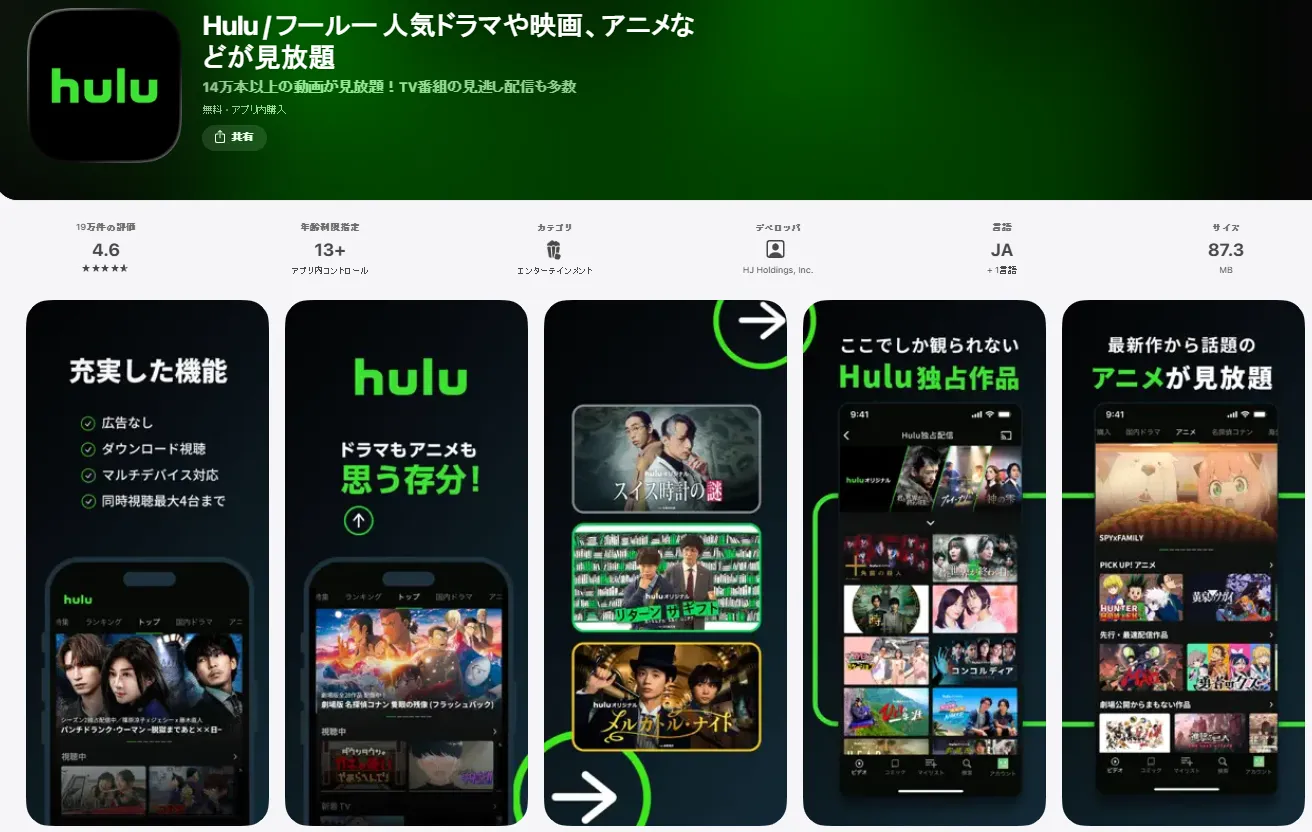
Although it shares the same brand name as the American service, Hulu Japan operates quite differently from Hulu in the United States. The Japanese version is managed separately with its own licensing agreements, content catalog, and streaming strategy. As a result, anime availability can differ significantly from what international users may expect. In Japan, Hulu functions more as a broad domestic streaming platform that combines anime, Japanese TV dramas, variety shows, movies, and international content rather than focusing primarily on anime.
Pricing:
| Plan Type | Monthly Fee (Tax Incl.) | Disney+ Included? | Resolution |
| Hulu Standard | ¥1,026 | No | 1080p / 4K (Select titles) |
| Hulu & disney+ Bundle | Disney+ Standard Set | ¥1,890 | Yes (Disney+ Standard) |
| Hulu & disney+ Bundle | Disney+ Premium Set | ¥2,150 | Yes (Disney+ Premium) |
Pros and Cons:
| Pros | Cons |
| Strong mix of anime and Japanese television content | Anime library is smaller than dedicated anime services |
| Familiar interface for international users | English subtitle support varies heavily by title |
| Good balance between domestic and global entertainment | Can feel less anime-focused than competitors like d Anime Store or ABEMA |
| Occasionally carries seasonal anime simulcasts |
Niche & Otaku-Focused Anime Platforms
Beyond mainstream streaming services, Japan also has several niche platforms designed for dedicated anime fans, franchise followers, and longtime otaku viewers. While these services may not be as internationally known as Netflix or Prime Video, they often provide deeper archives, exclusive extras, and stronger connections to specific anime franchises and fan communities.
1. Bandai Channel — Best for Gundam & Franchise Fans
Website: https://www.b-ch.com/
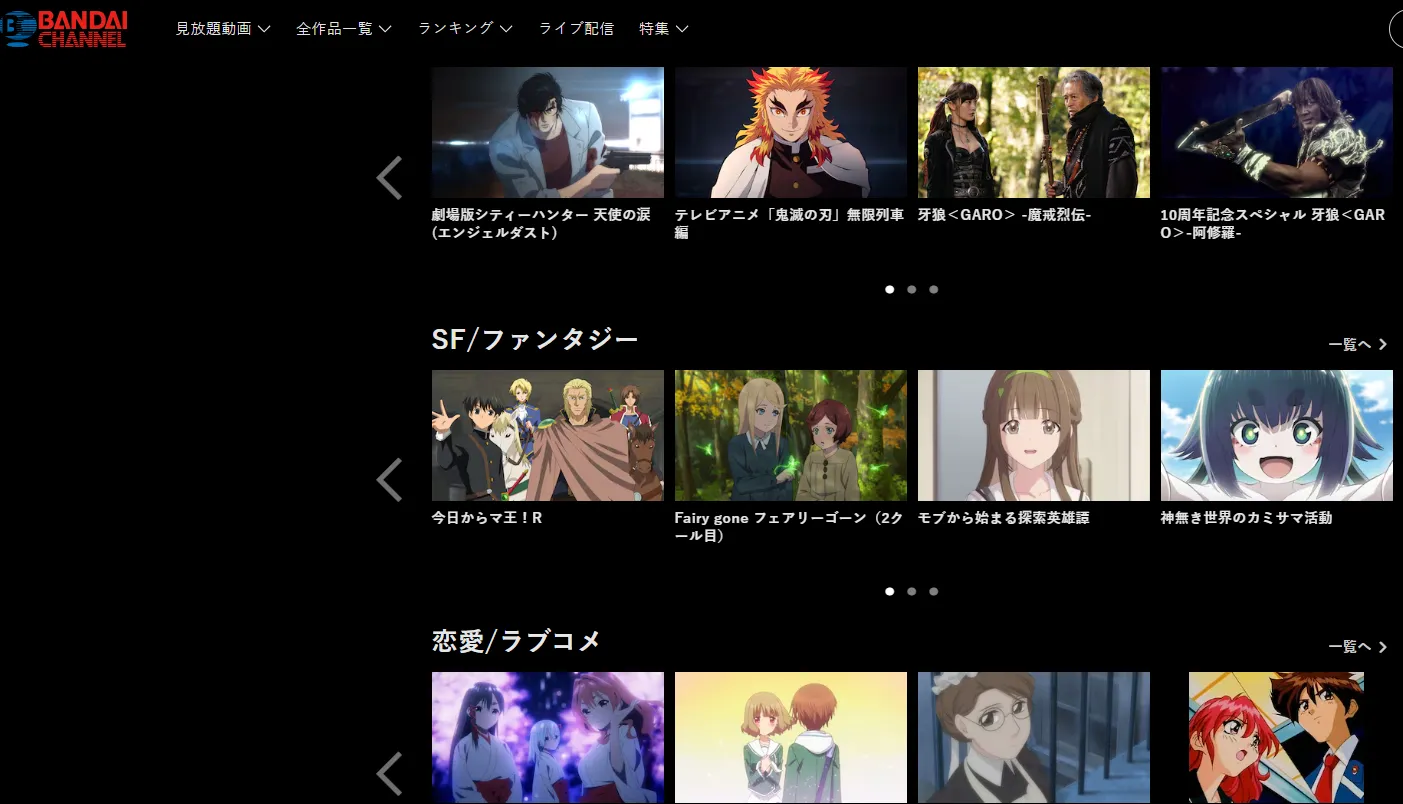
For hardcore anime fans in Japan, Bandai Channel offers a very different experience from mainstream streaming platforms. Instead of trying to compete as a broad entertainment service, Bandai Channel focuses heavily on anime connected to Bandai Namco and Sunrise-related franchises. As a result, the platform is especially popular among fans of Gundam, Love Live!, idol anime, mecha series, and long-running otaku franchises. Compared to general streaming apps, Bandai Channel often feels more archival and franchise-oriented, making it particularly appealing to longtime anime fans who want deeper catalog access rather than just the latest seasonal shows.
Pricing:
| Item | Unlimited Viewing Membership | Rental / Pay-per-view |
| Monthly Fee | ¥1,100 (Tax Incl.) | Varies (¥110 - ¥550 per ep) |
| Free Trial | First Month Free (For new members) | N/A |
| Catalog | 2,000+ Unlimited titles | Latest movie releases |
| Key Advantage | Early access to Gundam & Mecha | Renting without subscription |
Pros and Cons:
| Pros | Cons |
| Strong focus on Gundam, Sunrise, and Bandai-related franchises | Limited English support |
| Deep library of older and niche anime | Less useful for casual viewers |
| Franchise-focused extras and archival content | Interface feels more niche than mainstream platforms |
| Popular among longtime otaku fans |
2. Lemino — A Growing Alternative Backed by Docomo
Website: https://lemino.docomo.ne.jp/
Previously known as dTV, Lemino has gradually expanded into a broader entertainment platform with anime, movies, dramas, live events, and variety content. Although it is not purely anime-focused like d Anime Store, Lemino has gained attention for occasionally carrying exclusive anime titles, early streaming releases, and lesser-known series that may not appear prominently on global services. Because it is backed by Docomo, one of Japan’s largest mobile carriers, the platform also benefits from strong domestic integration and visibility within Japan’s streaming market.
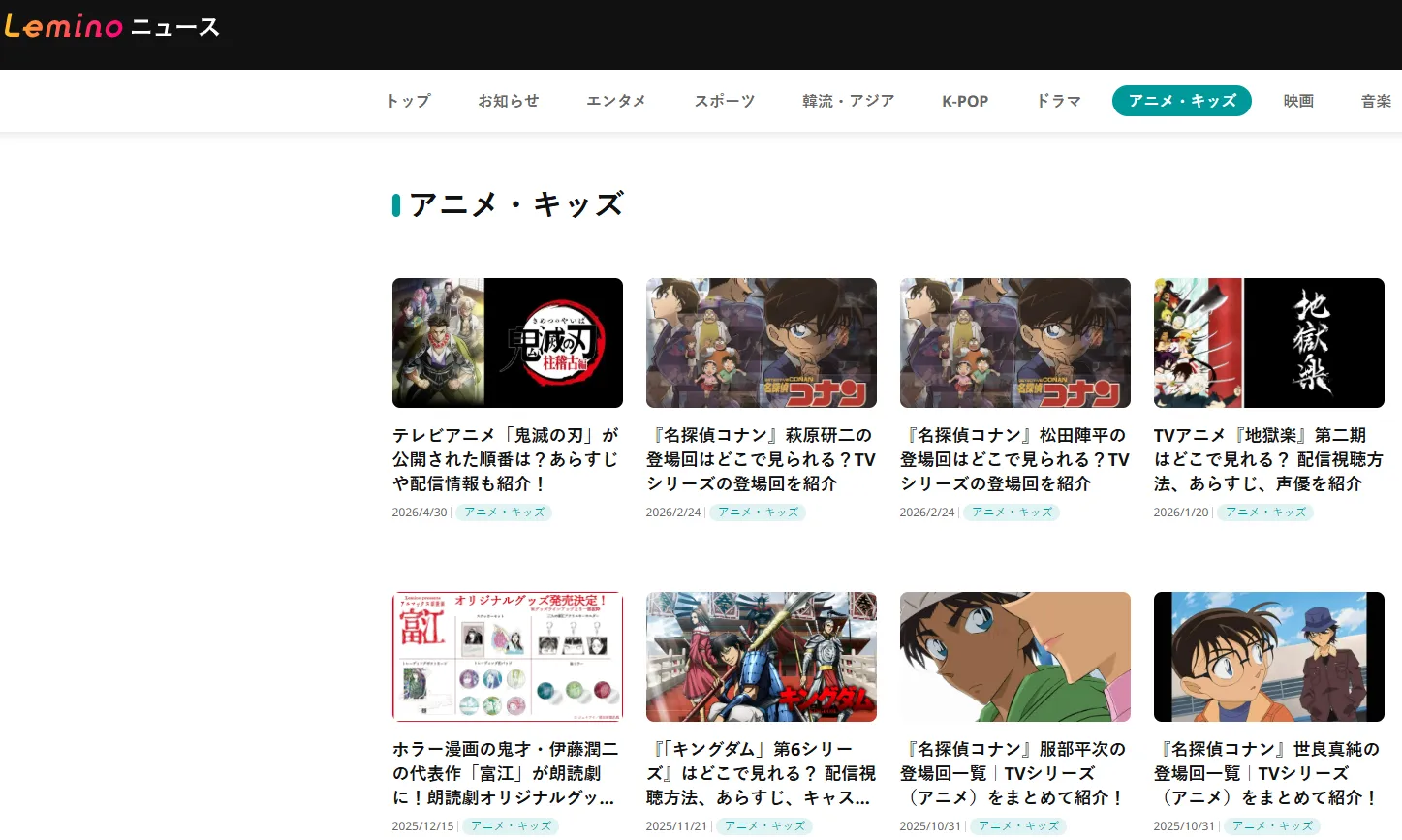
Pricing:
Starting February 1, 2026, NTT Docomo significantly upgraded the Lemino Premium library while adjusting the monthly fee to ¥1,540.
| Feature | Lemino Free (Ad-supported) | Lemino Premium (Standard) |
| Monthly Fee | ¥0 (Free) | ¥1,540 (Web/Docomo Shop) |
| App Store / Google Play | ¥0 (Free) | ¥1,650 (Due to platform fees) |
| Free Trial | Unlimited duration | 31 Days (First-time users) |
| Content Access | Selected episodes & Catch-up | 180,000+ Titles (Unlimited) |
| Advertisements | Yes (Before & during videos) | None (Ad-free) |
| Offline Play | Not Available | Download & Watch offline |
| Live Stream Archives | Not Available | Full access to archive/rewatch |
Pros and Cons:
| Pros | Cons |
| Growing anime and entertainment catalog | Anime library is less specialized than anime-only services |
| Occasionally features exclusive or early anime releases | English subtitle support is very limited |
| Strong domestic ecosystem through Docomo | International recognition remains relatively low |
| Mix of anime, movies, live events, and TV content |
FAQ — Watching Anime in Japan
1. Can foreigners use Japanese anime streaming services?
Yes, but the experience can vary significantly depending on the platform. Services like Netflix Japan, Disney+ Japan, and Amazon Prime Video Japan are generally easier for foreigners because they support multiple languages and international payment systems. However, many domestic Japanese services — including d Anime Store and Bandai Channel — are designed mainly for Japanese users and may require Japanese payment methods, local app stores, or Japanese-language navigation.
2. Why doesn’t Crunchyroll work properly in Japan?
Many anime fans are surprised to learn that Crunchyroll is far more limited inside Japan than overseas. This happens because anime licensing in Japan is handled differently from international distribution. Many titles are tied to domestic TV broadcasters, production committees, or exclusive Japanese streaming agreements with platforms like ABEMA, d Anime Store, or U-NEXT. As a result, some anime available internationally on Crunchyroll may disappear or become inaccessible when viewed from Japan.
3. Which anime streaming service in Japan has the best English subtitle support?
Among Japanese streaming platforms, Netflix Japan and Disney+ Japan usually provide the best overall English subtitle experience. Most domestic Japanese services prioritize native Japanese audiences, so English subtitles are often limited or unavailable. For viewers who do not speak Japanese, global platforms are usually much easier to navigate.
4. What is the cheapest anime streaming service in Japan?
DMM TV is currently one of the cheapest paid anime streaming services in Japan, with plans starting around ¥550/month. d Anime Store is also considered one of the best value services due to its massive anime-focused library and relatively low subscription cost. For completely free legal viewing, platforms like TVer and ABEMA remain popular choices.
5. Which anime apps are completely free in Japan?
Several legal anime platforms in Japan can be used completely free, although some include ads or limited viewing windows. The most popular free anime apps include:
-
TVer — Free catch-up streaming for recently aired TV anime
-
ABEMA — Free simulcasts and rotating anime channels
-
Niconico — Free anime episodes and live community viewing
-
Official anime YouTube channels like GundamInfo and TMS Anime
Most free services in Japan operate using ad-supported models, and newly aired episodes are often only available for a limited time after broadcast.
6. What is the most popular anime streaming service in Japan?
There is no single platform that dominates the entire Japanese anime market. Instead, different services are popular for different viewing habits:
-
ABEMA → Seasonal anime and simulcasts
-
d Anime Store → Hardcore anime fans
-
Netflix Japan → Mainstream and international viewers
-
U-NEXT → Large entertainment ecosystem
-
Niconico → Otaku community culture
Because Japan’s streaming ecosystem is highly fragmented, many viewers use multiple anime services at the same time.
Final Thoughts
Watching anime in Japan is very different from the streaming experience most international fans are used to. Instead of relying on a single dominant platform, Japan’s anime ecosystem is spread across TV broadcasts, simulcast services, catch-up apps, franchise-specific platforms, and community-driven streaming culture.
For seasonal anime fans, services like ABEMA and TVer make it surprisingly easy to watch new episodes legally for free. Meanwhile, hardcore anime viewers often gravitate toward platforms such as d Anime Store, U-NEXT, or Bandai Channel for deeper libraries and niche franchises. At the same time, international viewers may find services like Netflix Japan or Disney+ Japan easier to navigate thanks to stronger subtitle support and more familiar interfaces.
Ultimately, the best anime streaming service in Japan depends less on price alone and more on how you watch anime — whether you care most about free simulcasts, English subtitles, massive archives, live comment culture, or exclusive franchise content.
And unlike many overseas markets, anime in Japan still feels closely connected to weekly TV broadcasting and real-time fandom culture — which is exactly what makes watching anime in Japan such a unique experience.