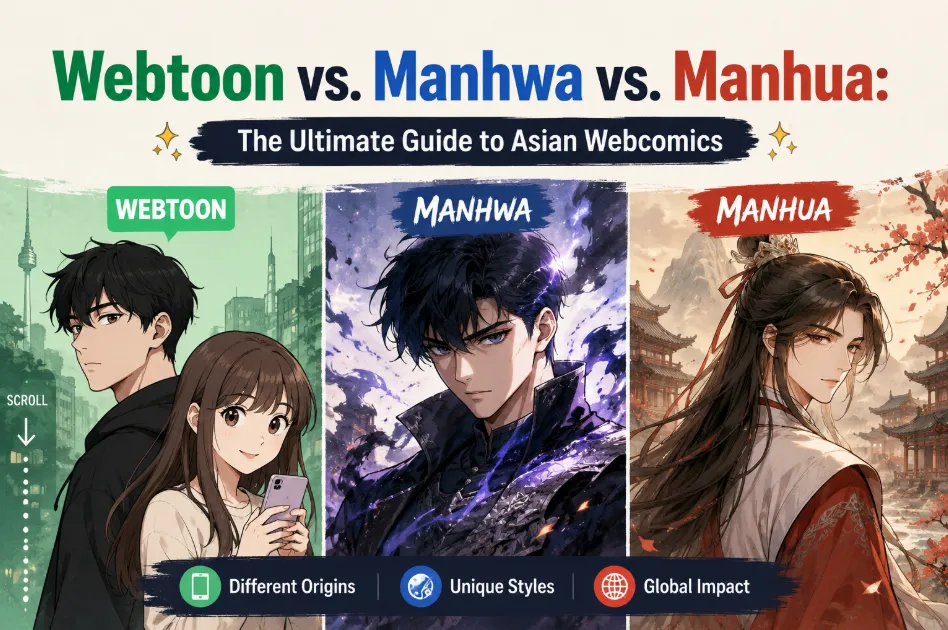
You've seen them on your TikTok feed. The art looks stunning — full-color, cinematic, made for your phone screen. Someone in the comments calls it a webtoon. Another person swears it's manhwa. And then there's that third voice saying manhua. If you're confused whether these are three different things or just three names for the same thing, you're not alone.
By 2026, Asian webcomics have taken over the global digital comics market. But the terms used to describe them — Webtoon, Manhwa, and Manhua — are still widely misunderstood. Some people use them interchangeably. Others think they're all just "Korean comics." Neither is quite right.
Here's the truth: these three terms represent different origins, different reading traditions, and often different storytelling styles. Once you learn the difference, you'll know exactly where to find the kind of comics you actually love — whether that's addictive romance, over-the-top cultivation fantasy, or spine-chilling horror.
This guide walks you through what each term really means, how to tell them apart at a glance, where their art and genres diverge, and which platforms to use in 2026. No gatekeeping, no jargon — just a clear, practical look at today's Asian webcomics. Let's dive in.
Quick Comparison: Webtoon vs. Manhwa vs. Manhua
Before we dive into the details, here's a bird's-eye view of how the three stack up against each other.
| Feature | Webtoon | Manhwa | Manhua |
|---|---|---|---|
| Primary Origin | Global (popularized by Korea) | South Korea | China |
| Core Definition | Digital-first vertical comic format | Korean comics (now mostly webtoon-formatted) | Chinese comics / webcomics |
| Reading Direction | Infinite vertical scroll | Vertical scroll (dominant modern format) / traditional page-based origins | Vertical scroll (common in digital) / traditional page-based origins |
| Color | Full color | Full color | Full color |
| Visual Vibe | Clean, readable, mobile-first aesthetic | Cinematic, glossy, anime-influenced style | Highly detailed, ornamental, “Guofeng” aesthetics |
| Dominant Genres | Romance, thriller, slice of life | Action, regression, villainess, fantasy | Cultivation, wuxia, fantasy epics |
| 2026 Top Platforms | WEBTOON, Tapas, Manta | Tappytoon, Lezhin, Toomics | Bilibili Comics, Kuaikan, Tencent Comics |
| Starter Titles | Lore Olympus, True Beauty | Solo Leveling, Omniscient Reader’s Viewpoint | Soul Land, Grandmaster of Demonic Cultivation |
Probably Tip: While the table makes them look distinct, the lines often overlap. For example, a Manhwa (Korean comic) is almost always published as a Webtoon (vertical format) today. However, a Manhua (Chinese comic) might be a Webtoon, but it brings a totally different cultural flavor and "vibe" to your screen.
Defining the Big Three – Webtoon, Manhwa, and Manhua
Before we compare them, we need to define them. While they may look identical on a smartphone screen, each carries a distinct cultural identity. Think of Webtoon as the stage, while Manhwa and Manhua are the different performers taking the spotlight. Here's what each term actually means in 2026.
1. What is a Webtoon? (The Format)
Think of a Webtoon not as a country of origin, but as the canvas. The term was coined in South Korea in the early 2000s (a portmanteau of "Web" and "Cartoon") specifically to describe comics designed for the "infinite scroll."
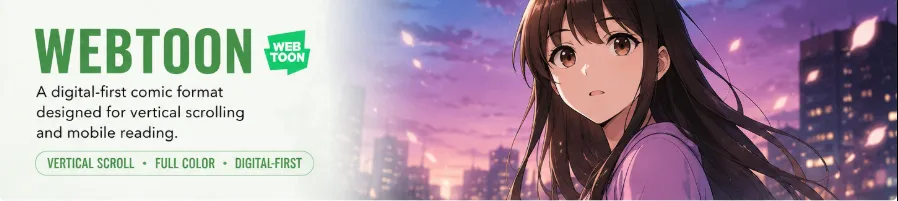
The Tech Era (2026): By 2026, Webtoons have evolved beyond static images. Top-tier "Originals" now often feature AI-synced haptic feedback (vibrations during action scenes) and localized background scores that change based on your scrolling speed.
Key Characteristics:
-
Infinite Scroll: No "pages"—just a continuous vertical flow optimized for one-handed reading.
-
The "Gutter" Strategy: Large gaps of white or black space between panels are used to control the emotional pacing and build suspense.
-
Digital Native: Unlike traditional comics, these are colored and lettered specifically for OLED smartphone screens.
Starter Title: True Beauty — The ultimate example of Webtoon's global reach. This romance masterpiece not only dominated charts for years but also proved how a vertical comic can become a massive K-Drama and animation franchise.
Bottom Line: A Webtoon is a format. An American, a Korean, and a Chinese creator can all publish a "Webtoon."
2. What is Manhwa? (The Korean Titan)
Manhwa refers to comics originating from South Korea. While the term historically included printed books, in 2026, "Manhwa" is almost synonymous with high-end, studio-produced digital content.
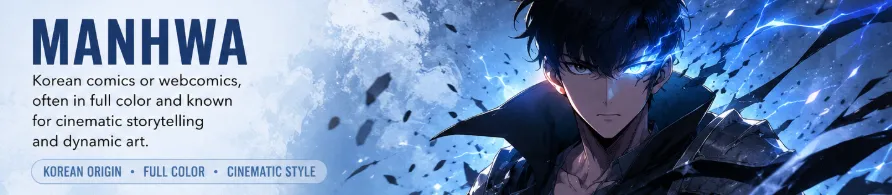
The "K-Wave" Influence: Manhwa is the secret engine behind the global K-Drama phenomenon. Because of their tight pacing and cinematic storyboards, these comics are the primary source material for Netflix’s biggest hits.
The Studio System: Most modern Manhwa are produced by professional "Studios" (like Redice or Lululala) rather than solo artists. This results in an incredibly consistent, high-gloss "look" that feels like a big-budget movie.
Signature Trope: The "System" or "Level-Up" genre. If you see a protagonist with a floating blue digital menu and a quest to become the strongest, you are likely reading a Manhwa.
Starter Recommendation: Solo Leveling — the definitive gateway drug for the action-fantasy genre.
Bottom Line: It is a nationality. If it’s a comic made in Korea, it’s Manhwa, regardless of whether it’s a scrollable Webtoon or a printed book.
3. What is Manhua? (The Chinese Powerhouse)
Manhua is the term for comics from China (including Mainland, Hong Kong, and Taiwan). While they may look similar to Manhwa at a glance, they carry a distinct cultural DNA.
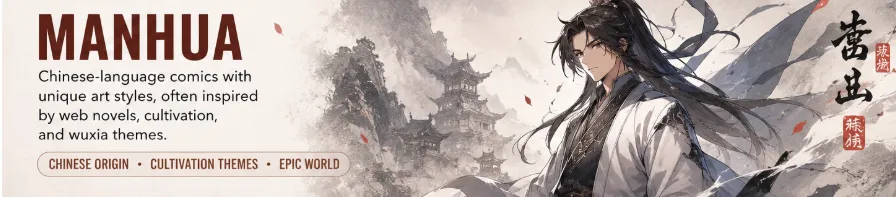
The Novel Connection: In 2026, the Manhua market is heavily driven by the "Web Novel" ecosystem. Popular "Xianxia" (cultivation) novels are adapted into comics with staggering speed, often boasting thousands of chapters.
Visual Grandeur: Manhua artists often lean into "Guofeng" (National Style). Expect vibrant, high-saturation color palettes, flowing hanfu-inspired costumes, and sprawling landscapes that feel like traditional ink paintings brought into the digital age.
Signature Trope: Cultivation and Reincarnation. Stories often revolve around a protagonist seeking immortality, mastering "Qi," or a "Trash" disciple returning to take revenge on an arrogant sect.
Starter Recommendation: The Grandmaster of Demonic Cultivation (Mo Dao Zu Shi) — a global phenomenon blending mystery, fantasy, and deep emotional stakes.
Bottom Line: It is a nationality. If it’s a comic originating from the Chinese-speaking world, it’s Manhua, often characterized by its ties to epic web novels.
Summary Tip:
Webtoon = The How (Vertical scrolling)
Manhwa = The Who/Where (Korean creators)
Manhua = The Who/Where (Chinese creators)
Detailed Multi-Dimensional Comparison: Webtoon vs. Manhwa vs. Manhua
Now that we've defined each term, let's put them side by side. While Webtoon, Manhwa, and Manhua share a digital home, they differ significantly across several dimensions. Here's how they compare.
1. Reading Experience: The “Scroll” vs. The “Page Logic”
One of the most important differences between Webtoons, Manhwa, and Manhua in 2026 is how the story is structurally delivered to the reader. Rather than focusing on origin or nationality, the real distinction lies in reading architecture: continuous scroll versus page-based composition.
Webtoon: Infinite Vertical Flow
Webtoons are built entirely around a continuous vertical reading system, designed for digital-first consumption.
Key Characteristics: Continuous downward flow, uninterrupted panel transitions, and mobile-optimized storytelling structure.
Narrative Flow: Instead of traditional page breaks, stories are constructed as a single visual stream. Scenes transition smoothly without interruption, guiding the reader through a controlled emotional progression.
Pacing Mechanism: Time is controlled through spacing and panel distance rather than page turns. Longer gaps between panels slow down perception, while tighter spacing increases narrative speed.
This structure makes Webtoons especially effective for continuous reading sessions, where emotional momentum is maintained without structural breaks.
Manhwa: Cinematic Scroll with Scene-Based Composition
Modern Manhwa largely use the same vertical scroll system as Webtoons, but their internal structure is more cinematic and scene-oriented.
Key Characteristics: Scene-driven layout, storyboard-like composition, and controlled visual framing.
Structural Logic: Instead of pure flow, Manhwa often organizes storytelling into “shots.” Each segment functions like a cinematic frame, with emphasis on composition and visual staging.
Reading Rhythm: The scroll is used not just for continuity, but for timing reveals. Key moments are often staged across large vertical compositions, creating a sense of camera movement through space.
Works like Solo Leveling helped define this cinematic scroll style, where storytelling feels closer to animated storyboards than traditional comics.
Manhua: Page-Based Rhythm with Digital Adaptation
Manhua occupies a more hybrid position, with strong roots in traditional page-based comic structure, even in its modern digital form.
Key Characteristics: Page-influenced composition, structured visual beats, and dense narrative construction.
Reading Logic: Rather than fully continuous flow, Manhua often retains “beat-based” storytelling, where major moments are concentrated into structured visual units resembling pages or spreads.
Modern Adaptation: In 2026, many platforms offer both scroll and page-view formats, allowing Manhua to preserve traditional composition while adapting to mobile reading environments.
Bottom Line: In 2026, reading experience differences are defined less by origin and more by structural design:
-
Webtoon: continuous vertical narrative flow
-
Manhwa: cinematic scene-based scroll composition
-
Manhua: hybrid page-based rhythm adapted for digital platforms
2. Visual Identity: Gloss, Clarity, and Ornamental Design
If 4.1 is about how stories are read, 4.2 is about how they are visually recognized at a glance. Each medium has developed a distinct aesthetic identity shaped by rendering style, composition philosophy, and artistic priorities.
Webtoon: Clarity-Driven Visual Design
Webtoons prioritize immediate readability and emotional clarity through simplified visual construction.
Key Characteristics: Clean linework, simplified backgrounds, strong color separation, and expressive character design.
Visual Priority: The focus is on clarity over density. Characters are designed to remain readable even on small mobile screens, with clear facial expressions and reduced background interference.
Aesthetic Identity: Bright, accessible, and emotionally direct visuals that prioritize communication over complexity.
Manhwa: Cinematic Gloss and Stylized Rendering
Modern Manhwa are defined by a highly polished, cinematic aesthetic that blends illustration with animation-style presentation.
Key Characteristics: Dramatic lighting, glossy shading, dynamic poses, and stylized character anatomy.
Visual Language: Panels often resemble key animation frames or promotional artwork, with strong emphasis on atmosphere and character presence.
Aesthetic Identity: A high-impact, “studio-quality” visual style that prioritizes emotional intensity and character appeal.
Series like Omniscient Reader's Viewpoint exemplify this polished cinematic visual direction.
Manhua: Ornamental Density and Guofeng Aesthetics
Manhua tends to emphasize visual richness, environmental complexity, and culturally influenced fantasy aesthetics.
Key Characteristics: Highly detailed environments, intricate costumes, layered compositions, and dense visual effects.
Guofeng Influence: Many modern Manhua draw from traditional Chinese aesthetics, including mythology, ancient architecture, and cultivation-inspired fantasy design.
Visual Identity: Compared to the clarity of Webtoon and the polish of Manhwa, Manhua often feels more ornate, detailed, and visually saturated.
This creates a strong sense of worldbuilding through visual density rather than simplified readability.
Bottom Line: Visual identity in 2026 can be understood as three aesthetic priorities:
-
Webtoon: clarity and expressive simplicity
-
Manhwa: cinematic polish and stylized impact
-
Manhua: ornamental detail and cultural fantasy richness
3. Storytelling & Genre DNA
Beyond reading style and visual design, the most important differences between Webtoons, Manhwa, and Manhua lie in the kinds of stories they tell—and the narrative logic behind them. Each medium has developed a distinct “story DNA” shaped by local publishing history and reader expectations.
Webtoon: Emotion-First, High-Concept Storytelling
Webtoons are designed around immediate emotional engagement and accessible high-concept premises. Stories are often structured to hook readers quickly and maintain weekly momentum through cliffhangers and emotional escalation.
Dominant Genres: Romance, thriller, fantasy, and BL (boys’ love).
Narrative Logic: Webtoons tend to prioritize emotional clarity over complex worldbuilding. Each episode is designed as a self-contained emotional beat, often ending with a hook that encourages immediate continuation.
Character Archetypes: Ordinary individuals placed into extraordinary emotional or supernatural situations—such as sudden romance, mystery encounters, or psychological disruption.
This structure makes Webtoons highly effective for fast engagement and social media-driven discovery.
Manhwa: Transformation, Revenge, and Structured Escalation
Modern Manhwa storytelling is heavily driven by transformation narratives, where characters evolve through reversal, rebirth, or systematic progression.
Dominant Genres: Regression/reincarnation, revenge fantasy, villainess stories, and workplace power struggles.
Narrative Logic: Manhwa often builds stories around escalation loops—failure → reset → strategic comeback. This creates a strong sense of progression and payoff over time.
Character Archetypes: Protagonists who return with knowledge, power, or advantage—allowing them to overturn previous failure states or social hierarchies.
Series like Omniscient Reader's Viewpoint reflect this structured, meta-aware storytelling tradition, where progression and strategy are central to narrative satisfaction.
Manhua: Long-Form Power Fantasy and System Progression
Manhua storytelling is strongly influenced by web novel culture, particularly cultivation and system-based progression narratives.
Dominant Genres: Cultivation (xianxia), wuxia, system upgrades, reincarnation, and long-form fantasy epics.
Narrative Logic: Stories are built around continuous power scaling, where characters repeatedly break through limitations, unlock new tiers, and ascend hierarchical worlds.
Character Archetypes: Initially weak or underestimated protagonists who gain structured systems or rare opportunities that allow rapid growth and dominance.
Unlike the tighter emotional arcs of Webtoons or structured reversals in Manhwa, Manhua often emphasizes long-term accumulation and exponential progression.
Bottom Line: Narrative DNA across these three mediums reflects different reader expectations:
-
Webtoon: emotional hooks and high-concept accessibility
-
Manhwa: structured transformation and reversal-based storytelling
-
Manhua: long-form progression and power fantasy escalation
4. Ecosystem: Platforms, Monetization & Audience
Beyond storytelling, the ecosystem surrounding each medium—including platforms, monetization models, and audience behavior—plays a major role in shaping how readers experience content in 2026.
Webtoon: Freemium Discovery Ecosystem
Webtoon platforms are built around accessibility and long-term engagement through freemium systems.
Platforms: WEBTOON, Tapas, Manta
Monetization Model: Wait-to-unlock episodes, daily free tickets, and optional paid early access.
Access Logic: Most content is technically free over time, but readers are encouraged to return daily or use currency to read ahead.
Audience Behavior: Highly social and reactive readers who engage with weekly episode drops, viral moments, and community discussions across platforms like TikTok and Reddit.
This ecosystem makes Webtoon the most entry-friendly format for global casual readers.
Manhwa: Premium Early Access Model
Manhwa platforms are more heavily centered on premium access and official translation speed.
Platforms: Tappytoon, Lezhin, Toomics
Monetization Model: Single-chapter purchases, subscription passes, and early access paywalls.
Access Logic: Paying readers often receive significantly earlier access to new chapters, while free access is delayed or limited.
Audience Behavior: More invested readership focused on character development, emotional arcs, and high-quality visual presentation. Many readers actively follow official English releases to avoid delays.
This system creates a more “premium-first” reading environment compared to Webtoon.
Manhua: Hybrid Free + Task-Based Ecosystem
Manhua platforms often rely on hybrid monetization systems that combine free access with engagement-based rewards.
Platforms: Bilibili Comics, Kuaikan, Tencent Comics
Monetization Model: Free chapters, ad-supported unlocking, daily check-ins, and task-based rewards.
Access Logic: Readers can access large volumes of content for free, but progression may be tied to daily engagement systems or ads.
Audience Behavior: Volume-oriented readers who prefer long binge sessions, often influenced by web novel reading habits and “power progression” storytelling culture.
Bottom Line: In 2026, ecosystem design directly shapes reading behavior:
-
Webtoon: emotional hooks and high-concept accessibility
-
Manhwa: structured transformation and reversal-based storytelling
-
Manhua: long-form progression and power fantasy escalation
Final Verdict – Which Style Is Your Match?
At this point, the differences between Webtoon, Manhwa, and Manhua are no longer just definitions—they reflect three distinct ways of experiencing stories in the digital age. Instead of asking which one is better, the real question is simpler: which one fits the way you read? In 2026, each format offers a different kind of storytelling rhythm, shaped by culture, platform design, and reader expectation.
Webtoon — for instant emotion and bingeable storytelling
Start with: Lore Olympus, True Beauty, or School Bus Graveyard.
Webtoons thrive on immediacy. They are built for stories that hook you quickly and keep you scrolling without pause.This is where you’ll find fast-moving romance, psychological tension, and character-driven narratives that are easy to start and hard to stop. If you enjoy stories that deliver emotional payoff in short bursts and fit naturally into mobile reading habits, Webtoons are the most accessible entry point.
Manhwa — for cinematic pacing and transformation-driven stories
Start with: Solo Leveling, Omniscient Reader's Viewpoint, or Tower of God.
Manhwa leans into structure, escalation, and visual impact. Reading them often feels closer to following a storyboarded action series than a traditional comic. These stories are defined by progression—whether it’s revenge, regression, or “system” style power growth. If you enjoy watching characters evolve from weakness to dominance through tightly constructed arcs, Manhwa delivers some of the most satisfying payoffs in digital comics.
Manhua — for scale, progression, and long-form fantasy worlds
Start with: Soul Land, The King's Avatar, or Grandmaster of Demonic Cultivation.
Manhua is built for endurance reading. These are stories that unfold across vast timelines, layered systems, and escalating power hierarchies.
Influenced heavily by web novel culture, they often focus on cultivation, martial progression, and world-defying growth arcs.
If you prefer long-running narratives where power scales continuously and worlds feel expansive and mythic, Manhua offers the most ambitious storytelling scale.
Frequently Asked Questions (FAQ)
1. Is Webtoon Korean or Japanese?
Webtoon is originally a Korean-born digital comic format, but today it is used globally. Creators from different countries can publish Webtoons, not just Korean artists.
2. Why are some Chinese comics also called Webtoons?
Because “Webtoon” is often used loosely to describe vertical-scroll comics in general, especially on global platforms.
3. Is Webtoon the same as Manhwa?
Not exactly. Webtoon refers to a format (vertical-scroll digital comics), while Manhwa refers to comics originating from South Korea. Most modern Manhwa are published in Webtoon format, but the terms are not interchangeable.
4. Does Manhua simply mean “Chinese manga”?
Not exactly. Manhua refers to Chinese-language comics, but it is not a “simplified manga.”Manhua has its own artistic identity, including:
-
Cultivation and wuxia storytelling traditions
-
Heavy influence from web novels
-
Distinct visual aesthetics like “Guofeng” (traditional Chinese style)
It is an independent comic ecosystem, not a derivative of Japanese manga.
5. Is Solo Leveling a manhwa or webtoon?
Solo Leveling is a manhwa, and it is also widely considered a webtoon-format series because it was published in vertical-scroll digital format.
6. Why are webtoons always in color?
Webtoons are full color because they are designed for mobile-first digital reading, where color improves readability, emotional impact, and visual clarity on small screens.
7. Why do webtoons scroll vertically?
This is one of the most searched questions. Vertical scrolling is optimized for smartphone UX design. It allows:
-
One-handed reading
-
Continuous narrative flow
-
Better control of pacing and suspense
It removes page breaks and creates a smoother, more cinematic reading experience.
8. What is the difference between Webtoon, Manhwa, and Manhua?
Webtoon is the format, while Manhwa and Manhua are regional comic categories with different cultural styles and storytelling traditions.
Conclusion: In 2026, How Will You Scroll?
By now, the lines between Webtoons, Manhwa, and Manhua should feel less like a blurry mess and more like a map to your next great obsession. While they may all live on your smartphone, their souls are shaped by centuries of different traditions and modern technological shifts.
Final Recap for the Smart Reader:
-
Webtoon is the Medium: It is the global, vertical-scroll language that allows creators from New York to Seoul to speak to your thumb.
-
Manhwa is the Polish: It is the high-gloss, cinematic powerhouse of South Korea. Choose this for "Studio-quality" action and the addictive thrill of the "Level-Up."
-
Manhua is the Epic: It is the vibrant, ornamental heart of Chinese storytelling. Choose this for massive world-building, "Guofeng" aesthetics, and the timeless journey of Celestial Cultivation.
The Future is Hybrid
As we move through 2026, these boundaries will only continue to blend. With AI-synced haptics, dynamic scores, and cross-border collaborations, the term "Webtoon" is becoming more than just a format—it’s a global digital language.
Whether you’re chasing the emotional highs of a Webtoon Original, the tactical genius of a Manhwa regression, or the cosmic scale of a Manhua cultivation, the "best" choice is simply the one that makes you lose track of time.
So, what’s next on your reading list? In the world of 2026 digital comics, the next masterpiece is always just one scroll away.