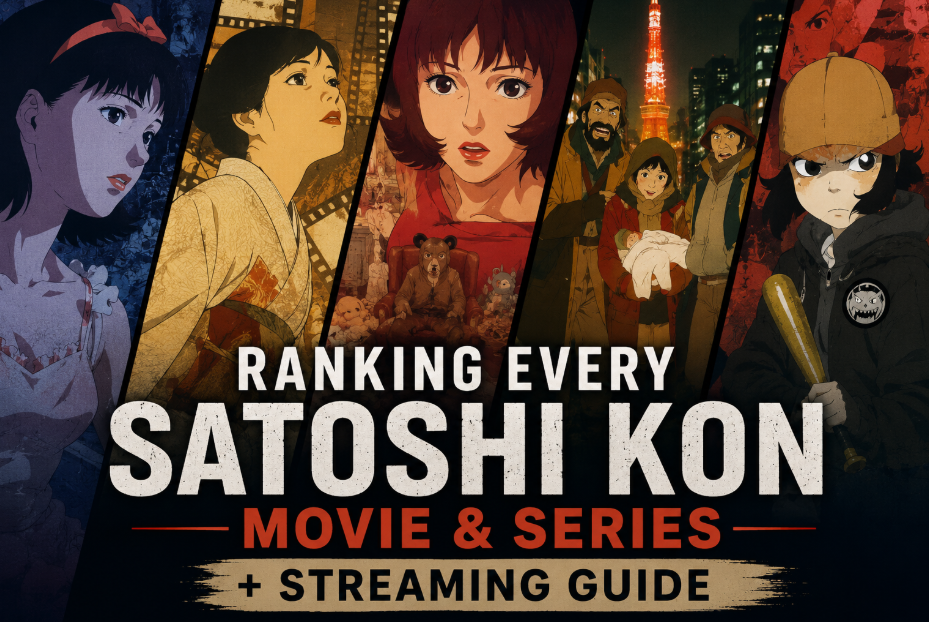
Satoshi Kon is one of the rare filmmakers whose entire body of work can be counted on one hand—yet each entry is widely regarded as a masterpiece. In just four feature films and one television series, he reshaped how animation explores the boundaries between reality, memory, and imagination. From psychological thrillers that blur identity and illusion, to emotionally grounded stories rooted in human connection, Kon’s works continue to influence filmmakers around the world decades later. His visual storytelling has even been cited as an inspiration for major Hollywood productions exploring dream logic and fragmented reality.
But with such a small yet powerful filmography, a question naturally arises: which Satoshi Kon work stands above the rest? In this article, we’ll rank every Satoshi Kon movie and series based on narrative strength, psychological depth, visual innovation, and lasting impact. We’ll also break down each entry in detail and provide a practical 2026 streaming guide so you can easily watch them today, no matter where you are. Whether you’re discovering his work for the first time or revisiting these classics, this guide will help you experience Satoshi Kon’s films in the most meaningful way possible.
Quick Overview Table — Satoshi Kon Filmography
Before diving into the ranking, here is a quick overview of Satoshi Kon’s complete filmography. The ratings below are interpretive indicators designed to highlight each film’s strengths across different dimensions rather than strict numerical scores.
| Title | Year | Type | Core Focus | Narrative Strength | Psychological Depth | Visual Innovation | Lasting Impact |
|---|---|---|---|---|---|---|---|
| Perfect Blue | 1997 | Feature Film | Identity breakdown, psychological thriller, idol culture | ⭐⭐⭐⭐⭐ | ⭐⭐⭐⭐⭐ | ⭐⭐⭐⭐☆ | ⭐⭐⭐⭐⭐ |
| Millennium Actress | 2001 | Feature Film | Memory, biography, cinema as life | ⭐⭐⭐⭐⭐ | ⭐⭐⭐⭐☆ | ⭐⭐⭐⭐⭐ | ⭐⭐⭐⭐☆ |
| Tokyo Godfathers | 2003 | Feature Film | Human drama, found family, Christmas story | ⭐⭐⭐⭐☆ | ⭐⭐⭐⭐☆ | ⭐⭐⭐⭐☆ | ⭐⭐⭐⭐⭐ |
| Paranoia Agent | 2004 | TV Series | Social anxiety, collective paranoia, urban myth | ⭐⭐⭐⭐☆ | ⭐⭐⭐⭐⭐ | ⭐⭐⭐⭐☆ | ⭐⭐⭐⭐⭐ |
| Paprika | 2006 | Feature Film | Dream vs reality, surreal sci-fi, subconscious exploration | ⭐⭐⭐⭐⭐ | ⭐⭐⭐⭐⭐ | ⭐⭐⭐⭐⭐ | ⭐⭐⭐⭐⭐ |
Note: ⭐ Ratings are comparative and interpretive, not absolute scores. Each category reflects a different aspect of Satoshi Kon’s storytelling style:
-
Narrative Strength → Story structure, pacing, and complexity
-
Psychological Depth → Identity, memory, perception, and mental tension
-
Visual Innovation → Animation creativity and surreal visual design
- Lasting Impact → Cultural influence and long-term significance
Main Ranking — Satoshi Kon Movies & Series (From #5 to #1)
Now that we’ve explored Satoshi Kon’s filmography at a glance, it’s time to break down each work in detail. This ranking is based on a combination of narrative strength, psychological depth, visual innovation, and lasting cultural impact. While every entry in his filmography is highly regarded, this section focuses on how each work contributes differently to his legacy—and why they are ranked in this specific order.
#5 Paranoia Agent (2004)
Where to Stream: Crunchyroll, Netflix
Type: Psychological thriller / Social commentary / Anthology series
Overall Impression: ⭐⭐⭐⭐☆
Overview: A mysterious roller-blading attacker known as “Lil’ Slugger” begins striking people across Tokyo, but as the investigation unfolds, the story gradually shifts away from the attacker and toward the psychological breakdown of the individuals and society around him.
Themes:
-
Collective anxiety and social pressure
-
Escapism and psychological denial
-
Urban alienation and isolation
-
Shared delusion vs individual perception
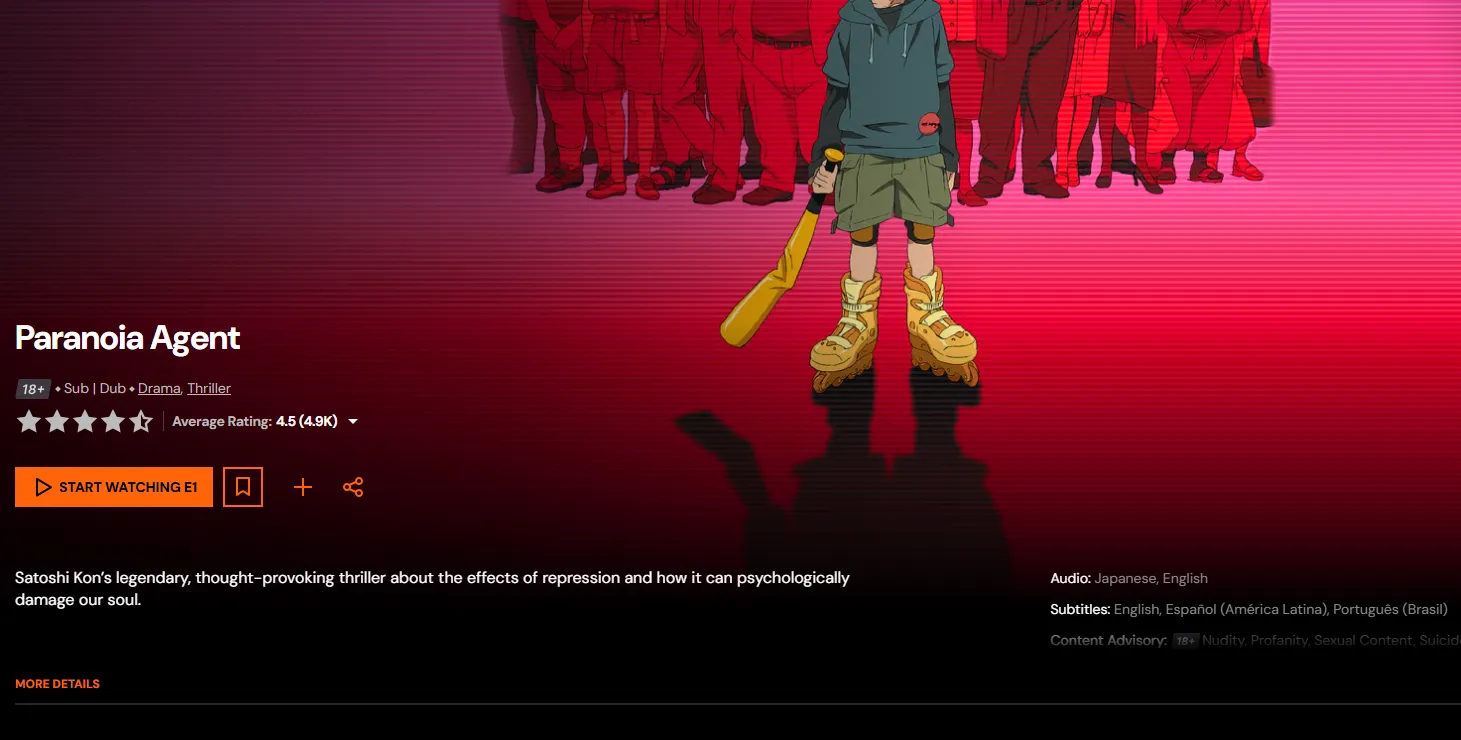
Style Notes: Paranoia Agent adopts a fragmented, anthology-like structure where each episode focuses on different characters and their personal crises. Reality and hallucination frequently blur, and the narrative shifts tone between grounded drama and surreal psychological sequences. Unlike Kon’s feature films, the series prioritizes thematic exploration over narrative continuity, resulting in a deliberately unstable storytelling experience.
Why It Ranks Here: Paranoia Agent is one of Satoshi Kon’s most ambitious works in terms of concept, but also his least cohesive in execution. While it powerfully captures modern social anxiety and psychological fragmentation, its episodic structure limits emotional buildup and narrative resolution compared to his feature films. It feels less like a unified cinematic journey and more like a collection of psychological case studies connected by a shared thematic thread.
Best Viewing Context: Best experienced in short sessions rather than binge-watching. The series’ psychological tension and surreal transitions are more impactful when given time to breathe between episodes.
Notes: Not a conventional mystery series—there is no single clear resolution or “final answer.” It should be approached as a psychological and thematic exploration of collective anxiety rather than a plot-driven narrative.
#4 Tokyo Godfathers (2003)
Where to Stream: Tubi, Netflix
Type: Comedy / Drama / Christmas film / Human story
Overall Impression: ⭐⭐⭐⭐☆
Overview: On Christmas Eve in Tokyo, three homeless people—an alcoholic, a former drag queen, and a runaway teenager—discover an abandoned baby and decide to search for its parents, setting off a chaotic but heartfelt journey through the city.
Themes:
-
Found family and human connection
-
Redemption and second chances
-
Fate, coincidence, and urban kindness
-
Social marginalization
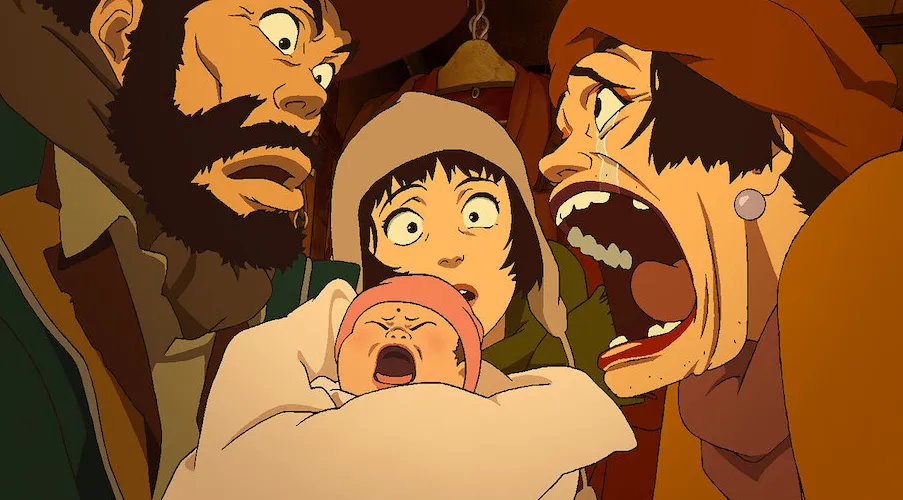
Style Notes: Unlike Satoshi Kon’s other works, Tokyo Godfathers is grounded almost entirely in reality, with minimal surrealism. The storytelling is linear, character-driven, and emotionally direct, focusing on human interactions rather than psychological fragmentation or dream logic. Despite this, Kon still brings subtle narrative coincidence structures and tightly interwoven storytelling that create a sense of “quiet miracle” beneath the realism.
Why It Ranks Here: While Tokyo Godfathers is arguably the most emotionally accessible and warmest film in Kon’s filmography, it lacks the psychological complexity and visual experimentation that define his higher-ranked works. Its strength lies in its humanity rather than innovation, which makes it feel slightly less distinctive within his overall body of work. However, it remains essential as the emotional counterbalance to his darker and more abstract films.
Best Viewing Context: Best watched during the holiday season or when looking for something emotionally uplifting. It works especially well as a “palette cleanser” between heavier psychological films.
Notes: Tokyo Godfathers stands out as the most grounded and emotionally direct film in Satoshi Kon’s filmography. While it lacks the psychological complexity and surreal experimentation seen in his other works, its strength lies in its human storytelling and emotional clarity. This makes it an ideal entry point for new viewers, but also the least representative of Kon’s signature “reality-bending” style.
#3 Paprika
Where to Stream: Tubi, Netflix, Prime Video
Type: Psychological sci-fi / Dream thriller / Surreal mystery
Overall Impression: ⭐⭐⭐⭐⭐
Overview: A revolutionary device that allows therapists to enter patients’ dreams is stolen, causing dreams and reality to begin merging uncontrollably, leading to a surreal collapse of perception across the waking world.
Themes:
-
Dream vs reality collapse
-
Subconscious desire and fear
-
Identity fragmentation
-
Technology and psychological boundaries
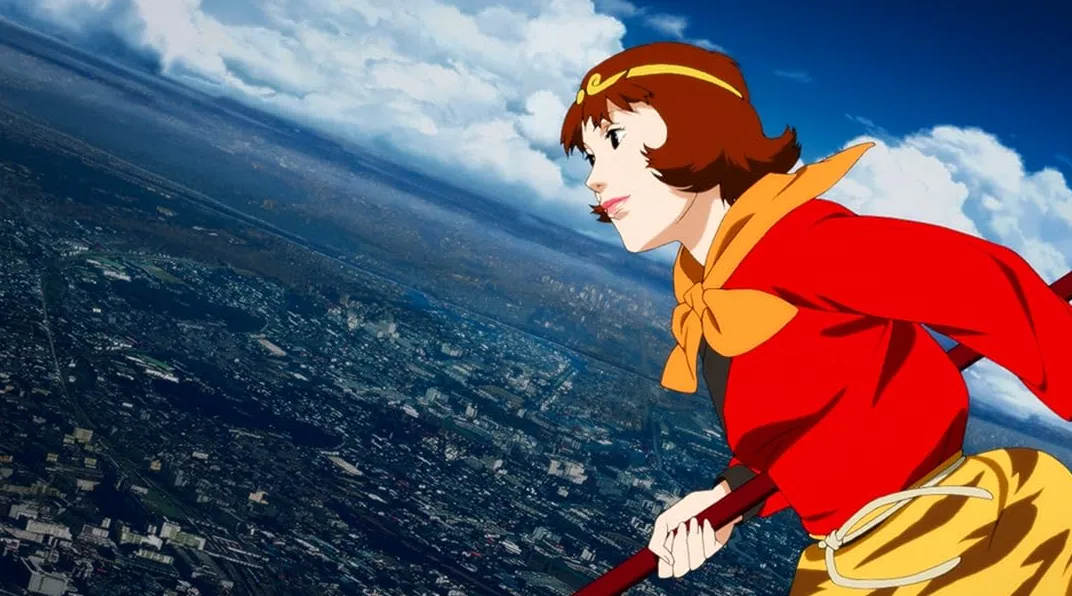
Style Notes:Paprika represents Satoshi Kon’s most visually unrestricted work, where dream logic replaces traditional narrative structure. Scenes shift seamlessly between impossible environments, fluid transformations, and surreal visual metaphors. The film constantly dissolves physical boundaries—between bodies, spaces, and identities—creating a cinematic experience that feels closer to lucid dreaming than linear storytelling.
Why It Ranks Here: Paprika is arguably Satoshi Kon’s most visually ambitious film, pushing his signature “reality distortion” concept to its extreme. However, compared to Perfect Blue and Millennium Actress, its emotional grounding is slightly more diffuse due to its heavy reliance on surreal spectacle and dream logic. It is less intimate than his higher-ranked works, but unmatched in pure visual imagination and conceptual freedom.
Best Viewing Context: Best experienced on a high-quality screen in a focused environment. It works especially well for viewers familiar with Kon’s themes, as its nonlinear dream structure can feel overwhelming on a first watch.
Notes: Paprika is Satoshi Kon’s most visually experimental film and directly influenced several Hollywood works exploring dream logic and layered reality. While it is stunning in concept and execution, its abstract narrative structure may feel less emotionally immediate compared to his earlier psychological dramas.
#2 Millennium Actress (2001)
Where to Stream: HBO Max, Crunchyroll
Type: Drama / Romance / Memory film / Meta-cinema
Overall Impression: ⭐⭐⭐⭐⭐
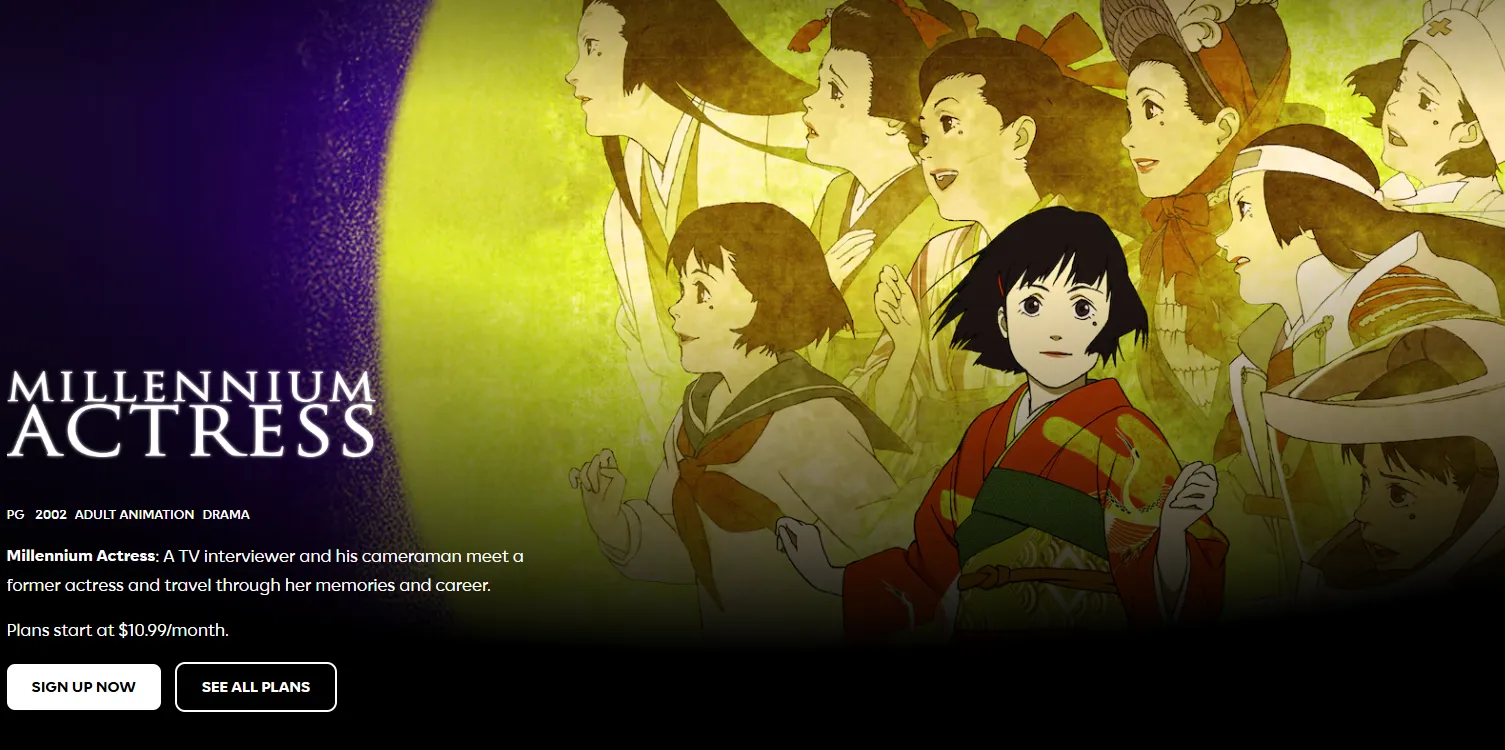
Overview: A retired actress recounts her life story during an interview, but as she speaks, her memories, film roles, and historical eras begin to merge into a single continuous journey that blurs the line between her real experiences and the movies she once starred in.
Themes:
-
Memory and subjective reality
-
Love as lifelong pursuit
-
Cinema as identity
-
Time distortion and emotional continuity
Style Notes: Millennium Actress blends multiple timelines and film genres into a seamless emotional flow, where historical periods, fictional roles, and personal memories coexist without clear separation. Unlike Kon’s more psychologically fragmented works, this film uses fluid transitions not to destabilize reality, but to unify it through emotion and memory. The result is a cinematic experience that feels like a continuous emotional stream rather than a traditional narrative.
Why It Ranks Here: Millennium Actress represents the emotional peak of Satoshi Kon’s storytelling. While it is less visually chaotic than Paprika and less psychologically intense than Perfect Blue, it achieves a rare balance between narrative complexity and emotional coherence. Its only limitation is that it is slightly less iconic in cultural impact compared to his most globally recognized works, which is why it sits just below the top position.
Best Viewing Context: Best experienced in a quiet, uninterrupted setting where the viewer can fully absorb its emotional rhythm. It is especially powerful on rewatch, as its layered structure reveals new meaning with each viewing.
Notes: Millennium Actress is often regarded as Satoshi Kon’s most emotionally fluid film. Instead of separating reality and fiction, it merges them into a single emotional memory stream, making it one of his most unique and poetic works. While it may feel less immediately intense than Perfect Blue, its emotional resonance grows significantly over time.
#1 Perfect Blue
Where to Stream: HBO Max, Netflix, Prime Video
Type: Psychological thriller / Psychological horror / Drama
Overall Impression:⭐⭐⭐⭐⭐
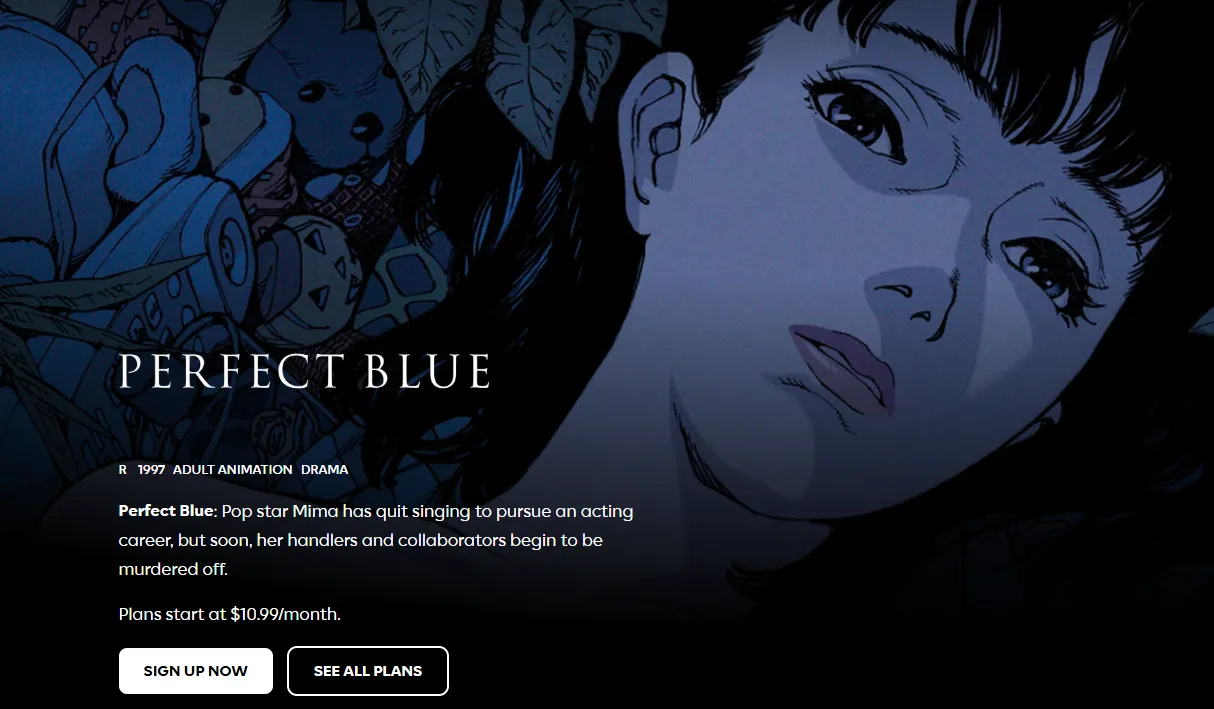
Overview: A former pop idol transitions into acting, but as she tries to rebuild her career, her sense of identity begins to fracture when a stalker, online harassment, and blurred boundaries between reality and performance push her into a psychological breakdown.
Themes:
-
Identity collapse and self-perception
-
Celebrity culture and voyeurism
-
Reality vs performance
-
Psychological trauma and paranoia
Style Notes: Perfect Blue uses a tightly controlled narrative structure where reality and hallucination are deliberately indistinguishable. Cuts between scenes often mirror the protagonist’s fractured mental state, creating constant uncertainty about what is real. Unlike Kon’s later works that lean into visual spectacle, this film is restrained, claustrophobic, and grounded in psychological tension, making its distortions feel more intimate and disturbing.
Why It Ranks Here: Perfect Blue stands at the top of Satoshi Kon’s filmography because it most clearly defines his core artistic identity: the complete breakdown of perceived reality through psychological pressure. It combines narrative precision, emotional intensity, and thematic clarity in a way that none of his later works fully surpass. While Paprika expands his visual imagination and Millennium Actress deepens emotional storytelling, Perfect Blue remains the most focused and psychologically devastating expression of his vision. It is also his most influential work, shaping not only anime but global psychological cinema for decades.
Best Viewing Context: Best experienced in a focused, distraction-free environment, ideally during a single sitting. Its psychological tension builds continuously and relies heavily on sustained immersion.
Notes: Perfect Blue is widely regarded as Satoshi Kon’s most defining and influential work. Its exploration of identity fragmentation and media obsession remains unsettling even today, and it is often cited as one of the most important psychological anime films ever made. While it is the most intense entry in his filmography, it is also the most essential starting point for understanding his artistic vision.
Bonus / Hidden Works & Early Experiments
Although Satoshi Kon is best known for his four feature films and Paranoia Agent, a few lesser-known works and early contributions offer valuable insight into the development of his visual and thematic style.
🎬Magnetic Rose (1995)
Where to watch: Prime Video,Netflix
Type: Screenwriter Contribution
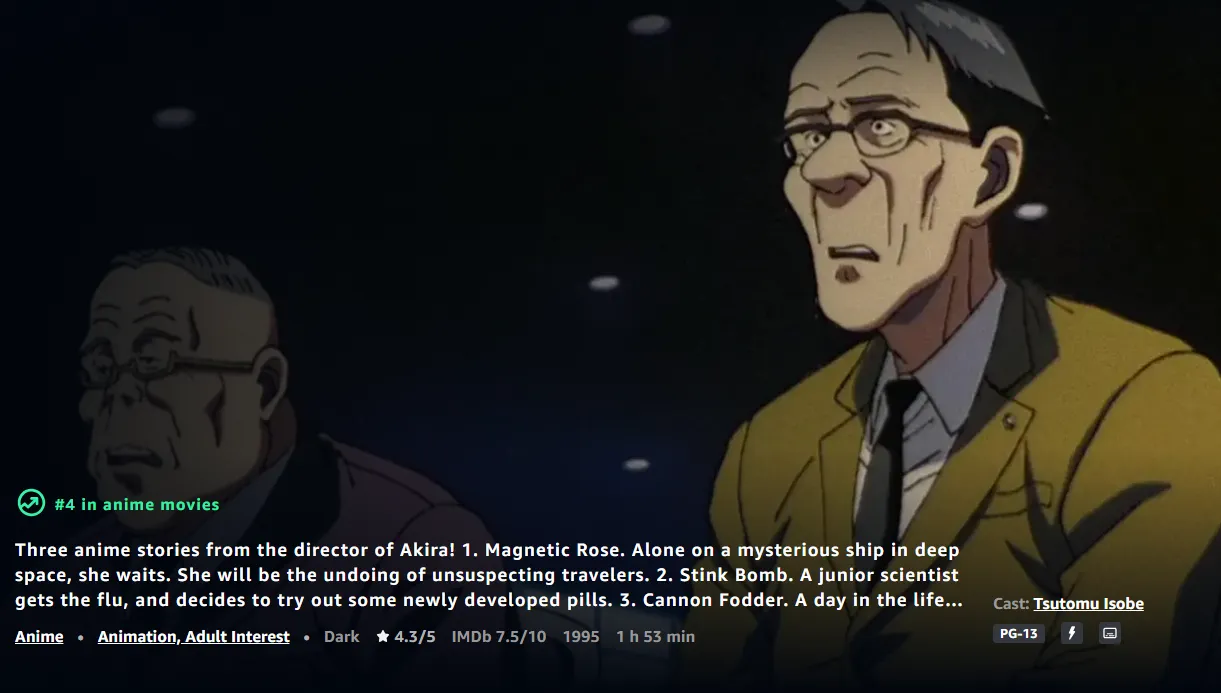
Part of the anthology film Memories, this segment was written with Satoshi Kon’s involvement. Although he did not direct it, the short already shows many of the ideas that would later define his career. It explores psychological illusion within a confined space, where memory and reality begin to merge in unsettling ways. Many fans consider it a conceptual precursor to Perfect Blue, especially in its treatment of perception and identity distortion.
⏱ Good Morning (1993)
Where to watch: Youtube
Type: Experimental Short Film

A one-minute experimental animation that compresses everyday routine into a subtle loop of repetition and surreal timing. Despite its brevity, it reflects Kon’s early interest in: slight distortions in daily reality, repetition and perception gaps and micro-surreal storytelling in ordinary life. It functions more like a creative sketch than a narrative work, but already hints at his later thematic direction.
Advanced Viewing Guide: Which Satoshi Kon Work Should You Start With?
Satoshi Kon's filmography is remarkably small, but each work offers a very different experience. While Perfect Blue tops this ranking, it isn't necessarily the best starting point for every viewer. Use this quick guide to find the best entry point based on your interests.
🌟 New to Satoshi Kon?
Start with: Tokyo Godfathers
Its straightforward narrative, emotional warmth, and grounded storytelling make it the easiest entry point for newcomers.
Best for: Anime beginners, drama fans, holiday movie lovers.
🧠 Want the Ultimate Satoshi Kon Experience?
Start with: Perfect Blue
The film that best captures Kon's signature themes of identity, perception, and reality distortion.
Best for: Psychological thriller fans and viewers seeking his most influential work.
🎨 Love Surreal Visuals and Dream Logic?
Start with: Paprika
A dazzling exploration of dreams, imagination, and the subconscious mind.
Best for: Sci-fi fans, surrealist cinema enthusiasts, and visual storytellers.
❤️ Prefer Character-Driven Drama?
Start with: Millennium Actress
Kon's most emotional and reflective work, blending memory, love, and cinema into a uniquely moving experience.
Best for: Drama lovers, romantics, and fans of emotional storytelling.
📺 Looking for a Longer Commitment?
Start with: Paranoia Agent
The only TV series in Kon's filmography and his most ambitious exploration of collective anxiety and social pressure.
Best for: Anthology fans, social commentary enthusiasts, and viewers who enjoy unconventional narratives.
Frequently Asked Questions (FAQ)
Q1. Will The Dreaming Machine ever be released?
The Dreaming Machine remains unfinished following Satoshi Kon’s passing in 2010. While producer Masao Maruyama has expressed interest in continuing the project, no official release plan has ever been confirmed. Some production materials, storyboards, and concept art have been shown in exhibitions and retrospectives, but the film has not been completed or announced for release in any final form.
Q2. Why do rankings differ between Perfect Blue and Millennium Actress?
The difference mainly comes from evaluation criteria. Perfect Blue is often ranked higher for its psychological intensity, cultural influence, and lasting impact on global thriller cinema. Millennium Actress is frequently favored in academic and cinephile circles for its narrative structure, emotional depth, and innovative use of cinematic transitions. Ultimately, the ranking depends on whether the emphasis is placed on psychological impact or narrative craftsmanship.
Q3. Are Satoshi Kon films available in true 4K quality on streaming platforms?
Not always. While several of Satoshi Kon’s films have received modern restorations and 4K releases in recent years, streaming platforms may not always offer the highest-quality versions available. In many cases, physical Blu-ray or UHD releases provide the most consistent visual fidelity compared to streaming versions, which may vary by region and platform licensing.
Q4. Are Satoshi Kon’s films suitable for children?
Most of Satoshi Kon’s works are intended for mature audiences due to psychological themes, complex narratives, and emotional intensity. Tokyo Godfathers is generally the most accessible and family-friendly entry point, while films like Perfect Blue and Paprika are better suited for older teens and adults due to their psychological and thematic complexity.
Conclusion
Satoshi Kon’s filmography may be small, but its impact is lasting. In just a handful of works, he reshaped how animation can portray memory, identity, and the fragile boundary between reality and illusion. What makes his legacy so powerful is not only the innovation of his storytelling, but the emotional resonance that stays with viewers long after the credits roll. Each film offers a different entry point, yet all lead back to the same question: how do we define what is real?
Whether you begin with the psychological tension of Perfect Blue, the emotional journey of Millennium Actress, or the surreal spectacle of Paprika, his works consistently blur that boundary in unforgettable ways. In the end, Satoshi Kon’s films don’t just tell stories—they reshape how those stories are experienced. If you haven’t explored his work yet, there’s no better time to begin.