In 2026, the Android manga and anime landscape has evolved into a complex ecosystem of specialized apps. While they all share a common ancestor, Mihon, Aniyomi, Anikku, Dantotsu, and the legacy Tachiyomi now offer vastly different experiences. Choosing the right one is no longer just about finding a "Tachiyomi alternative"—it’s about deciding whether you prioritize raw playback performance, library stability, or modern UI aesthetics.
The shift toward specialization has created a clear divide: some apps focus on the clinical purity of manga reading, while others push the limits of mobile cinema with advanced rendering engines. As newcomers like Anikku and Dantotsu redefine the user experience with MPV cores and social integration, older giants like Aniyomi and Tachiyomi face new challenges in security and compatibility.
This guide provides a definitive comparison of these five titans. We strip away the jargon to help you decide which app earns a permanent spot on your home screen and which ones are best left in the past.
Quick Verdict: Best Choice at a Glance
In 2026, the "best" app depends entirely on your consumption habits. If you want to skip the technical deep dive, use the guide below to find your perfect match.
| If You Prioritize... | Recommended App | The "X" Factor |
| Pure Manga Reading | Mihon | The only stable, 1:1 Tachiyomi successor. |
| Anime & Manga Hybrid | Aniyomi | Massive extension library for both worlds. |
| Modern UI & Socials | Dantotsu | Stunning Netflix-style UI with AniList integration. |
| 4K/NAS Playback | Anikku | Desktop-class MPV engine for high-bitrate files. |
| Legacy / Nostalgia | Tachiyomi | Obsolute. High security risks in 2026. |
Note: Both Mihon and Aniyomi support direct backup imports from Tachiyomi, ensuring a seamless transition for long-time users.
What Happened to Tachiyomi? The Shutdown That Reshaped the Ecosystem
If you have searched for “Is Tachiyomi dead?” or “Why did Tachiyomi stop working?”, you are not alone. In 2026, the once-dominant manga reader has effectively become a legacy application, surviving only through archived APKs and community workarounds.
For years, Tachiyomi was the backbone of the Android manga-reading world. Its open-source nature and massive extension library made it the default choice for millions. However, the ecosystem shifted dramatically after the project’s official shutdown in early 2024.
Why Was Tachiyomi Discontinued?
The project ceased official development following mounting legal pressure regarding extension distribution. To protect contributors, the official GitHub repositories were removed, and the project entered archival status.
While legacy APKs still circulate, using Tachiyomi in 2026 means you are missing:
-
Security updates: Protection against modern Android exploits.
-
Compatibility fixes: Support for the latest Android "Scoped Storage" protocols.
-
Modern API integration: Stability when syncing with trackers like AniList or MyAnimeList.
The “Ghost App” Problem
Without a central infrastructure, Tachiyomi has become a "Ghost App." In 2026, users face two critical hurdles:
-
Broken Infrastructure: The original extension store is gone. Users must now manually manage third-party repositories—a process too steep for casual readers.
-
Security & Trust Risks: Unofficial "Tachiyomi 2026 Mod" or "Premium" APKs often contain aggressive ads, tracking components, or malware.
⚠️ Warning: There is no "Official Premium" version of Tachiyomi. Avoid any site claiming to offer one.
The Rise of Mihon: The Spiritual Successor
Out of the vacuum left by Tachiyomi, Mihon emerged as the primary successor. Built on the same core foundation, Mihon preserved the familiar experience while restructuring the project to reduce legal exposure. For most, migrating to Mihon is the most logical path because it retains the familiar UI, backup compatibility, and open-source spirit.
The Ecosystem Shift: Decoupled Repositories
The biggest change in the post-Tachiyomi era is the decoupling of extensions. Modern apps like Mihon and Aniyomi no longer host content sources. Instead, the ecosystem is now split into two distinct layers:
| Layer | Purpose | Component |
| The App | Handles UI, library management, and reading progress. | Mihon / Aniyomi / Anikku |
| The Repo | Provides third-party content sources (Extensions). | External Repos (e.g., Keiyoushi) |
How to Migrate from Tachiyomi to Mihon
The transition is nearly lossless and takes less than two minutes:
-
Create a Backup: In Tachiyomi, go to Settings → Data & Storage → Create Backup. This generates a .tachibk file.
-
Install Mihon: Download the latest release from the official Mihon website or GitHub.
-
Restore Your Library: In Mihon, go to Settings → Data & Storage → Restore Backup. Select your .tachibk file.
Your library, reading progress, and categories will automatically sync, making the move feel like a simple upgrade rather than a fresh start.
Deep Dive: The Four Core Forks of the 2026 Ecosystem
While Mihon, Aniyomi, Dantotsu, and Anikku share a technical ancestry in the Tachiyomi open-source project, they have evolved into specialized tools. In 2026, they are no longer direct alternatives but distinct solutions optimized for specific media consumption styles.
1. Mihon: The Best Manga Reader for Android
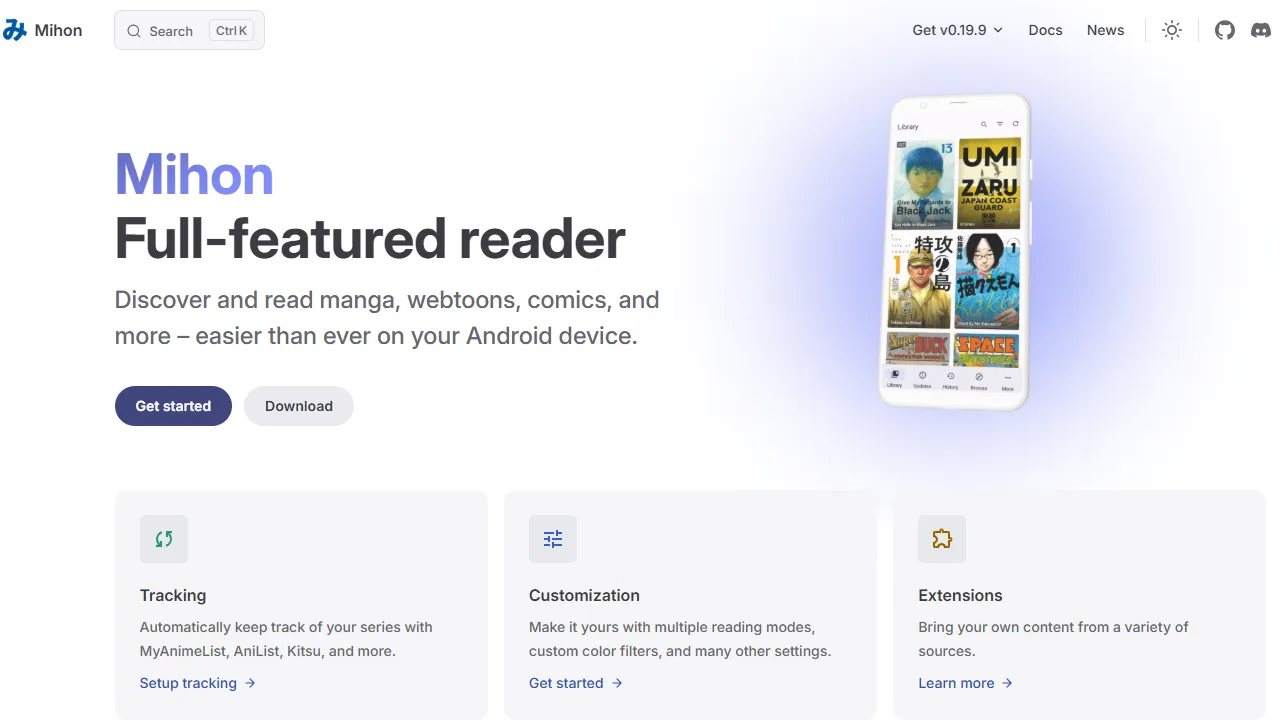
Mihon is widely regarded as the most direct continuation of the original Tachiyomi experience. It focuses on refining stability, speed, and a clean reading workflow without expanding into anime or other media types.
Best For: Users who primarily read manga, manhwa, or manhua and prefer a distraction-free, library-first experience.
Core Experience: As a lightweight application, Mihon maintains a smooth interface even with massive libraries (2,000+ titles), as it avoids the system overhead of video playback engines.
Key Strengths:
-
Highly Optimized Performance: The fastest and most responsive app for pure reading in 2026.
-
Familiar UI: Retains the classic Tachiyomi-style interface and intuitive gesture controls.
-
Extension Stability: The strongest compatibility with the current Keiyoushi extension repositories.
-
Resource Efficiency: Minimal battery drain and low memory footprint on modern Android 15/16 devices.
Limitations:
-
No Video Support: It does not support anime or any video playback.
-
Intentionally Minimal: Lacks modern content discovery or social features found in newer forks.
The Verdict: The most stable, "no-nonsense" successor for manga purists.
2. Aniyomi: The Ultimate All-in-One Anime & Manga App
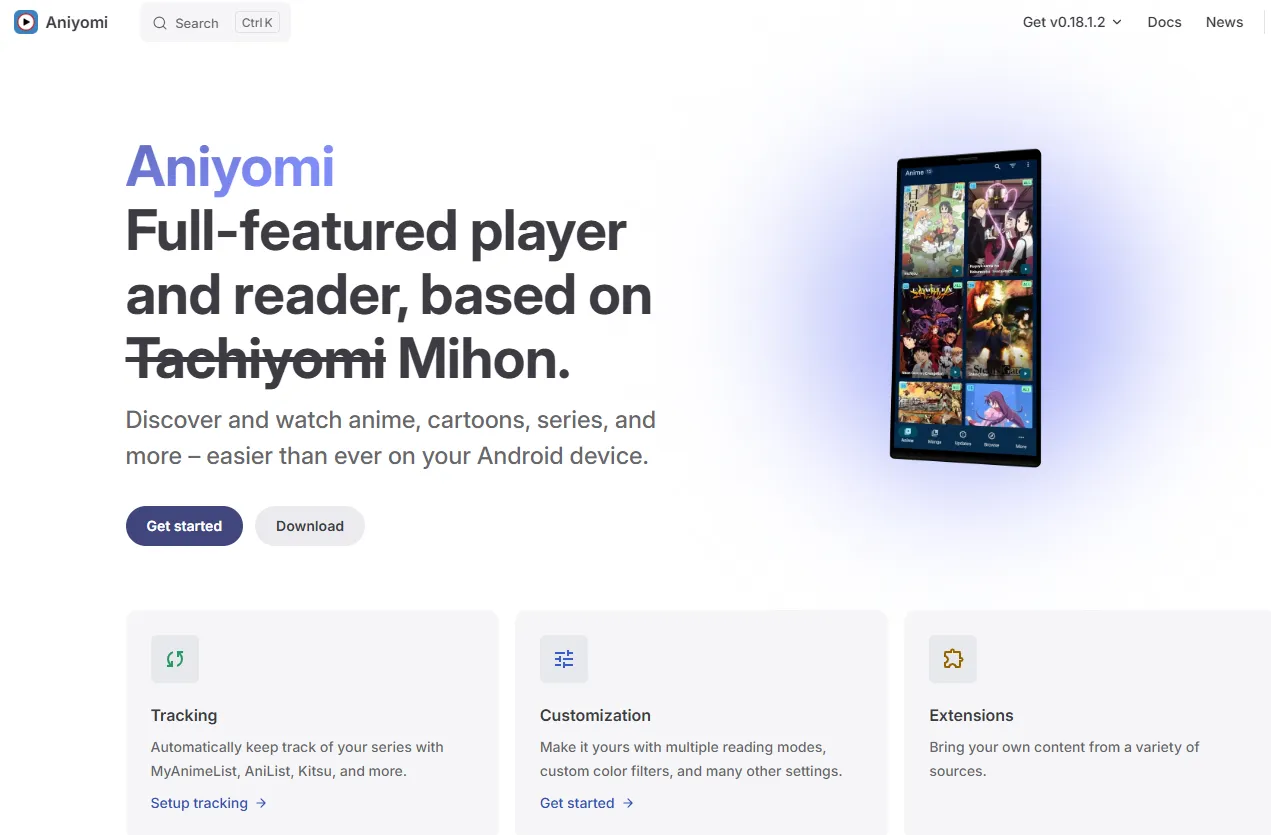
Aniyomi remains the most feature-complete evolution of the lineage, extending the original design into a unified platform for both anime streaming and manga reading.
Best For: Users who want a single application to manage their entire media library under one roof.
Core Experience: Aniyomi integrates video playback directly into the library, allowing a seamless transition between reading a chapter and watching an episode.
Key Strengths:
-
Unified Library: Manage manga and anime extensions concurrently in one app.
-
Flexible Playback: Supports built-in rendering or launching external players like VLC and MPV.
-
Vast Content Reach: Access to the widest range of international media sources.
-
Universal Tracking: Reliable sync with AniList and MyAnimeList for both media types.
Limitations:
-
System Footprint: Larger APK size and higher RAM usage compared to single-purpose apps.
-
Maintenance Overhead: More complex setup required to keep both media types functional long-term.
The Verdict: The "Swiss Army Knife" for users who want everything in one place.
3. Dantotsu: The Modern UI King with AniList Integration
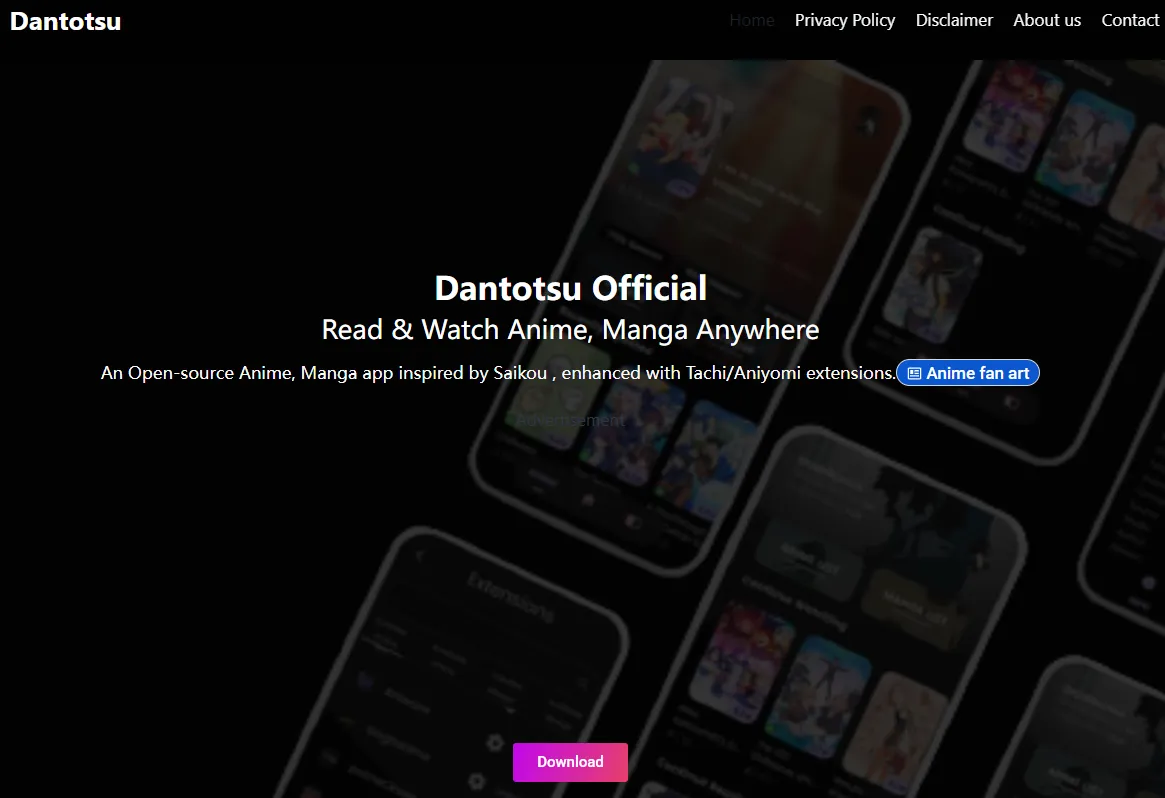
Dantotsu represents a newer generation of apps that prioritize visual design, social features, and content discovery over traditional list-based navigation.
Best For: Users who prioritize a modern "Netflix-style" interface, community scores, and automated tracking.
Core Experience: Built around deep AniList integration, Dantotsu functions as a media dashboard, emphasizing splash art, trailers, and discovery engines.
Key Strengths:
-
Modern Aesthetics: Stunning, visually rich UI with smooth animations and Material You elements.
-
Social Integration: Real-time sync with AniList and easy access to community reviews and scores.
-
Discovery-First: Powerful "Trending" and "Recommended" sections based on user history.
-
Feature-Rich: Native support for trailers and community comments within the app.
Limitations:
-
Secondary Manga Focus: Reading functionality is functional but less customizable than Mihon.
-
API Dependency: Functionality is significantly reduced if AniList or external metadata services are offline.
The Verdict: A social-heavy media dashboard that feels like a premium streaming service.
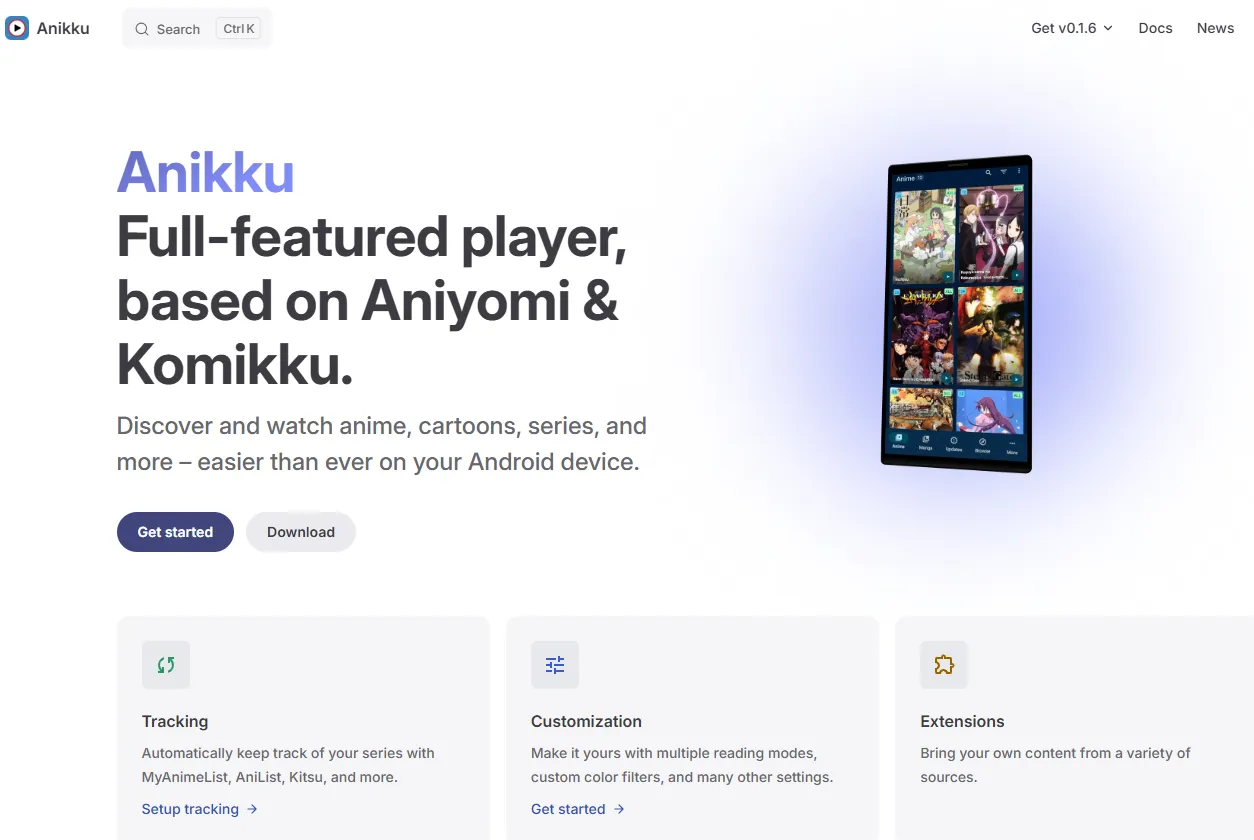
4. Anikku: The Best Choice for High-Quality Anime & NAS Playback
Anikku is a playback-focused evolution of the ecosystem, designed specifically to prioritize video performance, rendering quality, and local media management.
Best For: Power users who demand high-quality video (4K/10-bit HEVC), professional subtitle rendering, and NAS (SMB/WebDAV) or Jellyfin integration.
Core Experience: Built around a heavily integrated MPV-based engine, Anikku offers desktop-class control over video rendering that standard Android players cannot match.
Key Strengths:
-
MPV Engine Power: Superior rendering, hardware-accelerated decoding, and advanced video filters.
-
Perfect Subtitles: Best-in-class support for complex SSA/ASS subtitle styling without rendering artifacts.
-
Home Server Integration: Exceptional handling of local files and network-attached storage (NAS).
-
Clean Design: A modern Material You UI that is both functional and aesthetically pleasing.
Limitations:
-
Niche Focus: Smaller community and less emphasis on the manga-reading experience.
-
Hardware Demands: Requires modern hardware to utilize its advanced high-bitrate rendering features fully.
The Verdict: The technical choice for high-fidelity anime playback and self-hosted libraries.
The Definitive 2026 Comparison: Architecture and Performance
In 2026, these forks are no longer simple clones of Tachiyomi. They have diverged into four distinct "Specializations." To choose the right one, you must compare them across these five technical battlegrounds.
1. The Strategic Overview (Intent)
The first differentiator is not a feature, but the Design Philosophy.
| Category | Apps | Core Philosophy |
| Manga-first stability | Mihon | Minimal, fast, library-focused reading. |
| Hybrid consumption | Aniyomi | Unified manga + anime experience. |
| Discovery & UX | Dantotsu | Streaming-style discovery platform (AniList-centric). |
| Playback Performance | Anikku | High-performance anime playback (MPV-powered). |
2. Rendering & Playback Engines (The Core)
This is the most critical technical divide. In 2026, the "engine" determines if your media stutters or shines.
-
Mihon: Uses a dedicated 2D image renderer. It handles 4K manga pages with zero lag because it carries no video-decoding bloat.
-
Anikku: The performance leader. It features a custom libmpv core, allowing for desktop-grade 10-bit HEVC decoding and flawless SSA/ASS subtitle rendering that standard players can't handle.
-
Aniyomi & Dantotsu: Use the ExoPlayer framework. It is excellent for web streaming but may struggle with high-bitrate local files.
3. UI Architecture & Responsiveness (The Feel)
-
Dantotsu: Built entirely on Jetpack Compose. It offers non-linear animations and a "Netflix-style" fluid interface. It is visually stunning but requires modern hardware.
-
Mihon & Aniyomi: Based on classic XML layouts. They are significantly more battery-efficient and the best choice for mid-range or older devices.
-
Anikku: Focuses on a Material You playback-centric flow—designed for watching rather than endless scrolling.
4. Metadata & Social Integration (The Connection)
-
Dantotsu: Functions as a full AniList hub. You browse voice actor data, trailers, and community reviews directly within the app.
-
Mihon & Aniyomi: Treat social features as a background task. They sync your progress but keep the interface focused purely on your local library.
-
Anikku: Adds specialized support for Discord Rich Presence (RPC), letting your friends see exactly what you're watching in real-time.
5. Infrastructure & Connectivity (The Source)
-
Mihon & Aniyomi: Optimized for the Extension Repository model (e.g., Keiyoushi). They are built to aggregate content from the open web.
-
Anikku: Optimized for Local & NAS (SMB/Jellyfin) integration. If you host your own media library on a home server, Anikku’s indexing logic is unrivaled.
6. Resource Footprint (The Cost)
-
Mihon: The lightest. Lowest RAM usage and longest battery life.
-
Aniyomi: Moderate. High library update overhead due to dual-media support.
-
Dantotsu & Anikku: Resource-intensive. They trade battery life for high-end visuals and superior video decoding.
Final Verdict: Which One Should You Install?
-
Choose Mihon if you want the fastest, most stable manga experience.
-
Choose Aniyomi if you want one app to rule all your web-based media.
-
Choose Dantotsu if you want a modern, social, and beautiful discovery hub.
-
Choose Anikku if you want cinematic playback quality and NAS integration.
The Repository Revolution: Adding "Souls" to the Shells
In 2026, downloading Mihon or Anikku is only the first half of the journey. Because these apps contain no content out of the box, you must bridge the gap by connecting to a community-maintained repository.
1. The "Empty Shell" Model
Unlike the legacy Tachiyomi, modern forks do not host a built-in extension store. This separation protects developers from legal liability and ensures the apps can stay on platforms like GitHub. To see any content, you must add an Extension Repo URL—essentially a digital "address book" that tells the app where to find sources like MangaDex or AnimePahe.
2. The Trusted Standard: Keiyoushi
The most important name in 2026 is Keiyoushi. It is the decentralized successor to the original Tachiyomi index and serves as the primary source for 99% of users.
-
Main Repository: The gold standard for manga.
-
Secondary Repos: Specialized repositories like Yuzono provide specific extensions for anime-focused forks or niche sources.
3. Step-by-Step: How to Add Repositories in 2026
The process is nearly identical across all forks (Mihon, Aniyomi, Dantotsu, etc.):
-
Copy the Repo URL: Find the official JSON link from the trusted community source (e.g., Keiyoushi’s official site).
-
Navigate to Settings: Open your app and go to Settings → Browse → Extension Repos.
-
Add the Link: Tap the
Addbutton and paste the URL. -
Refresh and Install: Go back to the Browse → Extensions tab. You will now see hundreds of available sources. Tap Install on your favorites.
⚠️ Pro Tip: The "Untrusted" Warning When you install an extension for the first time, Android may flag it. You must go to the Extensions tab, find the source, and manually tap "Trust" to enable it. This is a security feature to ensure you are only using sources you recognize.
4. Safety First: Avoiding Malicious Repos
With the ecosystem being decentralized, 2026 has seen a rise in "Ghost Repos." These are unauthorized repositories that may bundle tracking scripts or malware.
-
Stick to the "Big Three": Keiyoushi (Manga), Yuzono (Anime), and official dev-recommended links.
-
Avoid "All-in-One" Mods: Never download a repo that asks for your AniList/MAL password directly. Authentic apps use the OAuth login system (which redirects you to the official website) rather than asking for credentials in a pop-up.
FAQ: Everything You Need to Know in 2026
1. Is Tachiyomi dead in 2026?
Technically, yes. While the app may still open, it is no longer maintained. Using legacy Tachiyomi in 2026 is risky because it lacks security patches and struggles with modern Android storage protocols. Mihon is its official spiritual and technical successor.
2. Is Mihon safe to use?
Yes. Mihon is an open-source "shell" that contains no content. Like its predecessor, it is a transparent project hosted on GitHub. As long as you download it from official sources and use trusted extension repositories, it is perfectly safe.
3. Are these apps legal?
The applications themselves are legal. They are media browsers/parsers, much like a web browser. However, the legality of the content depends on the extensions you use. We recommend supporting official creators and using these tools to organize your legally owned media.
4. What is the best Tachiyomi replacement in 2026?
There is no "one size fits all" answer:
-
Mihon for pure manga reading.
-
Aniyomi for a hybrid manga/anime experience.
-
Dantotsu for a modern, social-heavy UI.
-
Anikku for high-end playback and NAS users.
5. Does Aniyomi still work?
Yes. Aniyomi remains highly active. While it is a "heavier" app due to its dual-media engine, it is still the top choice for users who want one library for both anime and manga.
6. Can Dantotsu read manga?
Yes, but it is anime-first. Dantotsu supports manga extensions, but its interface is optimized for discovery and video streaming. If you are a hardcore manga reader, you might find Mihon's reading engine more refined.
7. Which app is best for anime streaming?
Dantotsu is the winner for its "Netflix-style" UI and discovery features. However, if you are playing high-quality local files from a server, Anikku’s MPV engine provides superior quality.
8. Does Anikku support Jellyfin?
Yes. Anikku is built for power users. It offers best-in-class support for Jellyfin, SMB, and WebDAV, making it the definitive choice for those who manage their own media servers.
9. Which apps support AniList/MAL sync?
All four. However, Dantotsu offers the deepest integration (browsing reviews and trailers), while Anikku adds specialized Discord RPC support so your friends can see what you’re watching.
10. Which app works best offline?
Mihon is the most reliable for offline manga. For anime, Anikku excels at playing pre-downloaded high-bitrate files without stuttering, thanks to its specialized decoding engine.
11. Can I migrate from Tachiyomi?
Yes. Both Mihon and Aniyomi support .tachibk backup restores. Your categories and progress will transfer in seconds.
12. Is there an iOS alternative for Mihon or Aniyomi?
There is no official port. Apple’s restrictions prevent these apps from existing on the App Store.
-
Warning: Any app on the App Store using these names is a fake clone with ads.
-
Legit iOS options: Look into Aidoku or Paperback, though they require side-loading (AltStore) and have different extension ecosystems.
Conclusion: The Era of Choice
The legacy of Tachiyomi hasn't vanished; it has evolved. In 2026, the best experience isn't found in a single "do-it-all" app, but in the one that aligns with your specific habits.
Whether you prioritize the surgical stability of Mihon, the unified anime-manga hybrid of Aniyomi, the visual discovery of Dantotsu, or the high-fidelity playback of Anikku, you are now in control of a more specialized and powerful ecosystem than ever before.
Your next steps:
-
Choose your shell based on your primary media and hardware (Manga vs. Anime vs. Hybrid).
-
Connect to trusted repositories like Keiyoushi to populate your library.
-
Sync your trackers (AniList/MAL) to keep your journey seamless across devices.
The post-Tachiyomi world is no longer about finding a replacement—it’s about upgrading your library. Pick your titan and start reading.