We’ve all been there: You’re scrolling through your feed and stumble upon a breathtaking animation clip—a jaw-dropping fight sequence or a mesmerizing lo-fi aesthetic—but the comment section is a ghost town of "Source?" and "What’s the name?" Or maybe you're haunted by a core memory of a specific scene from a decade ago, but the title remains perpetually on the tip of your tongue.Welcome to 2026, where "unknown anime" is a thing of the past. Thanks to the explosion of Multimodal AI and Semantic Search, finding that elusive series has evolved from a pixel-matching chore into an instant, near-magical experience. Today’s identifiers don't just "see" images; they understand context, style, and motion.Whether you have a blurry screenshot, a heavily filtered GIF from TikTok, or nothing but a vague text description, there is an AI tool built specifically to track it down. In this ultimate guide, we’ve field-tested and curated the Top 14 Free AI Anime Identifiers of 2026. From industry legends like trace.moe to the new-age intelligence of LearnFast AI, here is how you can identify any anime in ten seconds or less. Let's dive into the future of anime discovery.
The Ultimate AI Anime Identifier Matrix: 14 Tools to Find Any Source
Below is our curated list of the top 14 tools for 2026, categorized by their specific strengths to help you find your source in seconds.
🧠 I. AI Semantic Pioneers: Solving Vague Memories
Best for when you don’t have a clear image. These AI tools rely on context, reasoning, and multimodal understanding.
| Tool Name | Category | Input Type | Accuracy | Best For | Key Feature |
|---|---|---|---|---|---|
| LearnFast AI | AI Semantic | Image + Text | ⭐⭐⭐⭐ | All-in-one search | Multimodal Search: Combines screenshot + description |
| ChatGPT | AI Semantic | Image + Text | ⭐⭐⭐⭐ | Vague descriptions | Context Reasoning: Identifies scenes via details |
| Gemini | AI Semantic | Image + Text | ⭐⭐⭐⭐ | Video context | Multimodal AI: Handles image + long context |
| Google Lens | AI Semantic | Image | ⭐⭐⭐⭐ | Mobile users | Instant Visual Match: Powered by Google index |
| Bing Visual Search | AI Semantic | Image | ⭐⭐⭐ | Alternative search | Similar Image Matching: Finds related frames |
🎯 II. Precision Scene Matchers: Frame-Level Accuracy
Perfect for screenshots, GIFs, and clips. These tools can identify the exact episode and timestamp.
| Tool Name | Category | Input Type | Accuracy | Best For | Key Feature |
|---|---|---|---|---|---|
| trace.moe | Scene Matcher | Image / GIF / Video | ⭐⭐⭐⭐⭐ | Exact scene match | Timestamp Detection: Returns episode + time |
| AnimeFinder.xyz | Scene Matcher | Image | ⭐⭐⭐ | Character recognition | Tag Extraction: Works on memes & cropped images |
| Glima (Galaxy AI) | Scene Matcher | Image | ⭐⭐⭐ | Style identification | Art Style Detection: Identifies studios & visuals |
| AnimeDB AI | Scene Matcher | Image | ⭐⭐⭐⭐ | Donghua / 3D anime | Niche Database: Optimized for 3D animation |
🔍 III. Reverse Search Detectives: Finding Original Sources
Use these when dealing with fanart, cosplay, or heavily edited images.
| Tool Name | Category | Input Type | Accuracy | Best For | Key Feature |
|---|---|---|---|---|---|
| SauceNAO | Reverse Search | Image | ⭐⭐⭐⭐⭐ | Fanart / Pixiv | Artist Lookup: Industry standard for sources |
| Ascii2d | Reverse Search | Image | ⭐⭐⭐⭐ | Cropped images | Robust Matching: Works despite filters |
| IQDB | Reverse Search | Image | ⭐⭐⭐⭐ | Similar images | Multi-source comparison |
| SauceKudasai | Aggregator | Image | ⭐⭐⭐⭐ | All-in-one search | Multi-engine search integration |
| Sogou Image | Regional Tool | Image | ⭐⭐⭐ | CN anime | Strong indexing for Bilibili/donghua |
Editor’s Choice: Best AI Anime Identifier Tools
While all 14 tools are excellent, these six tools represent the most reliable and practical ways to identify any anime from screenshots, descriptions, or even vague memories.
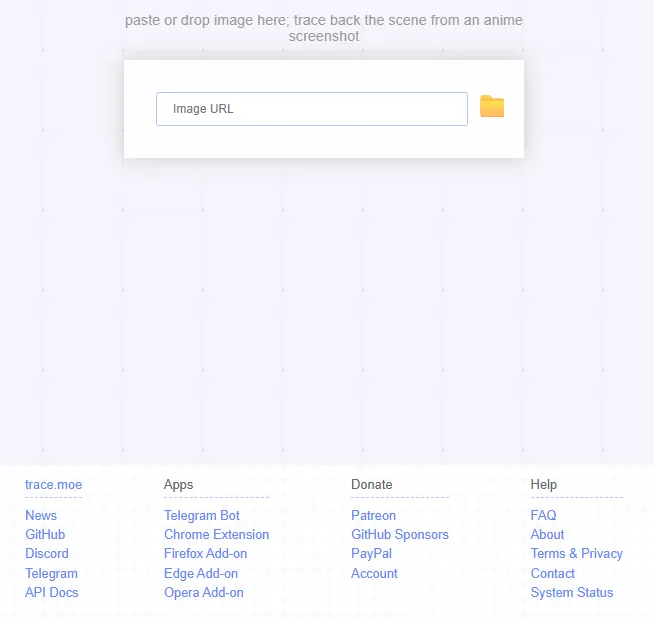
1. trace.moe — Best Overall Anime Identifier
trace.moe is widely considered the gold standard for anime scene identification. It works by analyzing video frames from thousands of anime series and matching your screenshot to the exact moment in an episode.
Key Features:
Frame-level video database matching anime screenshots with actual scenes;
Returns exact episode number + timestamp (down to seconds);
Extremely fast processing (usually within 2–5 seconds);
Covers thousands of mainstream anime titles with high accuracy;
Works with screenshots, GIFs, and short video clips.
Best For:
Finding the exact source of anime screenshots or TikTok clips;
Users who want fast, precise identification without guessing;
Recognizing scenes from popular or widely indexed anime;
Verifying “what episode is this moment from?”.
👉 If you only use one tool, this is the one.
2. ChatGPT — Best for Vague or Partial Memories
Unlike traditional search tools, ChatGPT uses multimodal AI reasoning instead of database matching. It can interpret descriptions, emotions, or partial visuals to guess the anime.

Key Features:
Multimodal reasoning (image + text understanding);
Interprets context, emotion, and visual clues instead of database matching;
Can explain why a certain anime is suggested (transparent reasoning);
Handles natural language queries like storytelling or memory fragments;
Works even when images are incomplete, blurry, or missing.
Best For:
Users who only remember partial scenes or descriptions;
“I don’t have a screenshot, but I remember the vibe/story” cases;
Identifying anime through plot hints or character descriptions;
Exploring possibilities when traditional tools return no result;
👉 Think of it as your “anime detective assistant.”
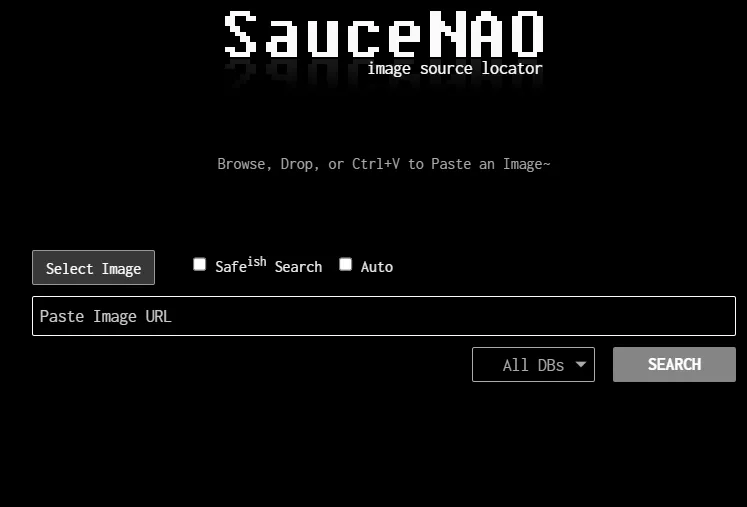
3. SauceNAO — Best for Fan Art & Illustrations
SauceNAO is the most trusted tool for finding the original source of anime-style artwork. It specializes in databases like Pixiv, Danbooru, and Twitter art reposts.
Key Features:
Searches across major anime art databases (Pixiv, Danbooru, etc.);
Identifies original illustrator or upload source;
Traces reposted or edited images back to original entries;
High accuracy for anime-style illustrations and digital art;
Provides direct source links when available.
Best For:
Finding original Pixiv / Twitter / Danbooru artwork sources;
Identifying anime-style illustrations and fan art;
Tracking reposted or edited images back to creators;
Attribution and credit verification for artists.
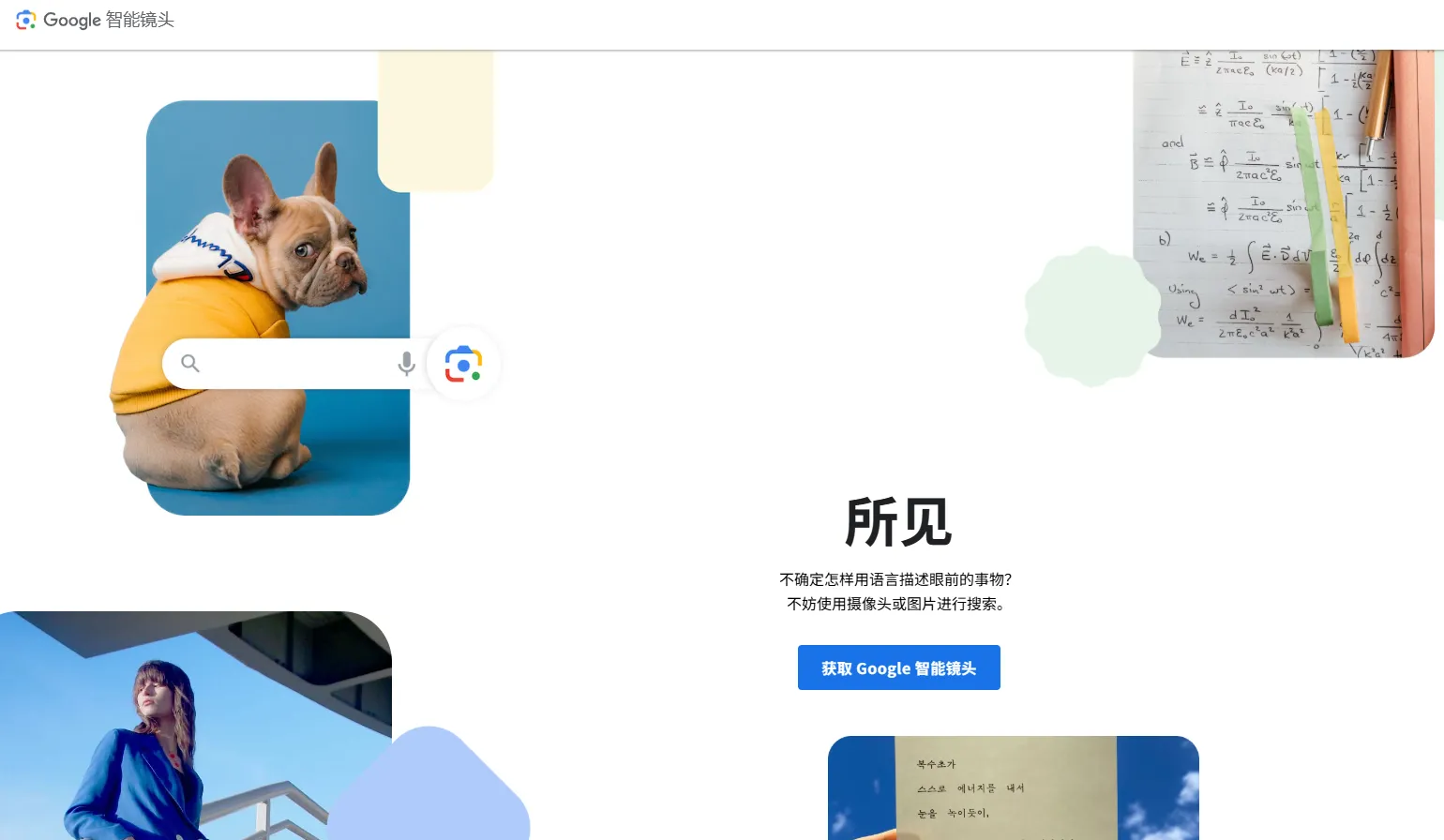
4. Google Lens — Best Mobile Anime Finder
Google Lens is the most convenient tool for everyday anime identification. It uses Google’s massive image index to match visuals in real time.
Key Features:
Real-time camera-based image recognition;
Powered by Google’s massive global image index;
Instant search results with minimal user input;
Works across posters, screenshots, merchandise, and characters;
Deep integration with Android and Google ecosystem.
Best For:
Identifying anime on the go using your phone camera;
Quick searches from social media screenshots or posters;
Casual users who want fast, no-effort results;
Real-world anime recognition (merch, events, ads).
5. Ascii2d — Best for Hard-to-Find or Edited Images
Ascii2d is a powerful reverse image search engine designed to handle difficult cases where other tools fail. It works especially well on cropped, filtered, or low-quality images.
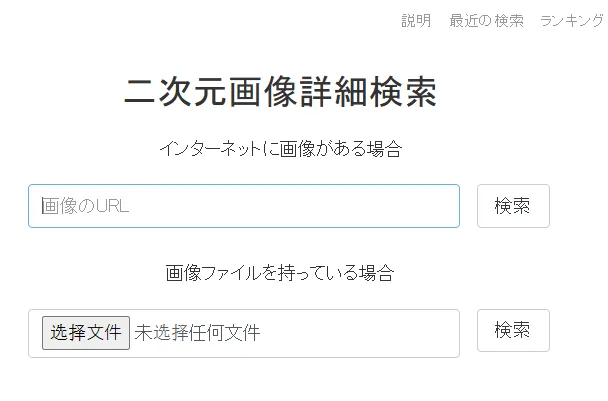
Key Features:
Dual search system: color-based + feature-based matching;
Strong at recognizing images even after cropping or filtering;
Can find visually similar images across multiple sources;
Works well when metadata-based tools fail (like SauceNAO);
Often returns alternative matches instead of exact duplicates.
Best For:
Heavily cropped, compressed, or edited anime images;
Low-quality screenshots or reposted content;
Backup search when primary tools fail;
Finding visually similar anime illustrations.
6. LearnFast AI — Best Emerging AI Anime Identifier
LearnFast AI is a new-generation multimodal AI tool that combines image recognition and text-based reasoning. Unlike traditional databases, it tries to “understand” the anime rather than just match frames.

Key Features:
Combines image recognition + natural language understanding;
Accepts both screenshots and text descriptions in the same query;
Uses AI reasoning instead of strict database matching;
Can interpret messy or incomplete inputs more flexibly;
Designed as next-generation AI search interface.
Best For:
Mixed input cases like image + partial memory description;
Users unsure whether they remember correctly or not;
Exploring possibilities when other tools return no match;
Early adoption of AI-native anime search workflows.
These six tools don’t just search anime—they represent three different identification paradigms: frame matching, semantic reasoning, and reverse image retrieval.
Pro-Level Search Tactics: How to Find the "Unfindable"
Sometimes, even the strongest AI needs a little help from the user. If your initial search returns "No Results," don't give up. Use these advanced 2026 search tactics to crack the case.
-
The "Mirror Flip" Trick: Many TikTok and Reels creators flip anime clips horizontally to bypass copyright filters. If trace.moe fails, use a basic photo editor to flip the image horizontally and search again.
-
The "Clean Crop" Strategy: AI identifiers can get distracted by subtitles, watermarks, or emojis. For the highest accuracy, crop the image so only the animation itself is visible.
-
Multimodal Stacking: When using tools like LearnFast AI or ChatGPT, don't just upload the image. Add context in the text box: "I think this is from a 90s cyberpunk anime" or "This character is a fire-user." This narrows down the AI's search parameters significantly.
-
Color-Vector Search: If you are using Ascii2d for a heavily filtered image, switch from "Characteristic Search" to "Color Search." It’s often better at finding the original Twitter (X) post based on the palette rather than the lines.
Frequently Asked Questions (FAQ)
1. Are these tools really free?
A: All 14 tools listed have robust free versions. Some may have daily search limits (like LearnFast AI), but for casual searching, you won't need a subscription.
2. What is the most accurate anime identifier in 2026?
It depends on your "clue."
-
For Screenshots: trace.moe is the king of precision (99% accuracy for indexed shows).
-
For Memories/Descriptions: LearnFast AI is the most accurate because it "understands" what you're describing rather than just matching pixels.
3. Why can't I find this specific clip?
A: It might be an original animation (OC) by an independent artist, a video game cutscene, or a "VTuber" debut PV. In these cases, SauceNAO is your best bet over trace.moe.
4. Are these tools free to use?
Most are Freemium.
-
trace.moe and SauceNAO are 100% free (supported by donations/ads).
-
LearnFast AI and ChatGPT offer free daily tiers, but heavy users might need a subscription for unlimited high-speed queries.
5. Why does trace.moe sometimes fail?
There are three main reasons:
-
Heavy Editing: Extreme color filters, cropping, or "aesthetic" blurs can confuse pixel-matching engines。
-
Unindexed Content: It focuses on TV/Movie anime. It might miss independent YouTube animations, VTuber PVs, or niche H-anime.
-
Horizontal Flips: Many clips are mirrored. Try flipping your image back before searching!
6. What if the tool identifies it as "Original Work" (OC)?
A: This means it isn't from a TV show, but an independent piece by an artist. Use SauceNAO to find the artist's Pixiv or ArtStation so you can follow their work.
7. Does "AI identification" work for Donghua (Chinese Anime)?
A: Standard tools struggle here. Always switch to AnimeDB AI or Sogou Image for 3D or 2D Chinese productions.
8. Can I identify anime from just a GIF?
Yes! trace.moe and AnimeFinder.xyz are optimized for GIFs. Simply upload the GIF file, and the AI will analyze the motion frames to find the source.
9. Can AI find anime from blurry or low-quality images?
Yes, but it's a two-step process. In 2026, we suggest running a blurry image through an AI Upscaler (like Waifu2x or Upscayl) first. If you're lazy, Google Lens and Ascii2d are the most "forgiving" tools for low-res or grainy photos.
10. What if the anime is very old (70s/80s) or extremely obscure?
For retro classics, SauceNAO and IQDB are surprisingly powerful because they index decades of fan-art and archive boards. If it's a very obscure 2026 indie project, try searching the Sogou Image or Ascii2d (feature search), as they crawl deeper into social media platforms like X (Twitter) and Bilibili.
Final Thoughts: No More "Source?" Needed
The era of "unknown anime" has officially ended. With these 14 powerful AI tools at your fingertips, the distance between seeing a stunning clip and starting the first episode is now just a matter of seconds.
Whether you are using trace.moe for pixel-perfect accuracy, LearnFast AI to decode a vague memory, or SauceNAO to credit a brilliant artist, you now possess the ultimate toolkit for 2026.
The strategy is simple: Use the tables above to pick your "combat group," combine tools when one fails, and never let a masterpiece go unnamed again.
Happy hunting, and enjoy your next favorite series!