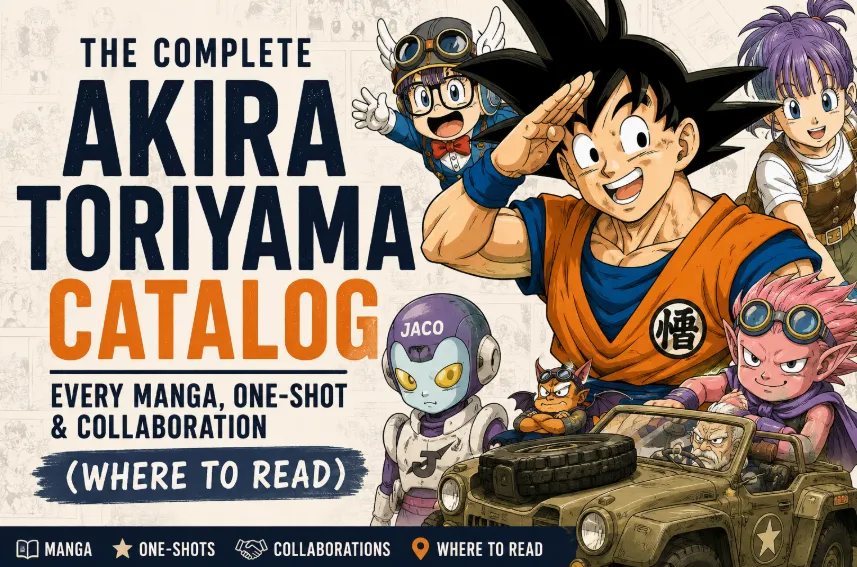
Akira Toriyama is best known as the creator of Dragon Ball, but his influence on manga extends far beyond a single global hit. Over a career spanning several decades, he produced a remarkably diverse body of work that includes comedy-focused gag manga, sci-fi adventures, experimental one-shots, and high-profile collaborations with other major creators and franchises. From his early breakout series Dr. Slump, which established his signature humor and visual style, to later works like Sand Land and Jaco the Galactic Patrolman, Toriyama consistently demonstrated an ability to blend sharp comedic timing with imaginative world-building in both long-form and short-form storytelling.
Beyond his serialized manga, he also contributed a wide range of short stories, many of which are collected in official volumes such as Manga Theater and Mankanzenseki, alongside character design work for iconic video game franchises like Dragon Quest and Chrono Trigger.
This guide provides a complete catalog of Akira Toriyama’s manga, one-shots, and collaborations, while also serving as a practical reading roadmap that shows where to read each work legally today, whether you are a longtime fan looking to explore deeper cuts or a newcomer trying to navigate his extensive creative legacy.
The Complete Akira Toriyama Catalog: Overview
Below is the complete, structured overview of Akira Toriyama’s works, organized into five clear categories for readability and SEO clarity. This framework separates long-form manga, short serialized works, official short story collections, collaborations, and rare or uncollected materials.
🟦 A. Full Serialized Manga (Long-form Works)
These are Toriyama’s primary serialized manga series, including his longest-running and most influential works that define his career.
| Title | Year | Type | Notes | Where to Read |
|---|---|---|---|---|
| Dr. Slump | 1978–1984 | Comedy / Sci-fi gag manga | Toriyama’s breakout series that established his signature humor and visual style | VIZ Media |
| Dragon Ball | 1984–1995 | Action / Adventure / Battle shonen | His most influential global hit and defining work | VIZ Media / Manga Plus (select regions) |
| Dragon Ball Super | 2015–present | Action / Battle shonen | Continuation of Dragon Ball story based on Akira Toriyama’s original concept and supervision, illustrated by Toyotarou | VIZ Media / Manga Plus (select regions) |
🟨 B. Short Serialized Works (Single-volume or Short Runs)
These works are shorter serialized manga that fall between full series and one-shot stories. They are typically published as single volumes and showcase Toriyama’s experimentation with compact storytelling.
| Title | Year | Type | Notes | Where to Read |
|---|---|---|---|---|
| Sand Land | 2000 | Desert adventure / sci-fi | Post-apocalyptic compact story later adapted into anime and game | VIZ Media |
| Jaco the Galactic Patrolman | 2013 | Sci-fi comedy | Includes narrative elements loosely connected to Dragon Ball lore | VIZ Media |
| Kajika | 1998 | Fantasy adventure | One-volume serialized story about a cursed boy seeking redemption | Amazon (Physical volumes) |
| Cowa! | 1997 | Fantasy comedy | Monster-themed adventure with lighthearted storytelling | |
| Neko Majin series | 1999–2005 | Parody / gag manga | Self-parody series set in a Dragon Ball-like universe | Amazon (Physical volumes) |
| Kintoki | 2010 | One-shot / pilot manga | A rare Toriyama solo experimental short intended as a potential series pilot, showcasing his late-career storytelling style | Amazon (Physical volumes) |
🟨 C. Official Short Story Collections (One-shots & Anthologies)
This section includes officially published collections of Toriyama’s short stories. These works are essential for understanding his early creative development, experimental styles, and prototype concepts that later evolved into major series.
| Collection | Year | Content Type | Includes Works | Where to Read |
|---|---|---|---|---|
| Akira Toriyama’s Manga Theater | 1983–1997 (collected) | One-shots / short stories | Wonder Island, Pink, Dragon Boy, The Adventure of Tongpoo, Cashman, Go! Go! Ackman, and other early experimental works | Viz Media |
| Mankanzenseki (Perfect Collection) | 1990s–2000 | Short stories / digital-era works | Japan-only (no full official English edition): Alien X-Peke, Tokimecha, Bubul and the Majin Village, Mahimahi the Lungfish, Hyowtam, and later digitally produced works | Amazon (Physical volumes) |
🟩 D. Collaboration & Design Works
These works highlight Toriyama’s contributions outside traditional manga, including video game character design and collaborations with other major creators. They demonstrate his influence across multiple entertainment industries.
| Title / Project | Year | Type | Role | Notes |
|---|---|---|---|---|
| Dragon Quest series | 1986–present | Video game design | Character & monster designer | One of the most iconic RPG art styles in gaming history |
| Chrono Trigger | 1995 | RPG design | Character designer | Classic Square Enix collaboration |
| Blue Dragon | 2006 | Game / anime | Character designer | Xbox JRPG project with Mistwalker |
| Katsura Akira – Sachie-chan Good!! | 2008–2010 | Manga collaboration | Script (Toriyama) / Art (Katsura Masakazu) | One-shot sci-fi comedy collaboration |
| Katsura Akira – Jiya | 2009–2010 | Manga collaboration | Story (Toriyama) / Art (Katsura Masakazu) | 3-chapter sci-fi comedy series featuring Toriyama-written story and Katsura artwork |
| Cross Epoch (Dragon Ball × One Piece) | 2006 | Crossover manga | Illustrator / collaborator | Collaboration with Eiichiro Oda |
🟥 E. Rare & Uncollected Works
This section includes rare, promotional, and magazine-exclusive works that are not consistently collected in standard volumes. These are primarily of interest to completionists and archival readers.
| Title / Type | Year | Category | Notes |
|---|---|---|---|
| Shonen Jump promotional one-shots (e.g., Dragon Ball Z: Gokū’s Traffic Safety, promotional shorts) | Various | Magazine-exclusive works | Short educational or promotional manga published in Weekly Shonen Jump special campaigns |
| Early experimental shorts (e.g., Awawa World, early submission-era works) | Late 1970s–early 1980s | Pre-debut works | Early creative submissions before official serialization debut, limited archival records |
| Early submission / archival work (e.g., Mysterious Rain Jack) | 1978 | Early submission / archival work | Pre-debut experimental manga reportedly submitted in early career phase; limited archival references and not part of standard commercial collections |
| Magazine-only one-shots (e.g., Mr. Ho, Kennosuke-sama) | Various | Archival manga content | One-shot stories published in magazines but not consistently included in collected volumes |
| Event/campaign manga materials (e.g., Jump anniversary specials) | Various | Promotional content | Limited-run story materials created for Jump events, exhibitions, or special campaigns |
| Uncollected illustration comics (various Jump special pages and hybrid manga illustrations) | Various | Illustrative manga content | Narrative illustration-based works not compiled into standard tankōbon editions |
Akira Toriyama’s Most Important Works Explained
Now that we’ve mapped out Akira Toriyama’s complete catalog, this section takes a closer look at his most important works. These selected titles are not only essential to understanding his creative evolution, but also serve as the best entry points for readers who want to experience his storytelling firsthand.
🐉 Dragon Ball (1984–1995)
Where to Read: VIZ Media
Overview: Dragon Ball is Akira Toriyama’s most influential and globally recognized manga series, transforming from a lighthearted adventure story into one of the defining works of the battle shonen genre.
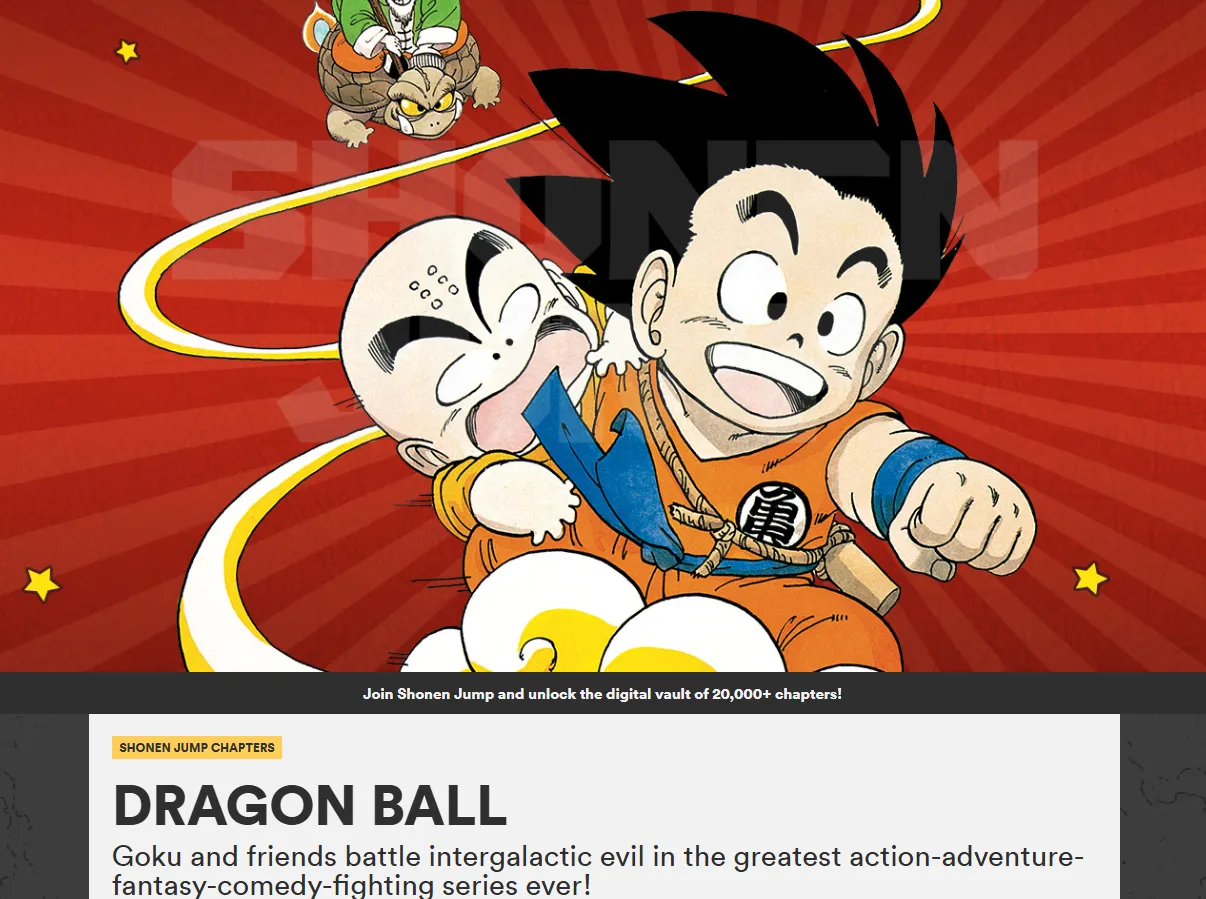
Core Concept: The story follows Son Goku, a young boy with extraordinary strength, as he embarks on a journey across the world to collect the Dragon Balls. Over time, the series expands from comedic adventure and martial arts tournaments into large-scale battles involving alien races, androids, and intergalactic threats.
Why It Matters: Dragon Ball fundamentally reshaped the structure of modern shonen manga. It introduced long-form escalation, iconic transformation milestones, and a character progression system that became a blueprint for countless later series. Its influence extends far beyond manga, impacting global pop culture, anime production standards, and video game design.
Toriyama’s Style: The series is defined by exceptionally clean visual storytelling, highly readable fight choreography, and efficient panel design. Toriyama balances intense action sequences with comedic timing, creating a rhythm that keeps the story fast-paced yet accessible. Character designs are highly distinctive, often relying on simple but memorable silhouettes.
Legacy: Dragon Ball became a worldwide cultural phenomenon, inspiring generations of manga artists and animators. It remains one of the best-selling manga series of all time and continues to influence new adaptations, including Dragon Ball Super, video games, and global media franchises.
🧪 Dr. Slump (1978–1984)
Where to Read: VIZ Media
Overview: Dr. Slump is Akira Toriyama’s breakthrough manga series, a comedic sci-fi work set in the whimsical Penguin Village. It established his reputation as a leading voice in Weekly Shonen Jump long before Dragon Ball.
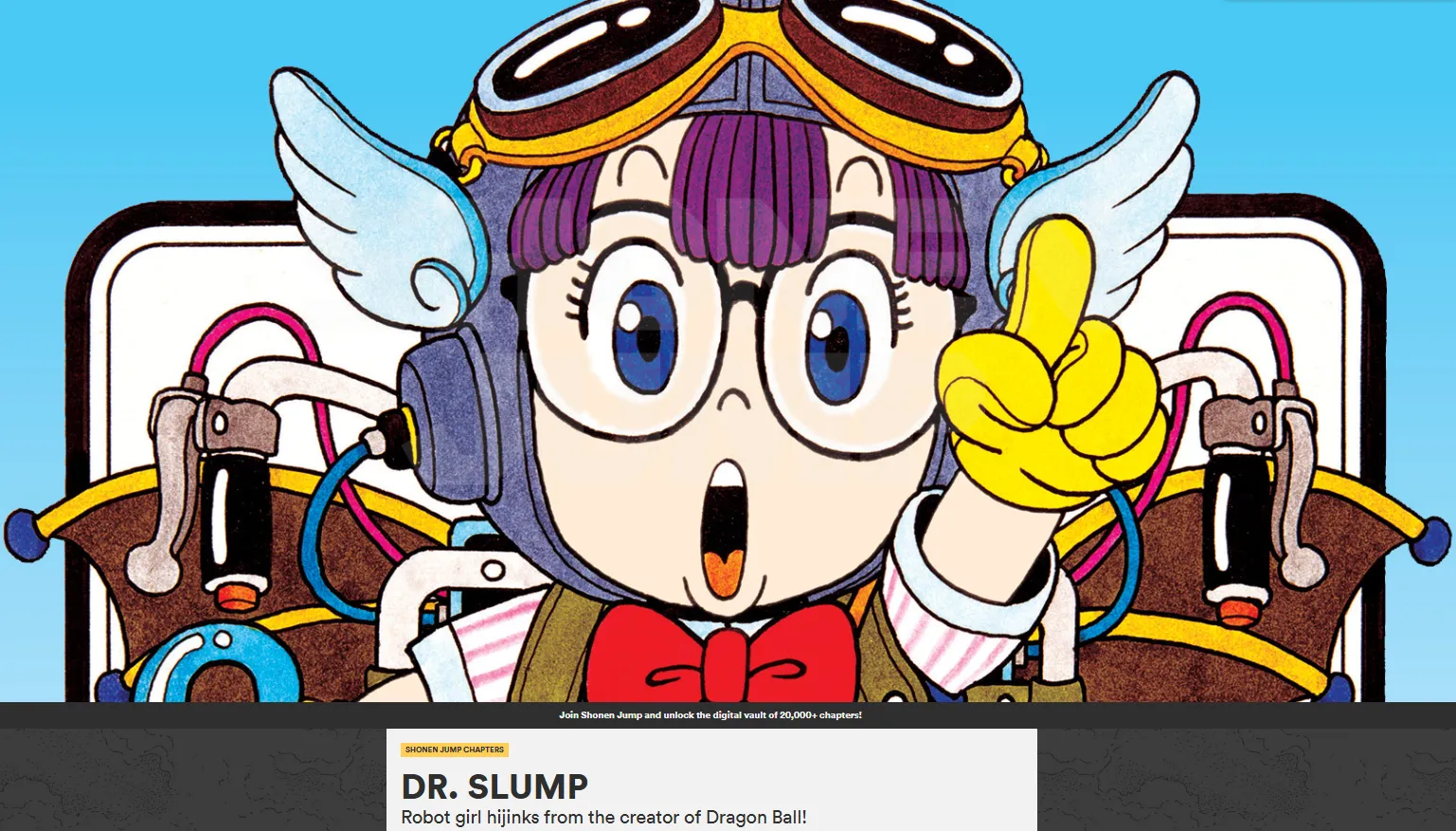
Core Concept: The series follows Senbei Norimaki, an eccentric inventor, and Arale, a highly powerful android girl with a childlike personality. Instead of a continuous plot, the story is structured as episodic comedic adventures filled with absurd situations, parody elements, and sci-fi inventions that constantly break the rules of logic.
Why It Matters: Dr. Slump is the foundation of Toriyama’s creative identity. It introduced the comedic rhythm, visual clarity, and character-driven humor that later became essential elements in Dragon Ball. Many of his signature storytelling habits were first refined in this series.
Toriyama’s Style: The series emphasizes gag comedy, exaggerated facial expressions, and highly readable visual humor. Unlike later battle-focused works, Dr. Slump prioritizes timing, absurdity, and character interaction over narrative progression.
Legacy: Dr. Slump was a massive commercial and cultural success in Japan and established Toriyama as a major manga artist. It remains one of the most influential gag manga series in history and directly shaped the evolution of modern shonen comedy.
📘 Akira Toriyama’s Manga Theater
Where to Read: Viz Media
Overview: This anthology collects Akira Toriyama’s standalone short stories published across Weekly Shonen Jump and other magazines. It represents his experimental phase as a manga artist, where he tested ideas in comedy, adventure, sci-fi, and action formats.
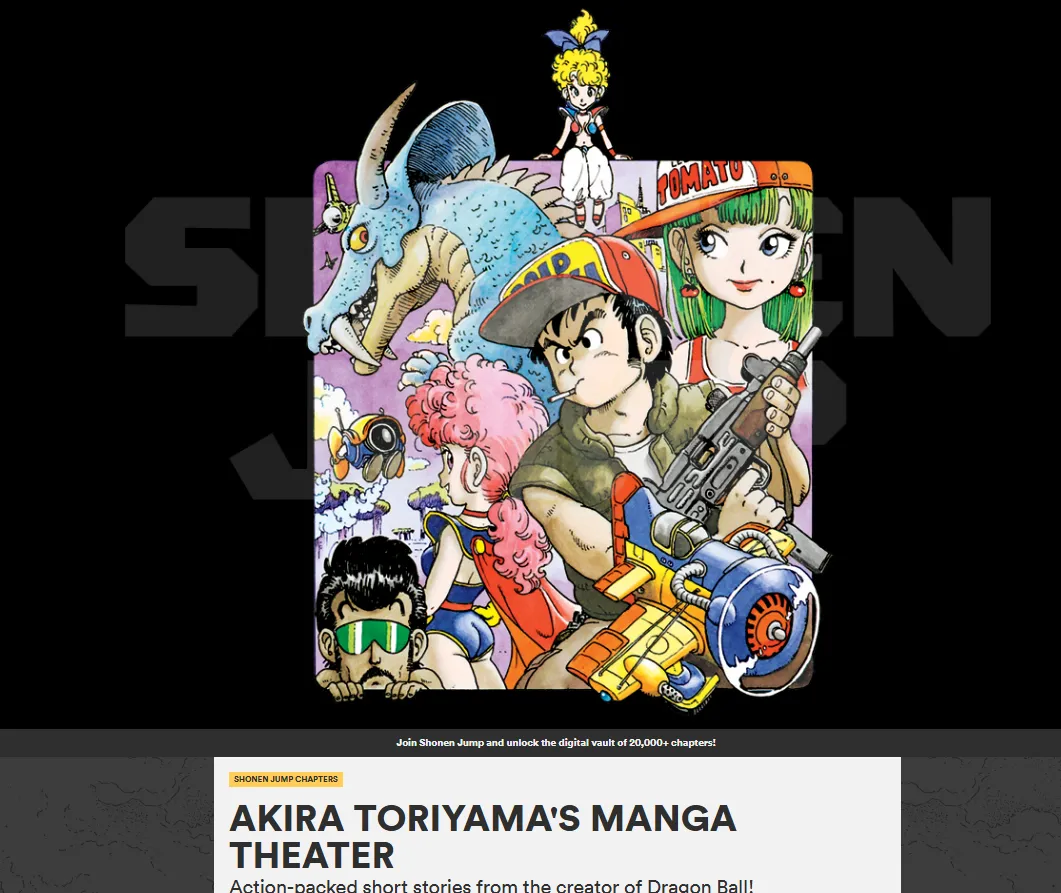
Core Concept: The collection is made up of independent one-shot stories rather than a continuous narrative. Many of these works explore prototype ideas, character concepts, and storytelling structures that later influenced his serialized works, especially Dragon Ball.
Notable Stories (Selected Works):
To understand the importance of this collection, here are some of its most notable entries:
-
Dragon Boy – A fantasy adventure often considered a conceptual predecessor to Dragon Ball
-
Pink – A comedic action story blending crime and sci-fi elements
-
The Adventure of Tongpoo – A sci-fi adventure that later influenced capsule technology concepts
-
Mr. Ho – A comedic short highlighting Toriyama’s gag storytelling style
-
Cashman: Saving Soldier – A parody-style hero story with financial satire elements
-
Go! Go! Ackman – A darker comedic action series about a child demon assassin
Why It Matters: This collection is crucial for understanding how Toriyama developed his storytelling language. Many ideas seen in Dragon Ball—including adventure structure, comedic pacing, and visual readability—can be traced back to these early experiments.
Toriyama’s Style: The stories demonstrate a wide range of tonal experimentation, from pure gag comedy to sci-fi adventure. Across all works, Toriyama’s emphasis on visual clarity and expressive character design remains consistent.
Legacy: Manga Theater is widely regarded as one of the best entry points into Toriyama’s early career. It provides direct insight into the evolution of his artistic identity and the foundation of his later global success.
🏜 Sand Land (2000)
Where to Read: VIZ Media
Overview: Sand Land is a short but highly refined action-adventure manga set in a vast desert world where water has become extremely scarce. Despite its compact length, it delivers a complete and self-contained narrative with strong world-building and a clear thematic focus.
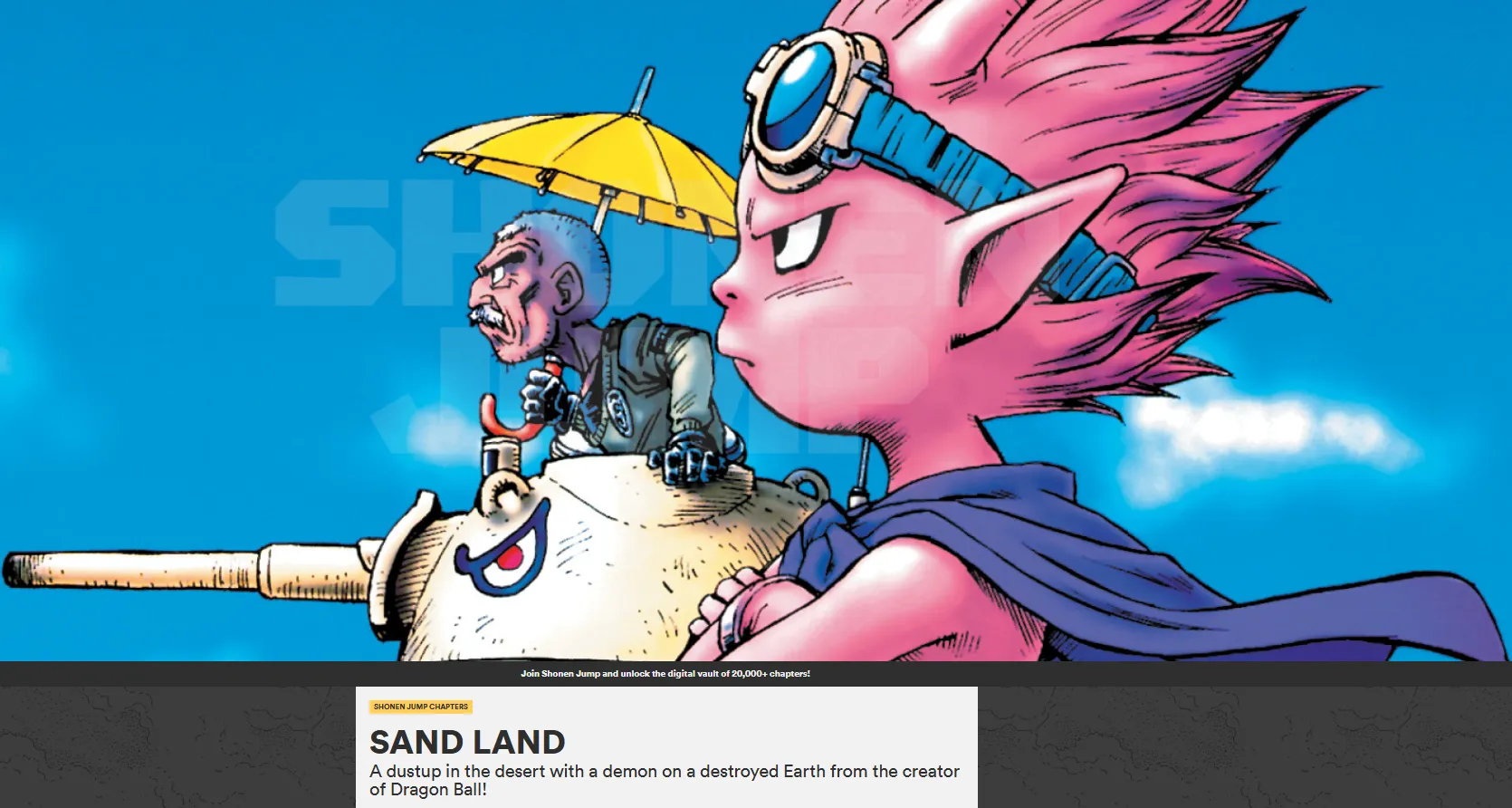
Core Concept: The story follows Beelzebub, a demon prince, who teams up with a human sheriff named Rao in search of a hidden water source. Their journey takes them across a harsh desert landscape controlled by corrupt forces, blending adventure, action, and subtle humor.
Why It Matters: Sand Land represents a major shift in Toriyama’s later career, showcasing his ability to tell complete, tightly structured stories within a limited page count. It highlights his move toward minimalist storytelling while maintaining strong visual clarity and world-building efficiency.
Toriyama’s Style: The manga features simplified yet highly expressive character designs, clear environmental storytelling, and fast narrative pacing. Compared to his earlier works, it places more emphasis on atmosphere and thematic cohesion than on long-form progression.
Legacy: Although initially a lesser-known title compared to Dragon Ball, Sand Land has experienced renewed attention through modern adaptations, including anime and game projects. It is now widely recognized as one of Toriyama’s most polished late-career works.
🚀 Jaco the Galactic Patrolman (2013)
Where to Read: VIZ Media
Overview: Jaco the Galactic Patrolman is a sci-fi comedy manga centered on an eccentric Galactic Patrol officer who arrives on Earth on a seemingly routine mission. Despite its light tone, the series plays an important role in connecting Toriyama’s broader narrative universe.
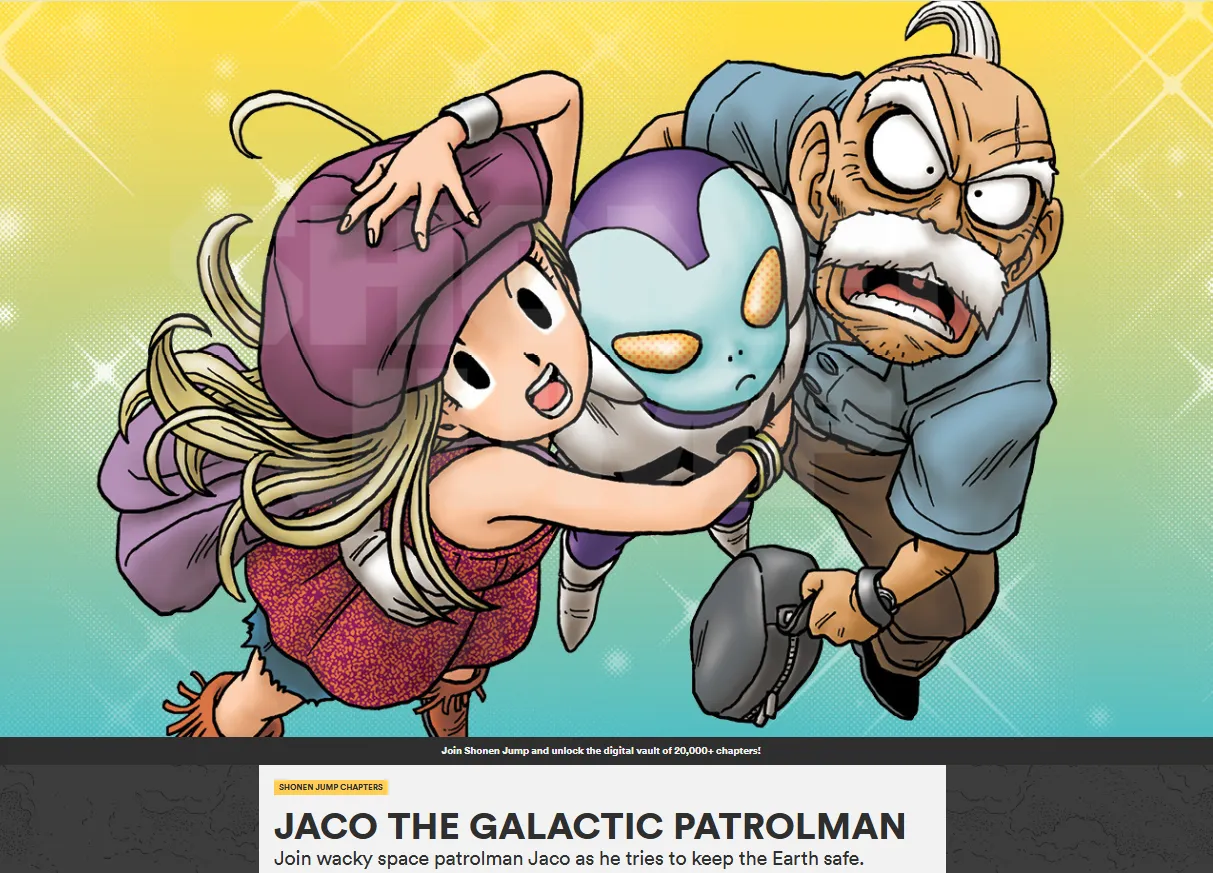
Core Concept: The story follows Jaco, a self-proclaimed elite space officer who crash-lands near Earth while pursuing his mission. He encounters Omori, an elderly scientist, and becomes entangled in a small-scale adventure that gradually reveals deeper ties to the wider Dragon Ball universe timeline.
Why It Matters: While modest in scale, Jaco the Galactic Patrolman is significant because it expands and retroactively connects elements of the Dragon Ball universe. It also includes a bonus chapter that directly links to the origins of Son Goku, making it an important lore bridge within Toriyama’s body of work.
Toriyama’s Style: The series features lightweight storytelling, clean comedic pacing, and simplified sci-fi aesthetics. It prioritizes character interaction and humor over complex plot structures, aligning with Toriyama’s later minimalist approach.
Legacy: Jaco the Galactic Patrolman serves as a narrative extension of the Dragon Ball universe while also functioning as one of Toriyama’s final major manga works. It is often viewed as a subtle epilogue to his long-form storytelling career.
Recommended Reading Order: Where Should You Start?
Akira Toriyama’s works span different tones, formats, and eras, so the best way to approach his massive catalog depends on what kind of reader you are. Below are three tailored entry paths to help you explore his universe in a structured, cost-effective way.
🟢 The Shonen Legend Path (For Complete Beginners)
If you have never experienced Akira Toriyama's work before, you need to start with the foundational pillars that shook the world.
-
Dragon Ball — Read from the very beginning to experience his unparalleled adventure pacing, panel design, and comedic martial arts.
-
Dr. Slump — Dip your toes into Penguin Village to understand his absurd, pop-art slapstick comedic foundation.
🎯 Why it works: This is the essential gateway. It gives you the clearest, most well-rounded picture of his global cultural impact and his core creative identity.
🟣 The Bite-Sized Masterpiece Path (For Fast & Fresh Insights)
If you have already watched or read Dragon Ball and want to experience Toriyama’s pure, short-form storytelling efficiency without committing to a massive 42-volume epic:
-
Sand Land — A single-volume masterclass. It features incredible vehicle designs, a tight plot, and a beautifully self-contained sci-fi story.
-
Akira Toriyama’s Manga Theater — Flip through this premium hardcover to read wild, experimental short stories like Dragon Boy (the original prototype for Goku) and Pink.
🎯 Why it works: Perfect for busy readers. It proves that Toriyama didn't need hundreds of chapters to build a memorable world, showcasing his peak minimalist storytelling.
🔵 The Chronological Path (For Manga Historians)
If you want a front-row seat to one of the greatest creative journeys in comic history, watch his artistic development, panel layouts, and character design evolution in the exact order they happened:
-
Dr. Slump (1980) — The comedic genesis.
-
Akira Toriyama’s Manga Theater (1980s–1990s) — The sandbox where he prototyped his upcoming action tropes.
-
Dragon Ball (1984–1995) —The multi-decade global peak of shonen action.
-
Sand Land (2000) — The transition to digital mastery and tight pacing.
-
Jaco the Galactic Patrolman (2013) — The ultimate loop back into the deep lore of his broader universe.
🎯 Why it works: This route shows how his style beautifully evolved from dense, rounded 1980s gag comedy to razor-sharp shonen martial arts, and finally to modern minimalist sci-fi.
Frequently Asked Questions (FAQ)
1. Is Dragon Ball the best place to start with Akira Toriyama’s works?
Yes. Dragon Ball is the most accessible and globally recognized entry point. It introduces Toriyama’s core strengths—clear visual storytelling, character-driven progression, and a balance of comedy and action—making it the ideal starting point for most readers.
2. Do I need to read Dr. Slump before Dragon Ball?
No, it is not required. However, reading Dr. Slump first can help you understand Toriyama’s comedic roots and how his storytelling style evolved before he shifted toward long-form action storytelling in Dragon Ball.
3. What is Akira Toriyama’s Manga Theater?
Akira Toriyama’s Manga Theater is a collection of his one-shot stories published across different periods of his career. It includes early experimental works like Dragon Boy and Pink, many of which helped shape ideas later used in Dragon Ball.
4. Is Dragon Ball Super fully written by Akira Toriyama?
Dragon Ball Super is based on story concepts by Akira Toriyama, but the manga adaptation is illustrated by Toyotarou. Toriyama acts primarily as a story supervisor rather than the sole author.
5. What is Akira Toriyama’s most underrated work?
Many readers consider Sand Land and Jaco the Galactic Patrolman to be underrated. Both are shorter works that showcase his ability to tell complete stories with minimal page counts and strong world-building efficiency.
6. Are all of Akira Toriyama’s short stories collected in one book?
No. While Manga Theater collects many of his major one-shots, other works appear in separate collections such as Mankanzenseki or remain in magazine-only publications and promotional materials.
7. Where can I look at Akira Toriyama’s iconic video game artwork?
Since his game art (for Dragon Quest, Chrono Trigger, and Blue Dragon) consists of character designs and illustrations rather than sequential manga panels, they are not included in his manga anthologies. Instead, the best legal way to view these masterpieces is through official premium art books published by VIZ Media, most notably Dragon Quest Illustrations: 30th Anniversary Edition and Akira Toriyama: Dragon Ball A Visual History.
8. Which manga short is the official prototype for Dragon Ball?
The most direct prototype of Dragon Ball is “Dragon Boy” (1983), a two-part short story that closely mirrors the early structure of the series. It follows a young martial artist named Tanton who escorts a princess to her homeland, accompanied by a small dragon hatched from a crystal-like sphere. Another important early influence is “The Adventure of Tongpoo” (1983). While not a direct prototype in terms of story, it introduced early sci-fi concepts such as capsule-style storage technology, which later evolved into the iconic Hoi-Poi Capsules in Dragon Ball. It also features character design elements that influenced early versions of Bulma. Both stories are included in Akira Toriyama’s Manga Theater collection.
9. Are there any completely uncollected or “lost” Akira Toriyama manga?
Yes, a small number of extremely early and rare works exist outside standard commercial collections. Among the most notable are: Awawa World (1977) and Mysterious Rain Jack (1978). These works were not released in mainstream manga volumes. Instead, they were primarily distributed through limited archival materials and fan club publications, such as the Bird Land Press newsletter during the early era of Toriyama’s career. Today, surviving copies of these materials are considered rare collector’s items and are not widely accessible through official retail channels.
Conclusion: The Timeless Legacy of Akira Toriyama
Akira Toriyama’s influence on global pop culture is often defined by the overwhelming success of Dragon Ball, but a closer look at his complete catalog reveals a far more versatile and experimental creator. Across decades of work, his manga consistently balances high-energy action with lighthearted comedy, supported by a distinctive commitment to clarity, readability, and visual storytelling.
From the slapstick humor of Dr. Slump, to the tightly structured sci-fi world of Sand Land, to the experimental one-shots in Akira Toriyama’s Manga Theater, and even his iconic character designs for franchises like Dragon Quest, Toriyama’s creative range extends far beyond a single genre or series.
For modern readers, exploring his full body of work is more than a nostalgic journey—it is a practical masterclass in pacing, composition, and world-building. Each title offers a different entry point into the same creative philosophy: make storytelling fun, accessible, and visually immediate.
While his career as a creator has come to an end, the worlds he built remain open, endlessly readable, and still influential across manga, animation, and game design. By following the reading paths outlined in this guide, readers can experience how one artist’s imagination fundamentally reshaped the language of visual storytelling.