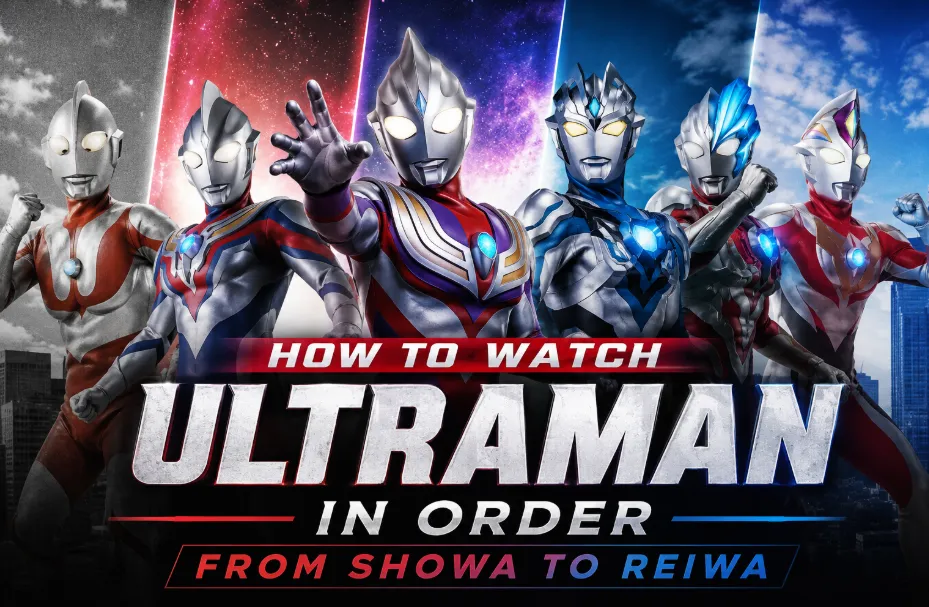
If you want to dive into the Ultraman franchise in 2026 but find yourself completely overwhelmed by the endless maze of chronologies, you are not alone. As one of the most influential superhero IPs in Japanese Tokusatsu (live-action) history, Ultraman hits its monumental 60th anniversary (1966–2026) this year. With 32 major TV series, dozens of feature films, and spin-offs spanning six decades, jumping in blind can feel as daunting as taking on a planet-destroying Kaiju.
The biggest hurdle for newcomers is understanding that Ultraman does not follow a single, linear storyline. Instead, it operates across a sprawling multiverse. Because of this, trying to watch all 32 shows in a strict, chronological release order from 1966 to 2026 is a first-class ticket to burnout. To save your sanity, this guide throws away dead-end filler. Here is how to watch Ultraman in order using the two most efficient and rewarding watch orders available in 2026, mapping the absolute best of the franchise from the Showa origins to the current Reiwa frontier.
📌 Your 2026 Watch Order Roadmap
Short on time? Find your current viewing goal below and skip straight to your customized timeline:
-
"I want a complete macro chronological view of the eras." ➡️ Go to Section 1: The Ultimate TV & Film Landscape.
-
"I want to watch the 5 best standalone shows in order." ➡️ Go to Section 3: Watch Order #1 — The Standalone Masterpieces Route.
-
"I want the interconnected, Marvel-style sequential lore." ➡️ Go to Section 4: Watch Order #2 — The M78 Sovereign Timeline.
Section 1: The Ultimate TV & Film Landscape: From Showa to Reiwa
To truly understand Ultraman, you need to understand the five major historical blocks that define the live-action franchise. Here is the complete chronological map:
I. The Showa Era (1966–1981): The M78 Foundations
-
The Core Titles: Ultra Q, Ultraman (1966), Ultraseven, The Return of Ultraman, Ultraman Ace, Ultraman Taro, Ultraman Leo, and Ultraman 80.
-
The Vibe: Retro-futurism, physical miniature cities, and monster-of-the-week sci-fi storytelling. This era birthed the "Land of Light" and the legendary "Ultra Brothers."
-
🚨 Pro-Viewer Advice: Modern beginners can safely skip this entire vintage era. If you just want a taste of the historic roots, watch the first three episodes of the original 1966 Ultraman and the fan-favorite standalone episodes of Ultraseven.
II. The Heisei Golden Age (1996–2006): The Renaissance
-
The Core Titles: Ultraman Tiga, Ultraman Dyna, Ultraman Gaia, Ultraman Cosmos, Ultraman Nexus, Ultraman Max, Ultraman Mebius, and Ultra Seven X.
-
The Vibe: Groundbreaking CGI integration, deep serialized narratives, darker psychological themes, and the introduction of "Form Changes" (Ultras changing colors to gain speed or strength).
-
🚨 Pro-Viewer Advice: This is the childhood peak for millions of global fans. If you choose only one vintage series to watch, make it the masterpiece Ultraman Tiga.
III. The Zero & Belial Film Era (2007–2012): The Cinematic Rescue
-
The Core Titles: Mega Monster Battle: Ultra Galaxy Legend (2009 Movie), Ultraman Zero: The Revenge of Belial (2010 Movie), and Ultraman Saga (2012 Movie).
-
The Vibe: Due to a temporary TV hiatus, Tsuburaya Productions focused its budget entirely into high-concept theatrical movies. This era introduced the franchise's ultimate modern poster boy, Ultraman Zero, and his fallen nemesis, Ultraman Belial.
-
🚨 Pro-Viewer Advice: Do not skip this era! Even though there is no standard weekly TV show here, these movies serve as the literal narrative bridge between classic lore and the modern universe.
IV. The New Generation Heroes (2013–2018): The Toy & Fusion Boom
-
The Core Titles: Ultraman Ginga, Ginga S, X, Orb, Geed, and R/B.
-
The Vibe: High-energy martial arts choreography, fast-paced 25-episode seasons, and collectible gimmicks where heroes fuse the powers of legendary predecessors to transform.
-
🚨 Pro-Viewer Advice: This is the peak era for fast, explosive fun. Ultraman Orb and Ultraman Geed are the undisputed twin peaks here.
V. The Reiwa New Frontier & 60th Anniversary Era (2019–2026)
-
The Core Titles: Ultraman Taiga, Z, Trigger, Decker, Blazar, Arc, Omega (2025), and the brand-new Teo (2026).
-
The Vibe: Film-level cinematography, peak Tokusatsu visual effects, and a brilliant narrative mix ranging from amnesiac sci-fi mysteries (Omega) to experimental blue giant protagonists (Teo).
-
🚨 Pro-Viewer Advice: This is the most technically advanced and accessible era for a modern 2026 audience. If you want to watch the latest content live with the community, this is your destination.
Section 2: 2026 OFFICIAL BLOCKBUSTER: Ultraman Teo (60th Anniversary Project)
Official Premiere: July 4, 2026 (Every Saturday at 9:00 a.m. JST)
Global Streaming: Free on the Official Ultraman YouTube Channel with simultaneous multi-language subtitles.
The Hero: Ultraman Teo, the long-awaited Blue Giant of Light.
The Human Host: Ibuki Mitsuishi (played by Aoi Iwasaki), a 3rd-year veterinary college student at Meishin University who is actually a lonely alien refugee from the destroyed Planet H12.
To celebrate 60 years of the Ultra Universe (1966–2026), Tsuburaya Productions is shaking up the franchise with a fresh, deeply emotional perspective. Ultraman Teo explores universal themes of how different species—humans, aliens, and kaiju—overcome deep suspicion to work together. Directed by Takashi Ninomiya with tokusatsu direction by Takanori Tsujimoto (Ultraman Arc), this is the biggest event in the Tokusatsu community this year.
July 4th is your ultimate historical window to jump into the fandom live. Pick one of our curated watch orders below right now to get fully caught up on the multiverse before Teo lands!
Section 3:【Watch Order #1】 The Standalone Masterpieces Route
If you want to experience the absolute pinnacle of Ultraman without doing hours of historical homework, follow this curated order. These five shows require zero prior knowledge and are sequenced from the most modern, accessible entry point down to the older, lengthier classics:
| Series (Recommended Order) | Era | Length | Why It's Mandatory (The Vibe) | Entry Barrier |
| 1. Ultraman Blazar (2023) | Reiwa | 25 Eps | Start here. A grounded, tactical kaiju-hunting military drama featuring a wild, untamed hero and film-level visual effects. | None. Perfect as your first-ever show. |
| 2. Ultraman Z (2020) | Reiwa | 25 Eps | The undisputed modern crown jewel. Packed with incredible giant robot battles, unmatched martial arts choreography, and immense heart. | Low. Legacy cameos are seamlessly explained. |
| 3. Ultraman Orb (2016) | New Gen | 25 Eps | Driven by a mysterious, harmonica-playing wandering protagonist and one of the greatest anti-hero rivalries in Tokusatsu history. | Low. The power-borrowing mechanic is easy to grasp. |
| 4. Ultraman Geed (2017) | New Gen | 25 Eps | A high-stakes Shakespearean family tragedy where the clone of the universe's ultimate villain must fight to become a true hero. | Medium. Must watch the 2009 Ultra Galaxy movie first. |
| 5. Ultraman Tiga (1996) | Heisei | 52 Eps | Conclude your journey with the immortal classic. The definitive masterpiece that saved and revolutionized the franchise with deep philosophical lore. | None. Takes place in a completely isolated universe. |
Section 4:【Watch Order #2】 The M78 Sovereign Timeline
If you love massive, multi-generational storytelling where superheroes team up, share the same hometown, and fight recurring galactic villains, this is your sequential route. Think of this as the "Marvel Cinematic Universe" of Tokusatsu. You cannot watch these series randomly because the characters are deeply connected as teachers, students, fathers, and sons. Follow this strict chronological order:
-
Step 1: The Showa Roots (1966–1967) ➡️ Watch the first 3 episodes of the original Ultraman (1966) and the standalone sci-fi episodes of Ultraseven to understand where the "Ultra Brothers" lore began.
-
Step 2: Ultraman Mebius (2006) ➡️ The bridge show. It features a rookie Ultra being trained by the Showa veterans, masterfully connecting 40 years of retro history into a sleek, modern digital era.
-
Step 3: Mega Monster Battle: Ultra Galaxy Legend (2009 Movie) ➡️ Do not skip this film! It is the literal catalyst for all modern lore, introducing the franchise's ultimate modern poster boy, Ultraman Zero, and the galactic tyrant, Ultraman Belial.
-
Step 4: Ultraman Geed (2017) ➡️ The ultimate family drama. The main hero, Geed, discovers he is the biological son of the evil Belial, while Ultraman Zero acts as his on-screen mentor.
-
Step 5: Ultraman Z (2020) ➡️ The story comes full circle. Ultraman Z arrives as the clumsy, hot-blooded disciple of Ultraman Zero, delivering the peak of modern M78 storytelling.
Section 5: Navigating Modern Ultraman Movies
A distinctive feature of the modern Ultraman franchise is that the 25-episode TV run often represents only part of the full story. While each series typically resolves its core conflict within its final episode, many entries are later expanded through theatrical films or specials that serve as narrative extensions.
Rather than being simple spin-offs, these films often function as epilogues that deepen character arcs, introduce final transformations, or expand on unresolved cosmic threads established in the series.
In several cases, they also feature the symbolic “Baton Pass,” a recurring motif where veteran Ultras pass the responsibility of protecting Earth to the next generation. To experience the complete story in modern entries, it is highly recommended to watch the companion films after their respective series:
-
Ultraman Orb ➡️ Watch: Ultraman Orb The Movie: Lend Me the Power of Bonds!
-
Ultraman Geed ➡️ Watch: Ultraman Geed The Movie: Connect the Wishes!
-
Ultraman Trigger ➡️ Watch: Ultraman Trigger: Episode Z
-
Ultraman Decker ➡️ Watch: Ultraman Decker: Finale: Beyond the Journey...
-
Ultraman Blazar ➡️ Watch: Ultraman Blazar the Movie: Tokyo Kaiju War
-
Ultraman Arc ➡️ Watch: Ultraman Arc The Movie: The Clash of Light and Evil (2025)
Note: While many modern Ultraman entries include theatrical or special epilogue content, not every series follows a fixed movie format. For example, some entries may conclude through TV episodes, streaming specials, or other media forms depending on production plans.
Section 6: Time-Saving Binging Rules & Skip Guide
Because Ultraman historically followed a weekly broadcast format, seasons naturally include a mix of critical lore progression, localized monster encounters, and budget-saving recaps. While a completionist watch offers the richest worldbuilding, viewers who are short on time in 2026 can utilize these battle-tested rules to streamline their binge.
Rule 1: The "Mid-Season Clip Show" Reality Check
Modern series regularly insert one or two "Recap Special" or "Summary" episodes right around Episode 13 or 14. These are designed strictly to give the heavy VFX and production crews a scheduling breather.
-
The Action Plan: Skip them instantly. They consist entirely of characters sitting in a command room reviewing old footage. They contain zero new plot developments or character growth.
Rule 2: The Ultraman Tiga "Core Storyline" Checklist
Ultraman Tiga is a Heisei masterpiece, but its classic 52-episode hybrid structure means it is heavily populated by standalone "monster-of-the-week" sci-fi anomalies. If you want to experience the legendary narrative arc without getting bogged down by 90s television pacing, use this precision skip guide:
-
The Sovereign Lore (Must Watch):
-
Episodes 1–3: The Essential Genesis & Form Changes.
-
Episodes 18–20: The Darker Psychological Peak & Prophecy.
-
Episodes 25–26: The Kyrieloid Sovereign Threat.
-
Episodes 43–44: The Evil Tiga Tragedy (Critical Lore).
-
Episodes 49–52: The Final Gatanothor Ancient Darkness Arc.
-
-
The Safe-to-Skip Fillers (Bypass Comfortably): Episodes 12, 23, 29, 35, and 41. These are self-contained stories that do not contribute directly to the overarching narrative payoff or GUTS character development.
-
Note on Episode 45: While technically standalone, Episode 45 ("The Eternal Life") introduces the ancient Gijera plant and carries immense philosophical weight regarding humanity's downfall. Skip it only if you are strictly racing to the finale.
-
-
The Casual Rest: Treat the remaining episodes as premium standalone sci-fi shorts. Watch them at your own leisure when you have the time!
Rule 3: Best Practice Strategic Binging
When tackling any era, never skip single episodes blindly based on online rumors. Instead, adopt this professional viewing habit: Always commit to multi-episode arcs (often split into Part 1 and Part 2 conclusions), prioritize any episode that introduces a new transformation gimmick or major rival, and treat standalone planet-of-the-week encounters as optional side-quests.
Section 7: 2026 Global Streaming Tracker: Where to Watch Ultraman Legally
Being a fan in 2026 means you have arrived at the absolute golden age of international Tokusatsu streaming. You no longer need to rely on sketchy torrents or sketchy fan-subs. Tsuburaya Productions has spent the last few years aggressively making Ultraman universally accessible. Depending on your geographical region, here is your definitive 2026 streaming cheat sheet:
1. The Global Hub: YouTube (Free & Legal)
For all modern Reiwa releases—including the upcoming global premiere of Ultraman Teo on July 4, 2026—the official Ultraman YouTube Channel is your absolute go-to destination.
-
What you get: Ultraman Blazar, Ultraman Z, Ultraman Arc, and the weekly live-stream of Ultraman Teo.
-
The Vibe: New episodes air every Saturday morning, completely free, uploaded within hours of the Japanese broadcast, packed with high-quality English, Spanish, Portuguese, and multi-language official subtitles.
2. North America & Europe: Tubi, Pluto TV
If you live in Western regions and want to explore the historical roots (Showa, Heisei, and New Gen classics), Shout! Factory’s licensing deals have made streaming incredibly seamless.
-
Tubi (Free on Demand): This is your absolute gold standard for binging classic series. Tubi hosts pristine, fully remastered HD versions of Ultraman (1966), Ultraseven, Ultraman Tiga, Ultraman Leo, and Ultraman Geed. Simply type "Ultraman" into the Tubi search bar, and the entire catalog is ready to stream instantly.
-
Pluto TV (TokuSHOUTsu Channel): Shout! Studios runs a dedicated 24/7 linear Tokusatsu streaming channel called TokuSHOUTsu across Pluto TV. If you want to watch live fan marathons or classic Showa/Heisei reruns streaming around the clock with a live community chat, this is your destination.
3. Mainland China & Asia-Pacific: The All-Access Juggernaut
If you are accessing the franchise from Mainland China or the broader APAC region, you have access to the largest digital Ultraman library on Earth.
-
The Mega-Platforms: Bilibili, iQIYI, Tencent Video, and Youku are the gold standard for sheer volume.
-
What you get: They offer almost every single TV series from 1966 to 2026, including rare spin-offs and complete theatrical movie finales. Best of all, they almost always provide dual-audio options: the original nostalgic local dubs or the crisp Japanese audio with immaculate local subtitles.
Frequently Asked Questions (FAQ)
1. Do I need to watch Ultraman in chronological order?
Not necessarily. Unlike linear franchises, Ultraman operates across multiple eras and partially independent timelines. While some entries are connected (especially within the New Generation and Reiwa continuity), many series are designed as standalone stories. If you're a beginner, it’s often better to start with accessible entry points like Ultraman Z or Ultraman Blazar rather than strict chronological order.
2. Do I need to watch Ultraman in release order?
No. Release order is useful for historical understanding, but not required for enjoyment. Many fans instead follow:
-
Era-based viewing (Showa → Heisei → Reiwa)
-
Or beginner-friendly entry points
-
Or standalone modern series first
3. What is the best Ultraman series for beginners?
Some of the most beginner-friendly Ultraman series include:
-
Ultraman Z (modern pacing, strong storytelling)
-
Ultraman Blazar (grounded tone, minimal lore dependency)
-
Ultraman Orb (character-driven, easy to follow)
-
Ultraman Tiga (classic reboot with self-contained universe)
These series do not require extensive knowledge of previous entries.
4. Are Ultraman movies necessary to understand the story?
In many modern entries, films act as narrative extensions rather than standalone side stories. They often expand character arcs, introduce final transformations, or serve as epilogues.
5. What is the fastest way to watch Ultraman?
If you're short on time, a streamlined approach is:
-
Start with a modern entry (Ultraman Z or Blazar)
-
Watch key companion films if you enjoy the series
-
Explore older eras like Tiga or Showa classics later if interested
This approach allows you to experience the best modern storytelling without needing decades of background knowledge.
6. Is Ultraman connected like the Marvel Cinematic Universe?
Partially. Some modern Ultraman series share continuity and recurring characters, especially in the New Generation and Reiwa eras. However, many entries still function as standalone stories, so the franchise is not fully interconnected like the MCU.
7. Are Ultraman, Kamen Rider, and Super Sentai part of the same universe?
No. While Ultraman, Kamen Rider, and Super Sentai are all part of Japan’s “tokusatsu” (live-action special effects) genre, they are completely separate franchises with independent story worlds. They are produced by different companies:
-
Ultraman is produced by Tsuburaya Productions
-
Kamen Rider and Super Sentai are produced by Toei Company
Although there have been occasional crossover-style collaborations in promotional events or special projects, these do not represent a shared canon or unified universe. Each franchise maintains its own continuity, characters, and narrative rules.
Final Thoughts
Ultraman is not a single linear story—it is a multi-era, multi-universe franchise that has evolved for nearly 60 years while constantly reinventing itself for new generations. Because of this structure, there is no single “correct” way to watch it. Some viewers prefer starting from modern entries like Ultraman Z or Blazar, while others enjoy exploring the franchise through its historical eras or interconnected M78 storyline.
The best approach is simply the one that fits your time and interest level. Whether you want a fast entry into modern tokusatsu or a deep dive into decades of sci-fi history, Ultraman offers a flexible viewing experience that can be as simple or as complex as you want it to be. Pick your starting point, follow the heroes that resonate with you, and enjoy one of the longest-running superhero universes in television history.