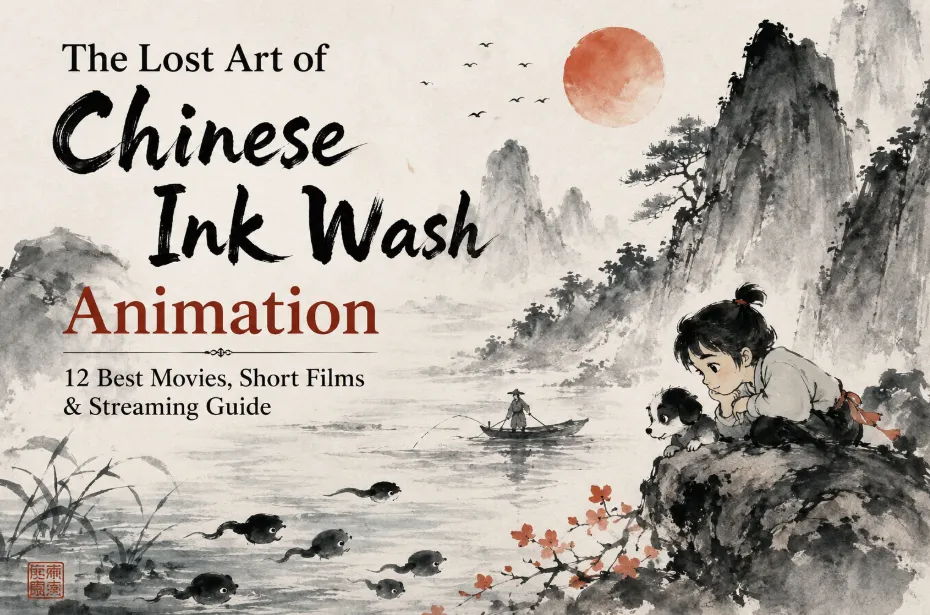
Chinese ink wash animation is often described as “moving Chinese painting.” Instead of clean outlines and fixed colors, it uses ink diffusion on Xuan paper to create fluid, poetic visuals that resemble traditional Chinese landscape paintings brought to life.This rare animation style emerged in the mid-20th century at the Shanghai Animation Film Studio, where artists experimented with combining classical painting techniques and frame-by-frame animation. At its peak, it produced some of the most visually unique works in animation history.
Today, traditional ink wash animation has largely disappeared due to its extreme production demands, but its influence continues through modern ink-inspired films and digital reinterpretations. This guide explores 12 essential ink wash and ink-inspired works, from classical masterpieces to modern revivals, along with their significance and where to watch them in 2026.
What Is Chinese Ink Wash Animation?
Chinese ink wash animation is a traditional animation style that transforms classical Chinese ink painting into moving images. It is defined by three core characteristics:
🎨 1. Ink-Based Visual Technique
It uses ink diffusion on Xuan paper rather than solid outlines, allowing colors and shapes to naturally blend and spread across the surface.
🖌️ 2. Rooted in Chinese Painting Aesthetics
The style is deeply influenced by traditional Chinese landscape painting, where brushwork, empty space, and tonal variation are used to express mood rather than realism.
🎞️ 3. Frame-by-Frame Handcrafted Animation
Each movement is created through painstaking frame-by-frame painting, making the process extremely time-consuming and artistically precise.
⚠️ Why It Became Rare: Due to its high production cost and difficulty to scale compared to modern digital animation, ink wash animation gradually declined after its golden age.
Ink Wash & Ink-Inspired Chinese Animation — Complete Overview
This table provides a quick overview of the 12 essential works covered in this guide, grouped by artistic category, style type, and availability.
| # | Title | Year | Category | Style Type | Importance |
|---|---|---|---|---|---|
| 1 | Baby Tadpoles Look for Their Mother | 1960 | Core Canon | Pure Ink Wash | Masterpiece |
| 2 | The Cowboy’s Flute | 1963 | Core Canon | Pure Ink Wash | Canon |
| 3 | The Deer Bell | 1982 | Core Canon | Pure Ink Wash | Canon |
| 4 | Feelings of Mountains and Waters | 1988 | Core Canon | Pure Ink Wash | Masterpiece |
| 5 | The Monkeys Fish the Moon | 1981 | Experimental | Ink-inspired Cut-out | Classic |
| 6 | The Snipe and the Clam | 1983 | Experimental | Ink + Stop Motion | Award-winning |
| 7 | The Mantis Stalks the Cicada | 1988 | Experimental | Ink-inspired Paper Animation | Classic |
| 8 | The Peach Blossom Spring | 2006 | Modern Revival | Digital Ink Style | Early Experiment |
| 9 | White Bird in a Misty Valley | 2018 | Modern Revival | Indie Ink-style CGI | Indie Revival |
| 10 | Fog Hill of Five Elements | 2020–2023 | Modern Revival | Ink-inspired Action Style | Popular Revival |
| 11 | Yao-Chinese Folktales: Goose Mountain | 2023 | Modern Revival | Ink-inspired Anthology | Viral |
| 12 | Deep Sea | 2023 | Modern Revival | 3D Particle Ink Simulation | Modern Peak |
Part 1: The Purists — Pure Hand-Drawn Ink Wash (1960–1988)
Before pixels and code, there was only the raw alchemy of brush, water, and paper. To step into this golden era is to witness an art form that discarded the hard borders of Western cell animation, choosing instead to let characters breathe and dissolve within the shifting mists of classical Chinese landscapes.
1. Baby Tadpoles Look for Their Mother (1960) — 15 min
Where to Watch: YouTube & Bilibili
The Creators: Formulated by the legendary director Te Wei and art director Tang Cheng at the Shanghai Animation Film Studio (SAFS).
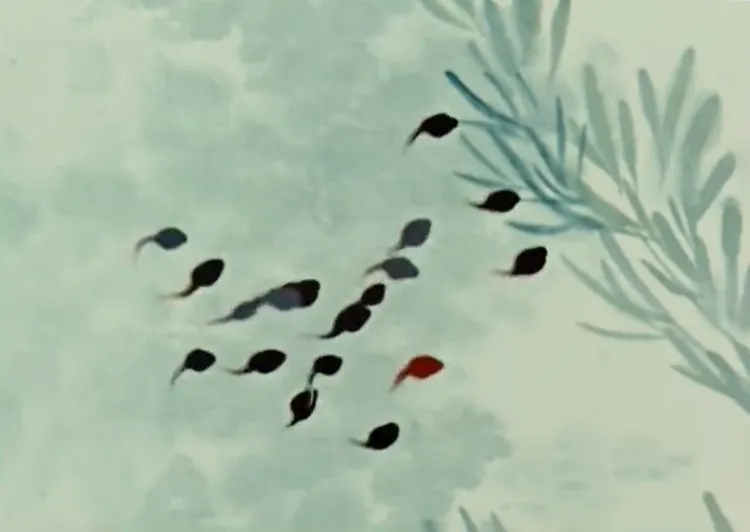
The Legacy: The Big Bang of Chinese animation. It shattered the Western "hard-outline" tradition through innovative techniques combining ink diffusion, paper absorption effects, multi-layer shooting, and frame-by-frame painting on Xuan paper. It received international recognition at major animation and film festivals, helping introduce Chinese ink wash animation to global audiences.
Why It Fits: Based directly on the spontaneous, whimsical brushwork of grandmaster Qi Baishi. This deceptively simple tale of tadpoles introduces the core philosophy of the form: utilizing negative space (Kongbai) not as emptiness, but as an active, breathing presence of water.
Watch If You Like: Finding Nemo re-imagined as an dynamic, living Louvre exhibit.
2. The Cowboy’s Flute (1963) — 20 min
Where to Watch: YouTube & iQIYI
The Creators: Directed by Te Wei and Qian Jiajun, with musical composition by renowned virtuoso Lu Chunling.
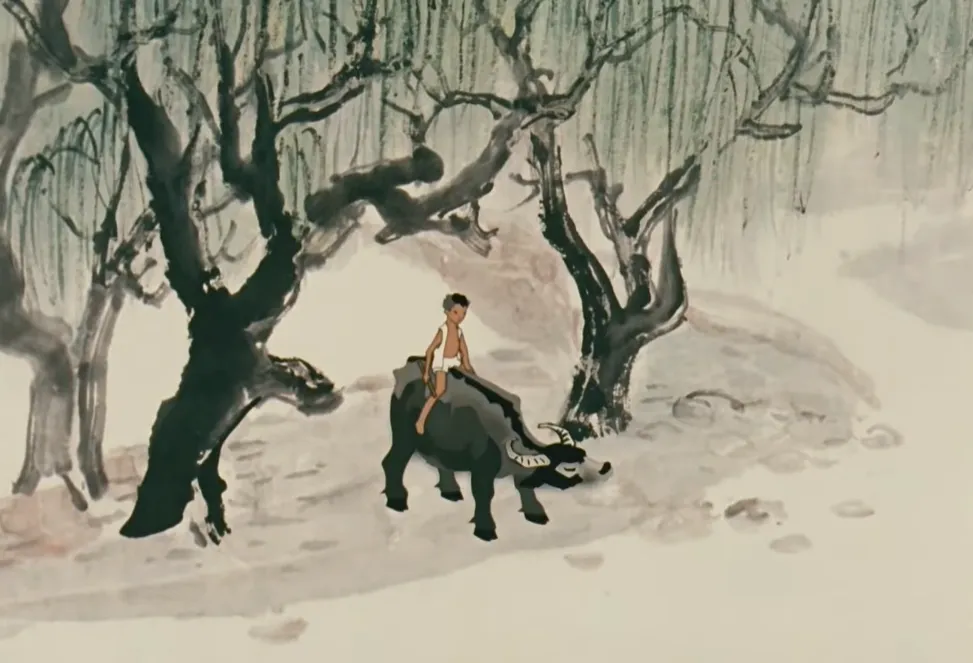
The Legacy: Widely considered by animation historians to be the technical and poetic pinnacle of the traditional ink wash era. It proved that where Where Is Mama? was a technical breakthrough, the medium could achieve profound, symphonic emotional resonance.
Why It Fits: Inspired by the idyllic landscape and water buffalo paintings of Li Keren. The film is completely wordless, relying entirely on a bamboo flute's melody and watercolor gradients to depict the harmony between a boy, his lost ox, and the misty green valleys. The way the ink diffuses into the paper to mimic skin, water, and fog remains unmatched.
Watch If You Like: Pastoral poetry, Studio Ghibli’s quietest landscapes, and wordless storytelling.
3. The Deer Bell (1982) — 20 min
Where to Watch: Youtube & Bilibili
The Creators: Directed by Tang Cheng and Wu Qiang, signaling the grand post-Cultural Revolution revival of SAFS.
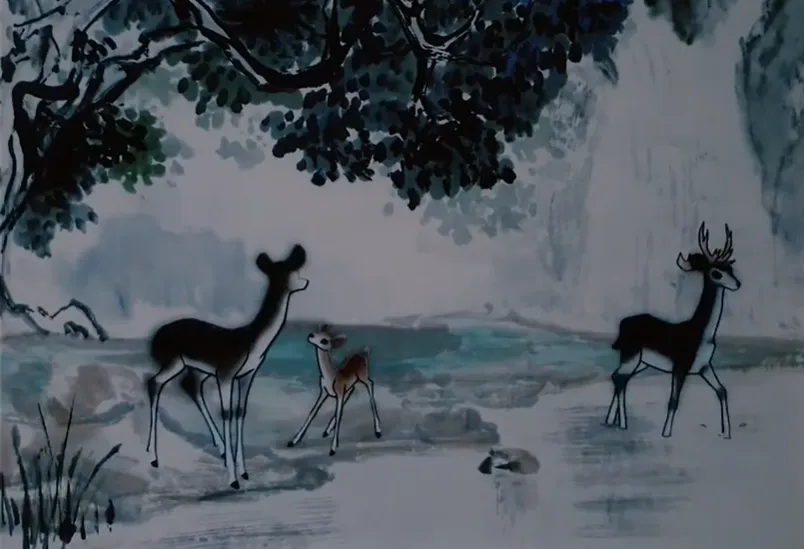
The Legacy: A heartbreakingly tender meditation on love and letting go, following a young girl who rescues a wounded fawn. The color palette breaks from the monochromatic tradition, splashing the screen with vibrant, saturated forest greens and deep, warm autumn oranges.
Why It Fits: Based on the elegant, expressive figure and animal paintings of Cheng Shifa. This short marked a major evolution by introducing highly expressive human characters into the ink wash medium—a feat previously avoided due to the difficulty of keeping human anatomy consistent through bleeding ink blots.
Watch If You Like: Heartwarming wildlife bonds, soft watercolor aesthetics, and bittersweet endings.
4. Feelings of Mountains and Waters (1988) — 19 min
Where to Watch: Youtube & Bilibili
The Creators: Directed by Te Wei, Yan Shanchun, and Ma Kexuan, featuring live-action ink work by master painter Wu Shanming.
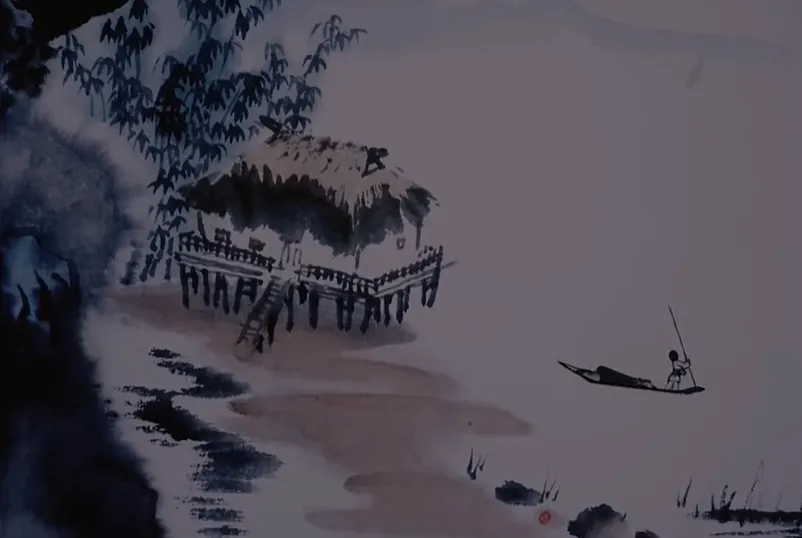
The Legacy: The masterpiece. The summit. The magnificent swan song of traditional animation. In 2006, the Annecy International Animated Film Festival named it among the "100 Greatest Animated Shorts of All Time"—the only Chinese film to ever make the list.
Why It Fits: Heavily influenced by the abstract, melancholic landscape styles of Lin Fengmian. This nearly wordless film follows an aging, ailing Guqin master passing his spiritual and musical lineage down to a young ferry boy. To shoot the film, master painters literally applied raw ink to Xuan paper live under the camera, frame by frame, capturing the entropic spread of ink. It represents the absolute zenith of Xieyi (freehand) philosophical depth.
Watch If You Like: Zen philosophy, live-instrument cinema, and nineteen minutes of pure, artistic surrender.
Part 2: The Avant-Garde — Ink Wash Aesthetics in Paper-Cut Art
As market economies shifted and the staggering costs of pure hand-drawn ink wash became unsustainable, the masters of the Shanghai Animation Film Studio refused to let the aesthetic die. Instead, they pioneered a brilliant avant-garde compromise: blending the organic texture of bleeding ink with the tactical, playful physics of traditional stop-motion puppetry.
5. The Monkeys Fish the Moon (1981)
Where to Watch: Youtube & Bilibili
The Creators: Directed by Zhou Keqin, utilizing traditional folk-art aesthetics.
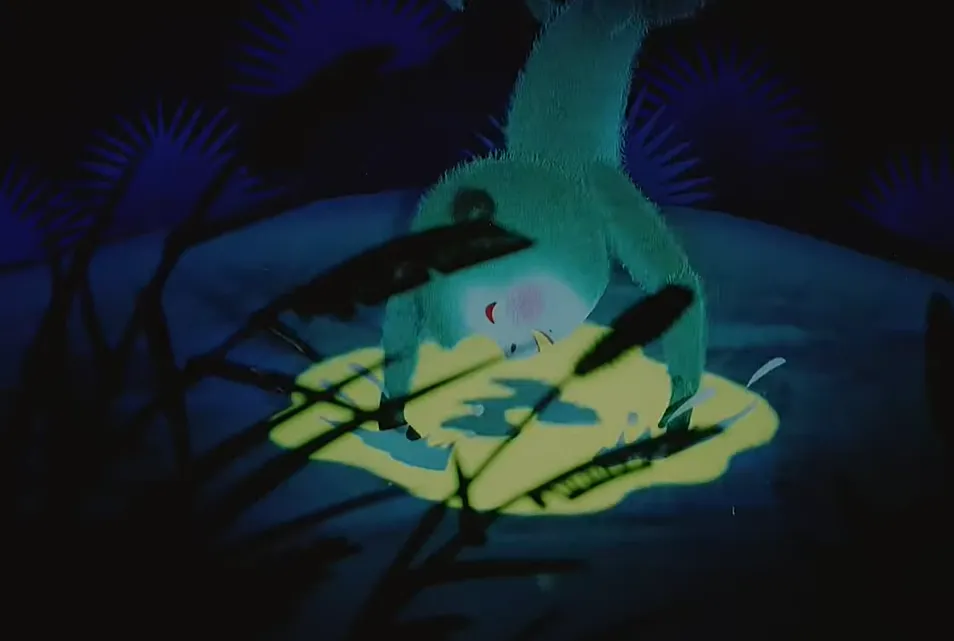
The Legacy: A beautifully stylized, rhythmic short that mimics the aesthetic of Chinese shadow puppetry infused with a modern, experimental color theory of deep blues and luminous yellows.
Why It Fits: A beloved children’s bedtime story transformed into an optical illusion masterclass. While categorized as a paper-cut silhouette film, it heavily incorporates ink wash textures to achieve its central visual magic: the shimmering, liquid reality of a full moon reflecting on rippling lake water.
Watch If You Like: Folk art, bedtime fables, and playful visual geometry.
6. The Snipe and the Clam (1983)
Where to Watch: Youtube & Bilibili
The Creators: Directed by Hu Jinqing, the pioneer of Chinese paper-cut and silhouette cinematography.
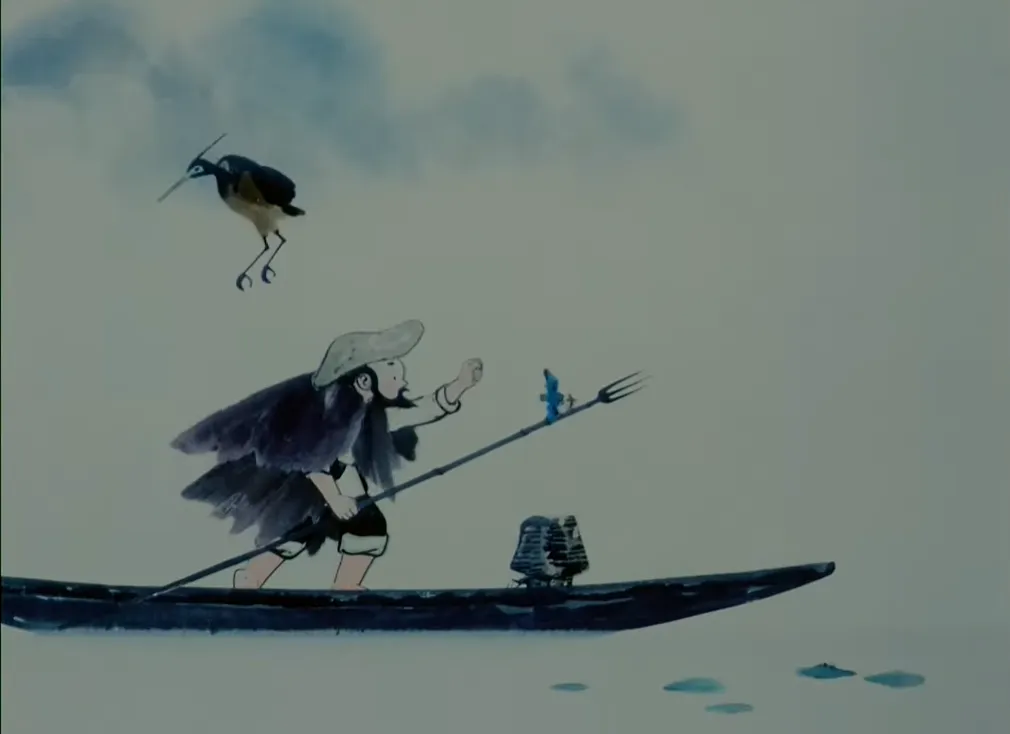
The Legacy: Winner of the Silver Bear at the Berlin International Film Festival. It represents a brilliant, cost-saving hybrid technique born from the economic pressures of late-20th-century SAFS.
Why It Fits: Rather than painting every frame on fragile paper, artists painted gorgeous, bleeding ink-wash gradients onto heavy paper puppets, cut them out, and animated them via stop-motion. The result marries the ethereal, calligraphic texture of ink-washed bird feathers with the whimsical, tactile physics of jointed puppet animation.
Watch If You Like: Traditional fables, witty slapstick humor, and intricate stop-motion craftsmanship.
7. The Mantis Stalks the Cicada (1988)
Where to Watch: Youtube & Bilibili
The Creators: Directed by Hu Jinqing, released in the same historic year as Feelings of Mountains and Waters.
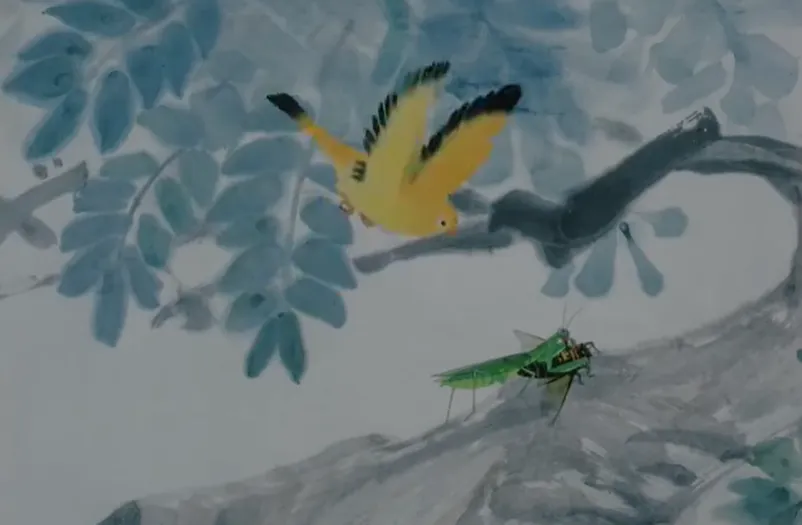
The Legacy: A quiet, tense, and visually arresting short that proves that "Chinese Style" doesn't require sweeping landscapes; it can find the universe in a single tree branch.
Why It Fits: A hyper-minimalist exploration of nature’s micro-ecosystem and food chain. Like The Snipe and the Clam, it uses ink-wash textures on paper-cut silhouettes. The film achieves near-impossible delicacy, rendering the gossamer, translucent wings of the cicada and the razor-sharp, calligraphic segments of the mantis’s legs through precise ink saturation.
Watch If You Like: Micro-nature documentaries, minimalist tension, and traditional Chinese ink-and-wash paintings of insects.
Part 3: The Digital Successors — Ink-Inspired Aesthetic Revival (2006–2023)
By the early 2000s, traditional ink wash animation had largely disappeared from mainstream production. The painstaking process of painting and animating ink on Xuan paper was simply too costly and difficult to sustain in a rapidly modernizing industry. Yet the artistic philosophy behind the medium never vanished. Instead, a new generation of filmmakers, independent artists, and animation studios began exploring how digital tools could recreate the atmosphere, movement, and emotional resonance of classical Chinese painting. Rather than using real ink and paper, these works employ CGI, digital compositing, stylized rendering, and particle simulations to reinterpret ink wash aesthetics for contemporary audiences. While they are not traditional ink wash animations in the strict historical sense, they represent the most important modern successors to one of China's most distinctive artistic traditions.
8. The Peach Blossom Spring (2006) — 15 min
Where to Watch: Bilibili
The Creators: Directed by Chen Ming, a pioneering figure in China's digital academic animation scene.
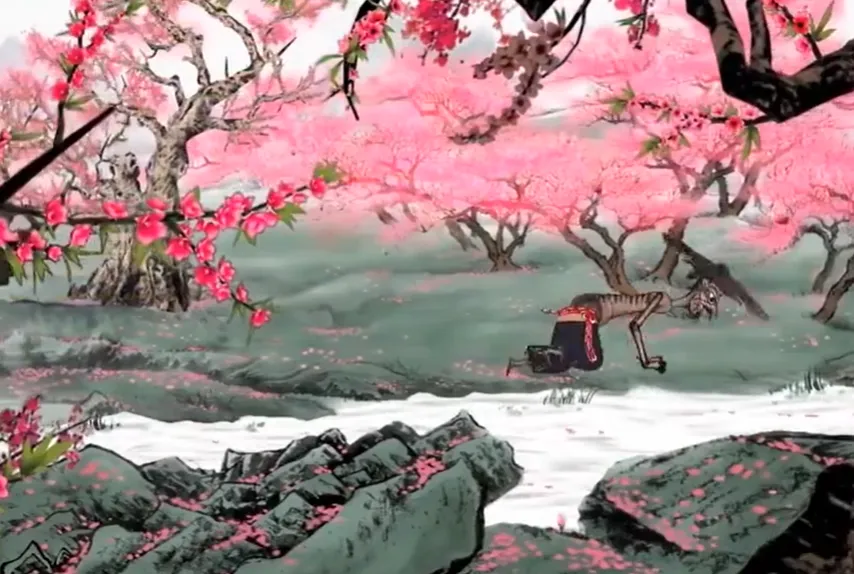
The Legacy: A vital bridge between the historical analog past and the digital future. It represents the first successful attempt to use modern 3D rendering engines to replicate the sprawling weight of ancient Chinese paintings.
Why It Fits: Rather than mimicking light brushstrokes, Chen Ming drew from Wei-Jin Dynasty stone carvings and heavy, dark, brooding ink-washes. The 3D camera sweeps through a world where lines are thick and calligraphic, creating a visceral, beautifully claustrophobic dream of Tao Yuanming's famous utopian myth.
Watch If You Like: Mythological world-building, stylized 3D graphics, and dark fairy tales.
9. White Bird in a Misty Valley (2018) — 15 min
Where to Watch: Bilibili
The Creators: A powerhouse collaboration between indie director Busifan (Dahufa) and the internationally acclaimed studio Wolf Smoke Animation.
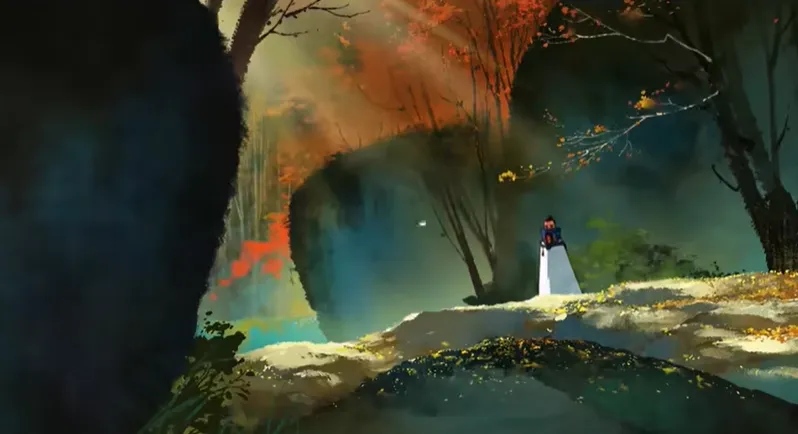
The Legacy: Winner of the Best Animated Short at the 2018 Washington Independent Film Festival and an official selection at Annecy. This wordless, mystical film follows a young man pursuing elusive white birds through a forest stained in saturated, fiery autumnal oranges and deep misty greys.
Why It Fits: It is a masterclass in how contemporary color theory can merge with traditional calligraphic line work. It doesn't use standard historical ink washes; instead, it uses modern digital paint to evoke the exact same psychological "weight" and atmospheric pressure of ancient Xieyi (freehand) paintings.
Watch If You Like: Striking color contrasts, philosophical indie shorts, and highly fluid 2D character action.
10. Fog Hill of Five Elements (2020–2023) — 7 Episodes
Where to Watch: Bilibili
The Creators: Directed by Liu Yilin (often credited internationally as Lin Hun), produced by Samsara Animation Studio.
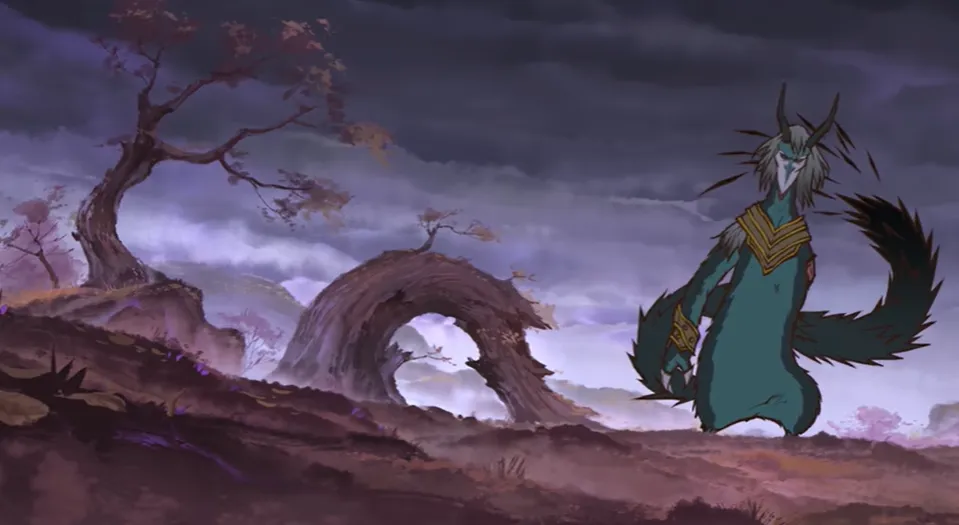
The Legacy: A massive, viral cult hit that ignited the modern internet. Fans globally refer to it as "sakuga for the ink wash generation."
Why It Fits: It is not a traditional ink wash animation in the historical sense, but an ink-inspired modern action series that reinterprets classical Chinese aesthetics through digital animation techniques. Lin Hun layered traditional Shanshui (mountain-and-water) background layouts behind breakneck, hand-drawn martial arts combat. In this world, blade trails move like frantic calligraphy strokes and blood splatters across the screen like explosive ink blots.
Watch If You Like: Avatar: The Last Airbender but with the dial turned up to 11, bone-crunching Wuxia combat, and breathtaking, stylized anime physics.
11. Yao-Chinese Folktales: "Goose Mountain" (2023) — 22 min
Where to Watch: Youtube
The Creators: Directed by Hu Rui, produced as a flagship episode for the SAFS centenary anthology series.
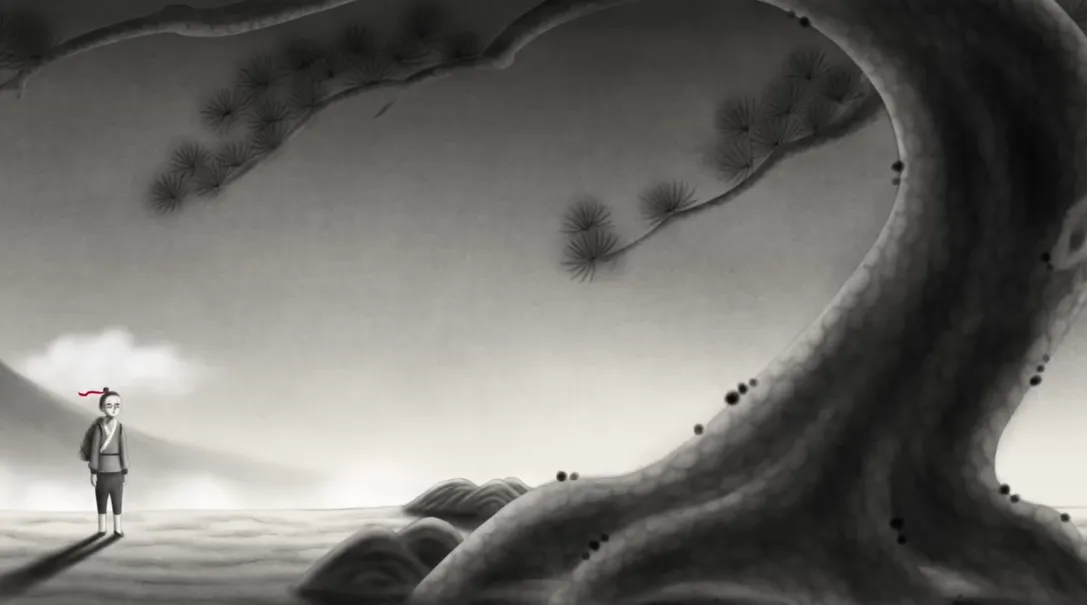
The Legacy: A staggering critical and commercial triumph, earning a near-flawless 9.4 rating on Bilibili and introducing Gen-Z to the psychological potential of traditional aesthetics.
Why It Fits: A haunting, gothic psychological horror film adapted from an ancient supernatural tale. Hu Rui took the清雅 (clean elegance) out of ink painting, applying heavy, grainy, monochromatic ink-washes onto surreal, 3D-assisted models. It uses silent-cinema title cards and an eerie, dreamlike logic to tell a story of greed, illusion, and desire.
Watch If You Like: Studio Ghibli's weirdest creatures, David Lynch-style surrealism, and classic folklore with a dark twist.
12. Deep Sea (2023) — 112 min
Where to Watch: Tubi & Youtube
The Creators: Directed by Tian Xiaopeng, the visionary director behind Monkey King: Hero is Back.
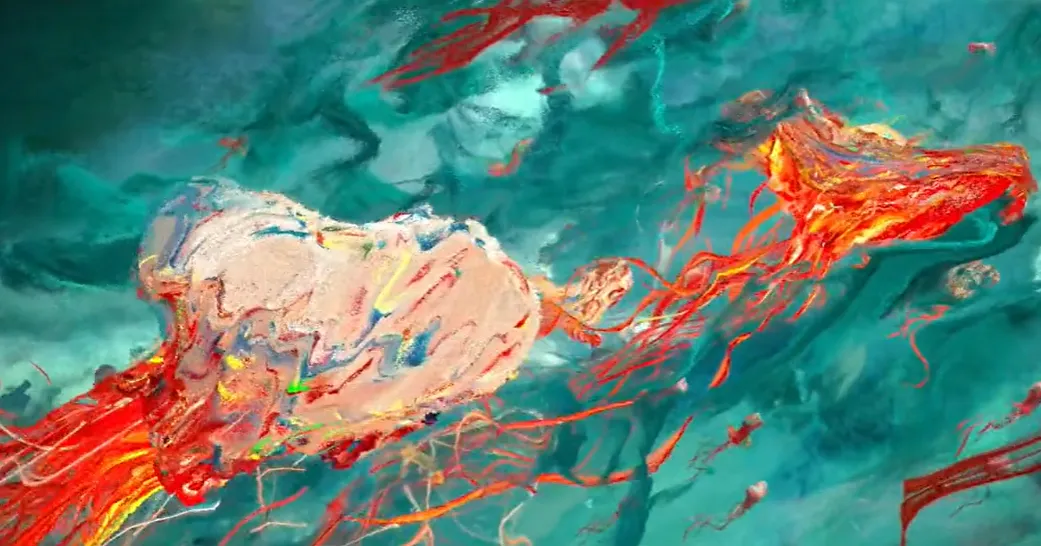
The Legacy: A monumental visual revolution in modern cinema. Tian Xiaopeng spent years developing a completely original, advanced particle-based rendering and 3D simulation techniques.
Why It Fits: This film completely redefines ink wash for the IMAX era. Abandoning traditional black ink, the filmmakers used billions of digital, hyper-colorful particles colliding and swirling in a three-dimensional digital space. It perfectly mimics the natural, unpredictable fluid mechanics of ink bleeding into water, transforming the deep ocean into a dazzling, shifting canvas of raw psychological emotion.
Watch If You Like: Spider-Man: Into the Spider-Verse's visual boundary-pushing, dazzling color explosions, and deeply emotional mental health journeys.
Frequently Asked Questions (FAQ)
1. What is the most famous Chinese ink wash animation?
The most widely recognized masterpiece is Feelings of Mountains and Waters, often regarded as the peak of the art form. Other iconic works include Baby Tadpoles Look for Their Mother and The Cowboy's Flute, which helped define the visual language of the genre.
2. Is ink wash animation still being made today?
Traditional ink wash animation is extremely rare today due to its labor-intensive production process. However, its influence continues in modern ink-inspired works such as Deep Sea and Fog Hill of Five Elements, which reinterpret its aesthetics using digital tools and CGI.
3. Why did traditional ink wash animation disappear?
The main reason is production difficulty. Traditional ink wash animation requires frame-by-frame painting on absorbent paper, making it extremely time-consuming and expensive. As digital animation became more efficient and scalable, studios gradually moved away from this technique, leading to its decline after the 1980s.
4. Are modern works like Deep Sea and Fog Hill of Five Elements considered traditional ink wash animation?
Purists and animation historians categorize them as "Ink-Inspired Modern Revivals" rather than traditional ink wash animations. They do not use real brushes or bleeding ink on physical paper. Instead, they utilize digital tools—such as 3D rendering engines, custom cel-shading, and advanced particle simulation software—to replicate, deconstruct, and paying homage to the fluid mechanics and aesthetic philosophies of the ancient art form.
5. Why is there so little dialogue in classic Chinese ink wash shorts?
This was a deliberate artistic choice rooted in traditional Chinese philosophy, particularly Daoism and Zen Buddhism. In classical Chinese aesthetics, "silence speaks louder than words," and "leaving blank space" (Kongbai) allows the viewer's imagination to fill in the meaning. The creators at the Shanghai Animation Film Studio believed that the movement of the ink, the rhythm of traditional instruments (like the Guqin or bamboo flute), and the atmosphere of the landscape were expressive enough to convey profound philosophical truths without the need for spoken exposition.
Conclusion
Chinese ink wash animation is not just a lost technique—it is a visual language that continues to evolve across generations. From early masterpieces like Baby Tadpoles Look for Their Mother and Feelings of Mountains and Waters, to modern reinterpretations such as Fog Hill of Five Elements and Deep Sea, this artistic tradition has continuously adapted while preserving its core aesthetic philosophy.
Even as traditional ink wash animation has become rare, its influence remains deeply embedded in contemporary Chinese animation—reshaped through digital tools, but still guided by the same principles of flow, suggestion, and emotional atmosphere.
If you enjoyed this guide, feel free to explore the full list above and discover where to watch each of these 12 essential works in 2026.