If you are still trying to learn Korean by grinding through textbooks and memorizing phrases like "철수와 영희는 학교에 갑니다" (Chulsoo and Younghee go to school), you’ll quickly notice a problem: real Korean doesn’t sound like that. Textbooks are great for learning grammar, but they often fail to prepare you for how Korean is actually spoken today—fast, conversational, and full of slang, abbreviations, and natural shifts between formal (존댓말) and informal (반말) speech.
So how do you bridge the gap between classroom Korean and real-world fluency? One of the most effective and enjoyable tools is already in your pocket: webtoons (웹툰). Unlike textbooks or traditional study methods, webtoons combine visual storytelling with natural dialogue, helping you understand context while absorbing modern Korean expressions in a way that feels effortless rather than academic.
In this guide, we’ve selected 12 beginner-friendly Korean webtoons that are not only entertaining but also genuinely useful for language learning in 2026. Each title has been chosen based on readability, dialogue simplicity, and real-world Korean usage. You’ll also find a clear selection criteria, a quick comparison table, where to read them legally, and practical tips to help you study Korean more effectively through webtoons. Let’s get started.
Our Selection Criteria for Beginner-Friendly Webtoons
Not all webtoons are equally effective for learning Korean. While many titles are entertaining, only a select few are truly suitable for beginners who want to improve their reading skills without getting overwhelmed. To ensure quality and consistency, we carefully evaluated each webtoon based on the following criteria:
1. Everyday Korean Vocabulary
We prioritized webtoons that focus on daily life situations such as school, work, friendships, and relationships. These contexts help learners absorb high-frequency vocabulary that is actually used in modern Korean conversation.
2. Heavy Dialogue Ratio
The best learning materials are dialogue-driven. We selected webtoons where conversations make up the majority of the content, allowing learners to repeatedly see sentence patterns and expressions in context.
3. Simple and Natural Sentence Structure
Beginner-friendly webtoons use short, clear sentences rather than long narrative blocks or complex literary language. This makes it easier to follow along without constant translation.
4. Modern, Real-Life Korean
We avoided historical, fantasy-heavy, or lore-dense series that rely on specialized terminology. Instead, we focused on contemporary Seoul Korean used by young adults in everyday situations.
5. Clear Use of Speech Levels (존댓말 / 반말)
A key part of learning Korean is understanding when and how speech levels change. We favored webtoons that naturally demonstrate both polite and casual speech in realistic contexts.
6. Accessibility in Korean and English
Whenever possible, we selected titles that are available in both Korean and official English translations. This makes it easier for learners to compare meanings and reinforce understanding. By applying these criteria, the following 12 webtoons were chosen not just for their popularity, but for their real value as Korean learning tools in 2026.
Quick Overview: 12 Beginner-Friendly Korean Webtoons
Here’s a quick at-a-glance table of all 12 webtoons so you can easily choose based on genre, difficulty, and learning focus before diving into the detailed breakdowns.
| Webtoon | Genre | Difficulty | What You’ll Learn | Why It’s Good for Beginners |
|---|---|---|---|---|
| Yumi’s Cells | Slice of Life | Beginner | Everyday Korean, emotions, relationships | Simple dialogue and highly natural conversational Korean |
| Romance 101 | Romance | Beginner | Dating vocabulary, campus life expressions | Clear sentence structure and relatable daily conversations |
| The Sound of Your Heart | Comedy | Beginner | Casual speech, humor, everyday slang | Very short sentences with strong visual context |
| A Good Day to be a Dog | Fantasy Romance | Beginner | Speech levels (formal vs casual) | Great for understanding 존댓말 and 반말 naturally |
| True Beauty | Romance | Beginner+ | Modern slang, SNS language | Reflects real Korean youth culture and online expressions |
| Business Proposal | Office Romance | Beginner+ | Workplace Korean, formal expressions | Useful office dialogue and professional phrases |
| See You in My 19th Life | Fantasy Romance | Beginner+ | Emotional expressions, storytelling Korean | Natural dialogue with strong narrative flow |
| Marry My Husband | Drama | Beginner+ | Daily conversation, emotional tone | Highly engaging modern Korean conversations |
| Odd Girl Out | School Life | Beginner+ | Teen slang, friendship language | Realistic school-life expressions and youth speech |
| Spirit Fingers | Coming-of-Age | Beginner+ | Creative and social vocabulary | Natural dialogue in youth-focused environments |
| Daily JoJo | Slice of Life | Beginner | Basic sentence patterns, simple conversations | Extremely easy-to-follow short dialogues |
| Lookism | Drama | Easy Intermediate | Slang, informal speech, youth culture | Exposure to modern Korean slang and casual tone |
Detailed Breakdown of the 12 Best Korean Webtoons for Beginners
Now that you’ve seen the overview, let’s take a closer look at each webtoon. Instead of focusing on plot, each title is broken down as a Korean learning resource, so you can clearly understand what kind of language you’ll actually pick up while reading. For each webtoon, we’ll briefly cover its difficulty, learning focus, and key language patterns.
#1. Yumi’s Cells (유미의 세포들)
Difficulty: Beginner
Best for: Everyday Korean conversations, Emotional expressions, Dating and relationship vocabulary, Casual spoken Korean (반말 중심)
Where to Read: NAVER Webtoon (Korean), WEBTOON (English)
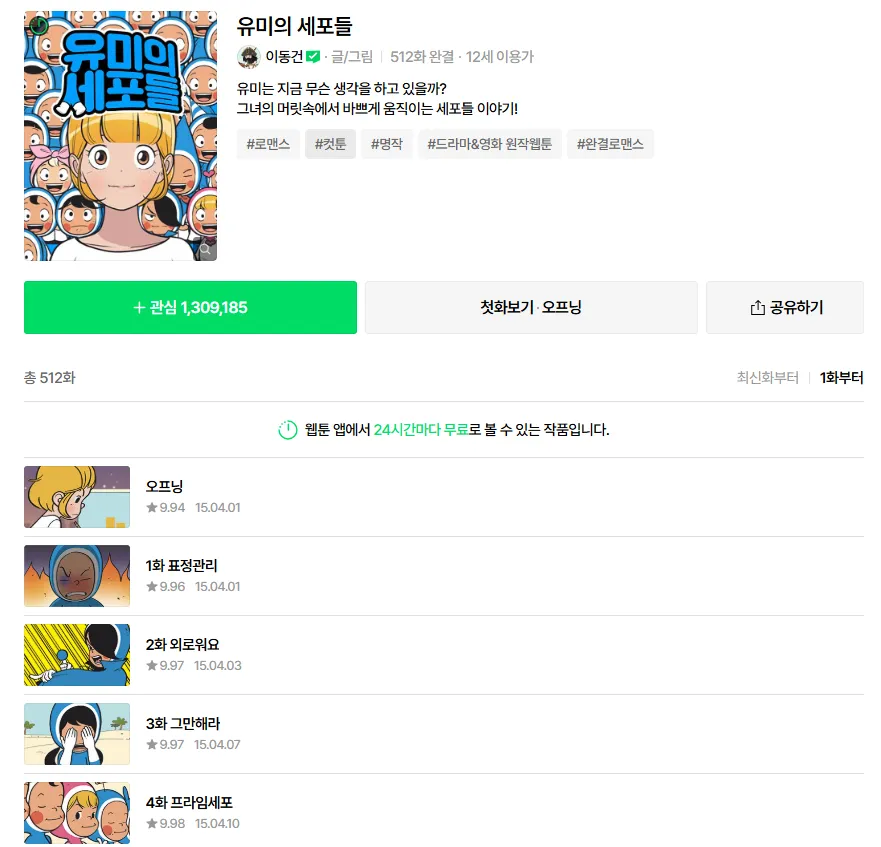
The Learning Vibe: Yumi's Cells is one of the most effective webtoons for learning natural, everyday Korean because it mirrors how people actually think and speak in real life. The story follows Yumi’s daily life, relationships, and internal emotional world, which is represented through her “cells,” each expressing different thoughts and feelings. Most of the dialogue is short, direct, and highly conversational. You’ll frequently see casual expressions used between friends, as well as emotional reactions tied to dating, misunderstandings, and personal reflection. Because the narrative often focuses on internal monologue and simple interactions, it becomes easy for beginners to follow even without translating every line. The pacing is also very learner-friendly. Scenes are usually grounded in everyday situations like work, texting, dating, or small social interactions, which helps you repeatedly encounter high-frequency Korean vocabulary in natural contexts.
Language Takeaway: From this webtoon, learners can absorb a wide range of practical Korean used in daily life. This includes casual sentence endings, emotional expressions, and common phrases used in relationships and social interactions. It is especially useful for understanding how Koreans express thoughts internally versus how they speak them out loud.
High-Frequency Expressions:
-
뭐야? (What is it?)
-
진짜? (Really?)
-
어떡해… (What should I do…)
-
괜찮아? (Are you okay?)
-
나 어떡하지? (What should I do?)
Why It Works for Beginners: This webtoon is ideal for beginners because it combines simple conversational Korean with strong visual context and relatable everyday situations, making it easy to understand meaning even without full translation.
#2 Romance 101 (바른연애 길잡이)
Difficulty: Beginner
Best for: Campus life Korean, Dating and relationship conversations, Casual spoken Korean (반말 / 존댓말 mix), Everyday emotional expressions
Where to Read: NAVER Webtoon (Korean), WEBTOON (English)
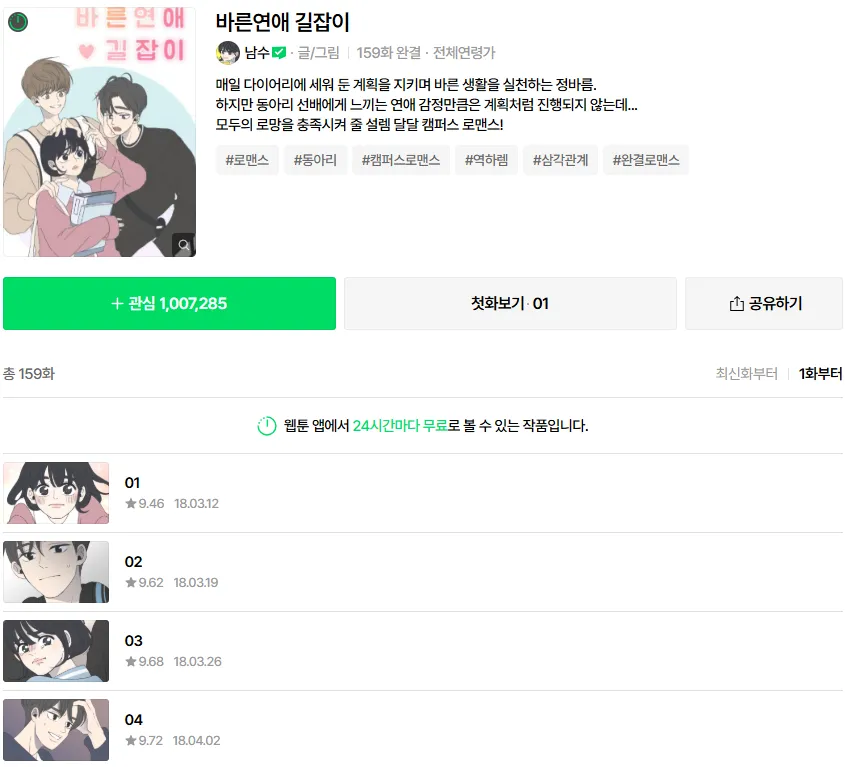
The Learning Vibe: Romance 101 focuses on college life, dating experiences, and the emotional ups and downs of modern relationships. The story follows a university student navigating love and friendship, which creates a very natural environment for conversational Korean. Most dialogues are grounded in everyday campus situations such as texting, group interactions, and one-on-one conversations. The language is simple, direct, and heavily focused on emotions, making it easy for beginners to follow without getting lost in complex narration. A key advantage of this webtoon is how often it uses repetitive relationship-related expressions. You will repeatedly encounter phrases related to liking someone, misunderstanding feelings, and expressing hesitation or affection, which helps reinforce practical vocabulary in context.
Language Takeaway: This webtoon helps learners absorb essential Korean used in dating and campus life, including emotional expressions, casual conversation patterns, and commonly used sentence endings in informal speech. It is especially useful for understanding how young Koreans naturally express feelings in everyday situations.
High-Frequency Expressions:
-
나 너 좋아해 (I like you)
-
뭐 하는 중이야? (What are you doing?)
-
진짜야? (Is it true?)
-
어떻게 생각해? (What do you think?)
-
좀 복잡해… (It’s a bit complicated…)
Why It Works for Beginners: This webtoon is beginner-friendly because it uses simple, repetitive dialogue patterns and focuses on familiar everyday situations like campus life and relationships, making it easy to understand and learn from context.
#3 The Sound of Your Heart (마음의 소리)
Difficulty: Beginner
Best for: Casual conversational Korean, Everyday slang and humor, Short, repetitive sentence patterns, Understanding natural Korean reactions
Where to Read: NAVER Webtoon (Korean), WEBTOON (English)
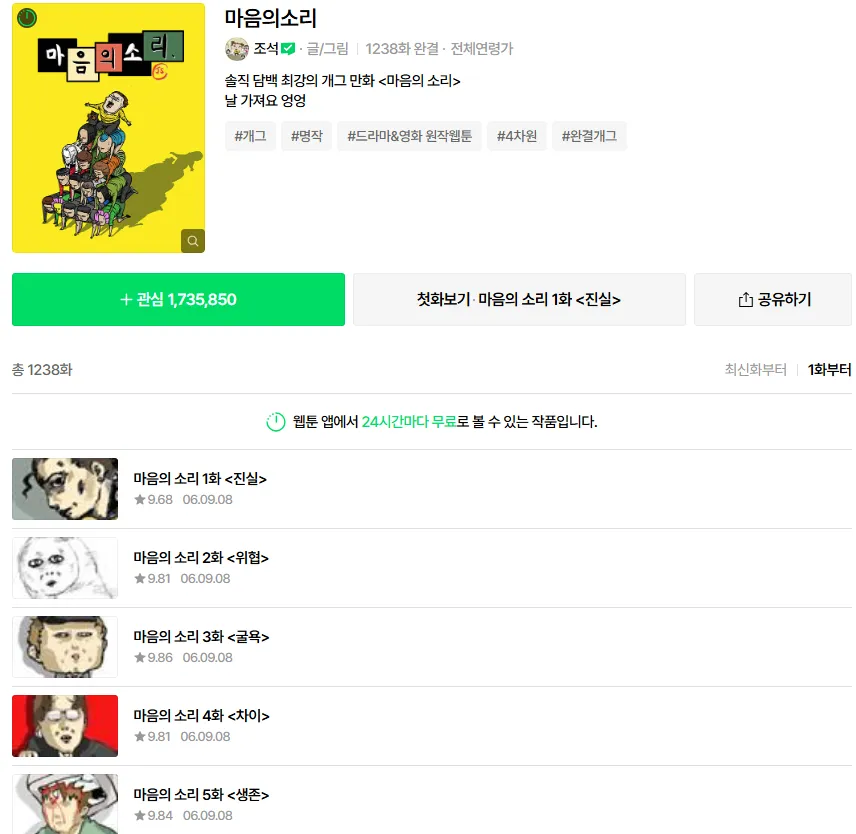
The Learning Vibe: The Sound of Your Heart is one of the most iconic Korean comedy webtoons, built entirely around exaggerated everyday situations and absurd humor. The story follows daily life events that are often completely ordinary at first, but quickly escalate into ridiculous outcomes. From a language learning perspective, this structure is extremely useful for beginners. Most dialogue is short, direct, and filled with common reaction phrases. Because the humor is highly visual and situational, you can often understand what is happening even if you don’t fully translate every sentence. Another strong advantage is repetition. Many jokes rely on similar sentence structures being reused with slight variations, which helps reinforce core Korean grammar patterns and conversational rhythm naturally over time.
Language Takeaway: This webtoon helps learners become familiar with everyday Korean reactions, casual speech, and simple sentence structures commonly used in spoken Korean. It is especially useful for learning how Koreans express surprise, frustration, agreement, and disbelief in a natural and humorous way.
High-Frequency Expressions:
-
뭐야 이거? (What is this?)
-
진짜 웃겨 (This is so funny)
-
말도 안 돼 (No way / That’s ridiculous)
-
왜 그래? (What’s wrong?)
-
대박 (Awesome / Crazy)
Why It Works for Beginners: This webtoon is ideal for beginners because it uses extremely simple conversational Korean, repetitive sentence structures, and strong visual context, making it easy to understand even without full translation.
#4 A Good Day to be a Dog (오늘도 사랑스럽개)
Difficulty: Beginner
Best for: Understanding Korean speech levels (존댓말 vs 반말), School and workplace-style interactions, Romantic dialogue with formal/casual switching, Everyday conversational Korean
Where to Read: NAVER Webtoon (Korean), WEBTOON (English)
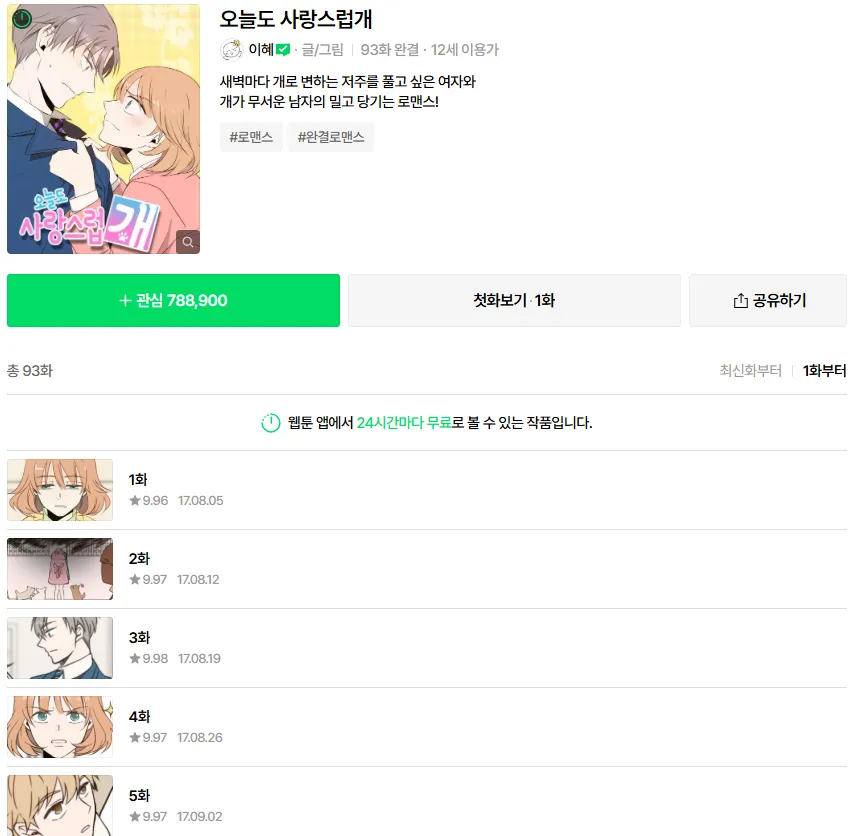
The Learning Vibe: A Good Day to be a Dog is a fantasy romance webtoon centered around a unique curse: the protagonist transforms into a dog whenever she kisses someone. While the premise is humorous and lighthearted, the dialogue is extremely valuable for Korean learners. A major learning advantage of this series is its clear and natural use of speech level switching. Characters frequently move between formal (존댓말) and informal (반말) speech depending on context, relationship, and emotional tone. This makes it an excellent reference for understanding how politeness levels function in real Korean communication. In addition, many interactions take place in school and teacher-related settings, which introduces realistic classroom and authority-based conversations. The language is simple, but the subtle shifts in tone provide an important layer of learning that goes beyond basic vocabulary.
Language Takeaway: This webtoon helps learners understand one of the most important aspects of Korean: when to use formal vs informal speech. It also reinforces everyday conversational patterns used in school and interpersonal relationships, making it highly useful for beginners who want to build natural speaking intuition.
High-Frequency Expressions:
-
괜찮으세요? (Are you okay? – formal)
-
괜찮아? (Are you okay? – informal)
-
뭐 하세요? (What are you doing? – formal)
-
뭐 해? (What are you doing? – informal)
-
정말요? (Really? – polite form)
Why It Works for Beginners: This webtoon is beginner-friendly because it clearly demonstrates how Korean speech levels change depending on context, while still using simple and easy-to-follow dialogue in everyday situations.
#5 True Beauty (여신강림)
Difficulty: Beginner+
Best for: Modern Korean slang and internet expressions, Beauty, fashion, and makeup vocabulary, High school social interactions, SNS-style conversational Korean
Where to Read: NAVER Webtoon (Korean), WEBTOON (English)
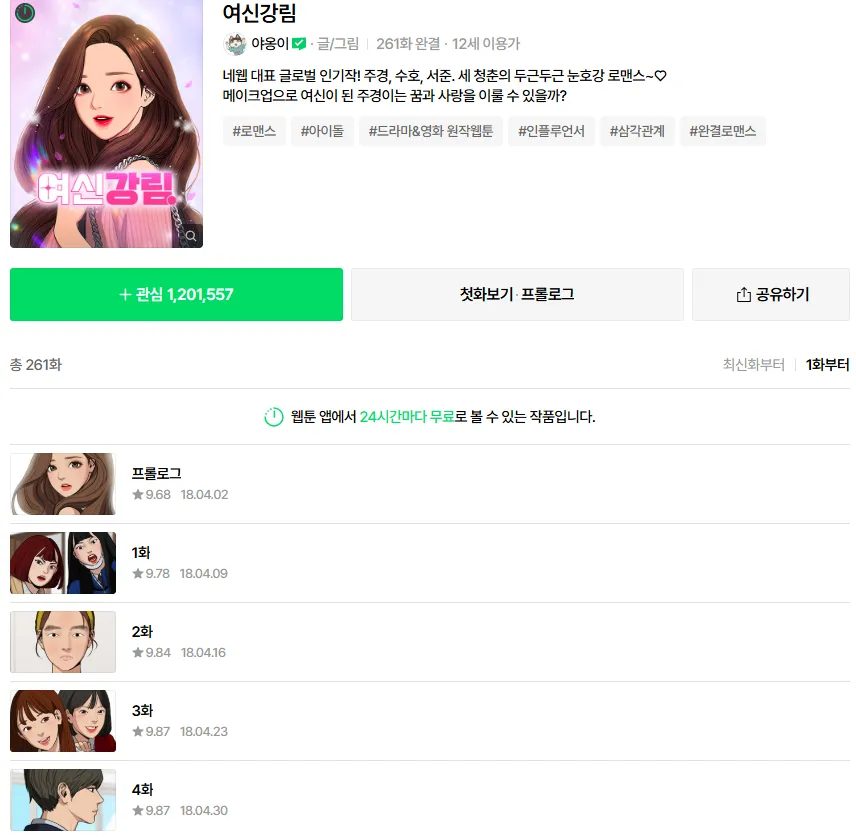
The Learning Vibe: True Beauty is one of the most globally popular Korean webtoons, focusing on high school life, beauty standards, and social dynamics. The story follows a protagonist who transforms her appearance through makeup, exploring themes of identity, popularity, and social acceptance. From a language learning perspective, this webtoon is particularly rich in modern, real-world Korean used by teenagers and young adults. Conversations often include slang, emotional reactions, and internet-style expressions commonly used in SNS and messaging apps. You will also frequently encounter vocabulary related to makeup, fashion, and social hierarchy within school environments. While the tone is more stylized compared to slice-of-life webtoons, it still provides strong exposure to how Korean is used in youth culture today.
Language Takeaway: This webtoon helps learners become familiar with contemporary Korean slang, beauty-related vocabulary, and informal social interactions. It is especially useful for understanding how younger Koreans communicate in both spoken dialogue and online-style expressions.
High-Frequency Expressions:
-
대박 (Awesome / Crazy)
-
진짜 예쁘다 (So pretty / Really beautiful)
-
뭐야 이건 (What is this?)
-
완전 좋아 (I really like it)
-
헐 (OMG / No way)
Why It Works for Beginners: This webtoon is suitable for beginners because it combines simple conversational structures with highly contextual visual storytelling, allowing learners to understand modern Korean expressions even when unfamiliar slang appears.
#6 Business Proposal (사내 맞선)
Difficulty: Beginner+
Best for: Workplace Korean and office communication, Formal vs semi-formal speech (존댓말 중심), Professional relationship vocabulary, Business setting conversations
Where to Read: NAVER Webtoon (Korean), WEBTOON (English)
The Learning Vibe: Business Proposal is an office romance webtoon centered around corporate life and a fake dating scenario that begins in a professional business setting. The story takes place in a typical Korean company environment, making it highly useful for learners interested in workplace Korean. A key strength of this webtoon is its consistent use of formal and semi-formal speech. Characters frequently interact using polite expressions, especially in meetings, introductions, and hierarchical workplace conversations. This provides clear exposure to how Koreans communicate in professional environments. In addition to workplace language, the romantic storyline also introduces shifts between formal office speech and more relaxed private conversations, helping learners understand how context affects language choice in real Korean usage.
Language Takeaway: This webtoon helps learners build a foundation in formal Korean used in office environments, including polite sentence endings, professional vocabulary, and workplace interaction patterns. It is especially useful for understanding how Koreans adjust language based on hierarchy and social context.
High-Frequency Expressions:
-
처음 뵙겠습니다 (Nice to meet you – formal)
-
감사합니다 (Thank you – formal)
-
괜찮습니다 (It’s okay – formal)
-
확인 부탁드립니다 (Please check)
-
말씀해 주세요 (Please tell me / speak)
Why It Works for Beginners: This webtoon is beginner-friendly because it introduces formal workplace Korean in clear and repetitive contexts, allowing learners to naturally absorb professional expressions without complex narrative difficulty.
#7 See You in My 19th Life (이번 생도 잘 부탁해)
Difficulty: Beginner+
Best for: Emotional and expressive Korean, Narrative storytelling language, Relationship-focused dialogue, Intermediate beginner reading practice
Where to Read: NAVER Webtoon (Korean), WEBTOON (English)
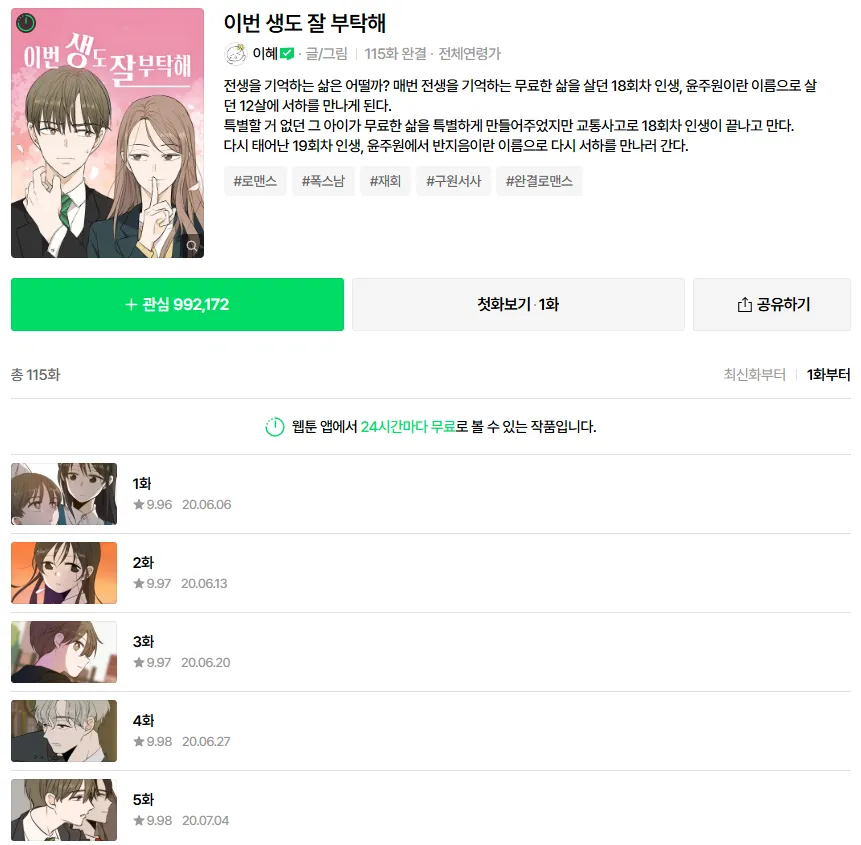
The Learning Vibe: See You in My 19th Life is a fantasy romance webtoon about reincarnation and memory across multiple lives. The protagonist remembers her past lives and reconnects with people from her previous existence, creating a deeply emotional and character-driven narrative. From a language learning perspective, this webtoon is especially useful for understanding how Koreans express emotions in more nuanced and layered ways. The dialogue often revolves around regret, longing, reunion, and emotional conflict, which introduces a wider range of expressive vocabulary compared to simpler slice-of-life stories. Although the storyline is more complex than earlier picks, the actual sentence structure remains relatively clear and readable. Conversations are still grounded in everyday Korean, making it accessible for learners who are ready to move beyond basic dialogue patterns.
Language Takeaway: This webtoon helps learners expand their emotional vocabulary in Korean, including expressions of memory, regret, affection, and personal reflection. It is also useful for understanding how narrative Korean differs from casual conversational speech.
High-Frequency Expressions:
-
보고 싶었어(我想你)
-
기억이 안 나(我不记得了)
-
미안해(对不起)
-
믿을 수 없어(难以置信)
-
다시 만나고 싶어(我想再见你)
Why It Works for Beginners: This webtoon is suitable for beginners because it combines clear dialogue with emotionally rich storytelling, allowing learners to naturally expand their vocabulary while still following simple conversational structures.
#8 Marry My Husband (내 남편과 결혼해줘)
Difficulty: Beginner+
Best for: Daily conversational Korean in dramatic contexts, Emotional expression and conflict language, Relationship and betrayal-related vocabulary, Natural spoken Korean in fast-paced dialogue
Where to Read: NAVER Webtoon (Korean), WEBTOON (English)
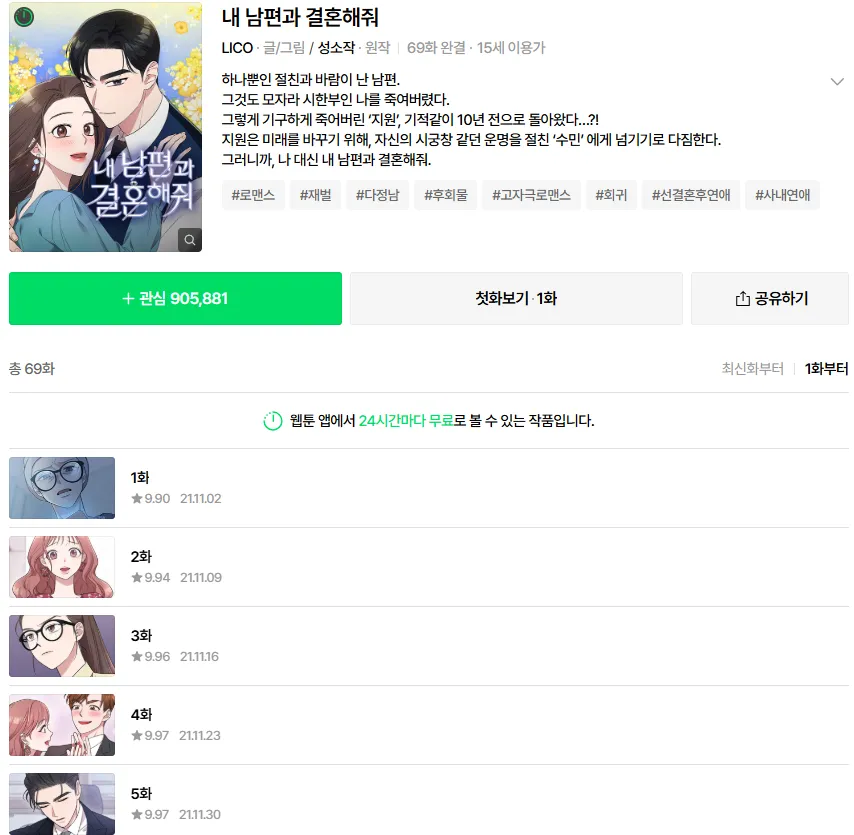
The Learning Vibe: Marry My Husband is a revenge-driven romance webtoon that follows a protagonist who gets a second chance at life after betrayal. The story combines intense emotional drama with everyday conversational Korean, making it both engaging and highly useful for learners. From a language learning perspective, this webtoon stands out for its frequent use of emotionally charged dialogue. Characters often express anger, frustration, regret, and determination, which introduces learners to a wide range of natural emotional expressions used in real Korean conversations.Despite the dramatic storyline, the sentence structures remain relatively simple and direct. Much of the dialogue is grounded in real-life situations such as workplace interactions, personal relationships, and confrontation scenes, which helps reinforce practical Korean vocabulary in context.
Language Takeaway: This webtoon helps learners expand their understanding of emotional Korean used in conflict situations, including expressions of betrayal, apology, confrontation, and determination. It is especially useful for recognizing how tone changes depending on emotional intensity.
High-Frequency Expressions:
-
왜 그랬어? (Why did you do that?)
-
믿을 수 없어 (I can’t believe it)
-
용서 못 해 (I can’t forgive you)
-
다시 시작할 거야 (I will start again)
-
끝났어 (It’s over)
Why It Works for Beginners: This webtoon is beginner-friendly because it combines simple, direct dialogue with highly contextual emotional storytelling, making it easy to understand even when the plot becomes intense.
#9 Odd Girl Out (소녀의 세계)
Difficulty: Beginner+
Best for: School life Korean conversations, Friendship and group dynamics vocabulary, Teen casual speech and slang, Emotional but realistic everyday dialogue
Where to Read: NAVER Webtoon (Korean), WEBTOON (English)
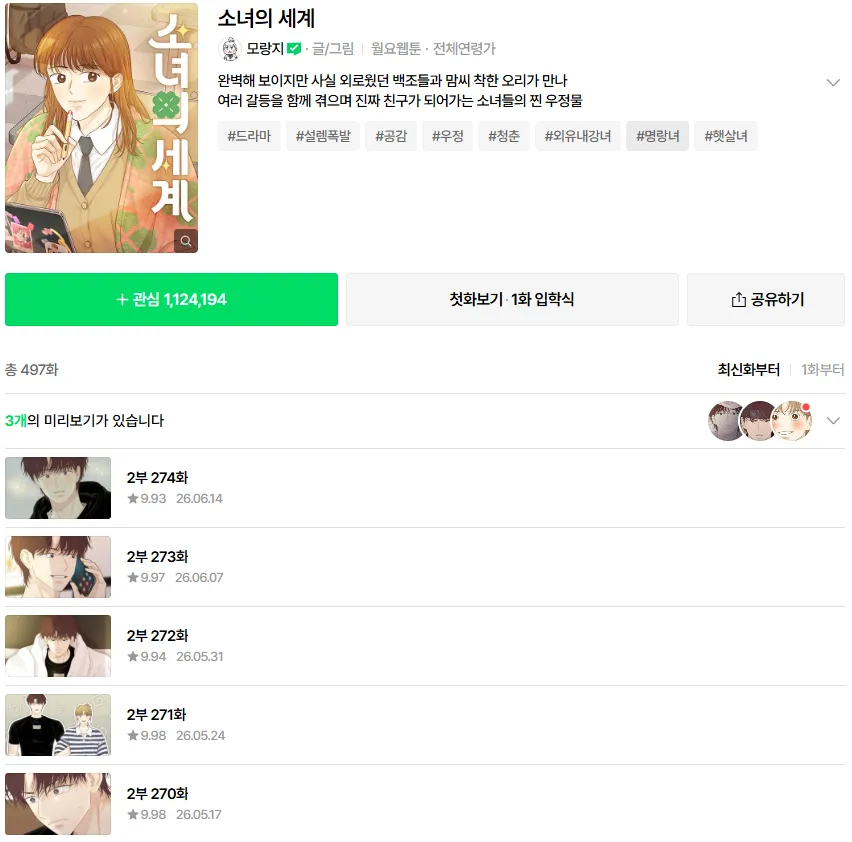
The Learning Vibe: Odd Girl Out is a school-life webtoon that focuses on friendship, social relationships, and the emotional complexity of teenage life. Unlike heavily romantic or fantasy-driven stories, this webtoon stays grounded in realistic school environments and peer interactions. From a language learning perspective, it is particularly useful for understanding how Korean teenagers communicate in group settings. The dialogue includes casual speech, emotional reactions, and subtle shifts in tone depending on social hierarchy within friend groups. Many conversations revolve around friendship conflicts, misunderstandings, and daily school experiences, making the language highly relatable and easy to contextualize even for beginners. The pacing is also relatively slow, which helps learners follow conversations without feeling overwhelmed.
Language Takeaway: This webtoon helps learners understand natural Korean used in school and friendship contexts, including casual expressions, emotional reactions, and everyday group communication patterns. It is especially useful for building confidence in reading conversational Korean without relying on formal grammar structures.
너 괜찮아? (Are you okay?)
진짜야? (Really?)
왜 그래? (What’s wrong?)
같이 가자 (Let’s go together)
알겠어 (Got it / I understand)
High-Frequency Expressions:
-
너 괜찮아? (Are you okay?)
-
진짜야? (Really?)
-
왜 그래? (What’s wrong?)
-
같이 가자 (Let’s go together)
-
알겠어 (Got it / I understand)
Why It Works for Beginners: This webtoon is beginner-friendly because it uses realistic school-life conversations with simple sentence structures and emotionally grounded interactions, making it easy to understand through context.
#10 Spirit Fingers (스피릿 핑거스)
Difficulty: Beginner+
Best for: Creative and hobby-related Korean vocabulary, Casual youth conversations, Self-expression and personality-focused language, Relaxed social interaction Korean
Where to Read: NAVER Webtoon (Korean), WEBTOON (English)
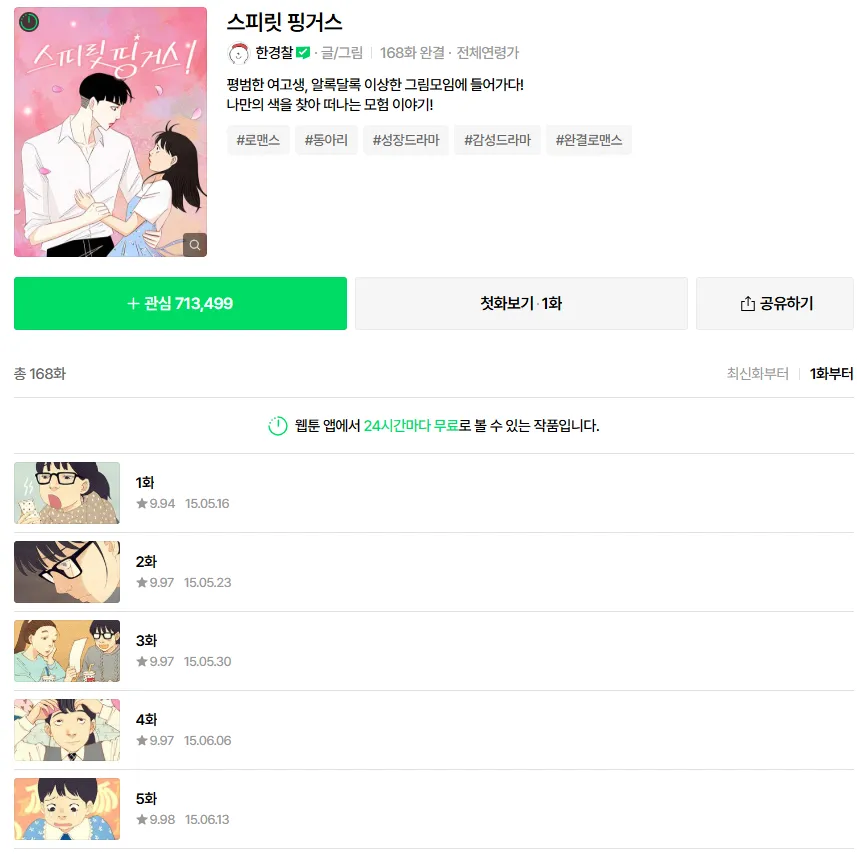
The Learning Vibe: Spirit Fingers is a coming-of-age webtoon that follows a shy high school girl who unexpectedly joins an art club filled with eccentric and expressive members. The story revolves around self-discovery, creativity, and personal growth within a highly supportive social group. From a language learning perspective, this webtoon offers a very natural and relaxed form of Korean. The dialogue is less dramatic and more focused on everyday interactions between friends, often centered around hobbies, emotions, and personal opinions. Because the characters have very distinct personalities, you are exposed to a wide variety of casual speech styles and expressive sentence patterns. This makes it especially useful for learners who want to move beyond basic conversational Korean and start understanding how tone and personality influence language use.
Language Takeaway: This webtoon helps learners expand their Korean beyond basic conversation into more expressive and personality-driven language. It is particularly useful for learning how Koreans talk about hobbies, emotions, and personal identity in casual settings.
High-Frequency Expressions:
-
진짜 좋아 (I really like it)
-
너무 재밌어 (So fun)
-
어떻게 생각해? (What do you think?)
-
나도 해보고 싶어 (I want to try it too)
-
괜찮아, 해보자 (It’s okay, let’s try)
Why It Works for Beginners: This webtoon is beginner-friendly because it uses relaxed, natural Korean in low-pressure social situations, allowing learners to absorb conversational patterns without complex plot difficulty.
#11 Daily JoJo (조조코믹스)
Difficulty: Beginner
Best for: Basic everyday Korean sentences, Simple conversational patterns, Light daily-life vocabulary, Reading practice with minimal cognitive load
Where to Read: NAVER Webtoon (Korean), WEBTOON (English)
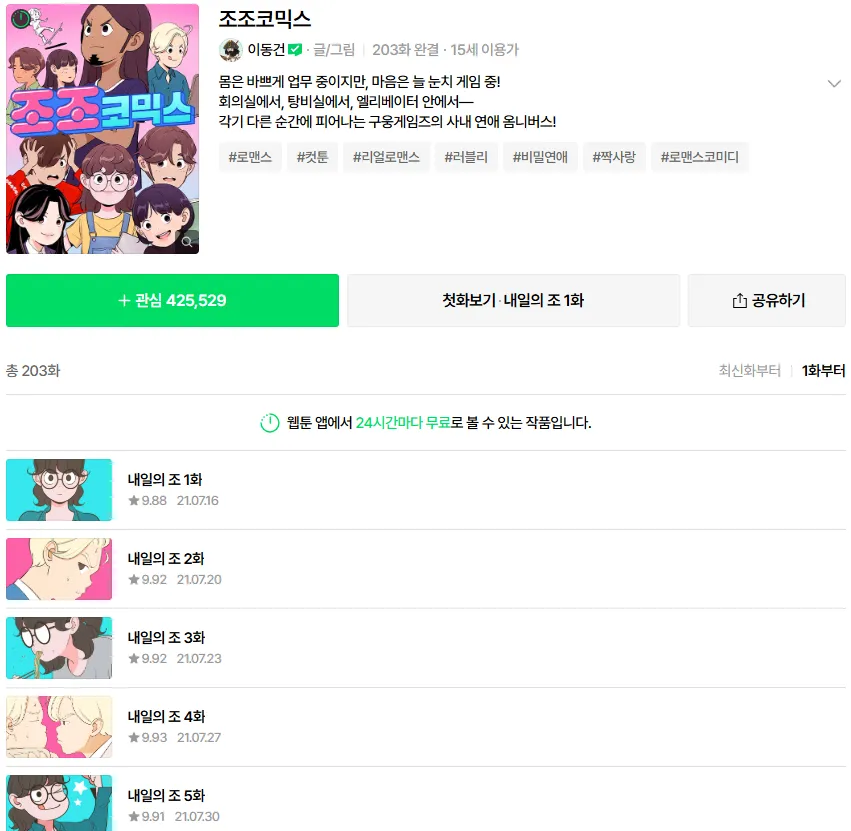
The Learning Vibe: Daily JoJo is a slice-of-life webtoon that focuses on extremely simple, everyday moments in daily life. Unlike more plot-driven or emotionally intense series, this webtoon keeps everything light, short, and easy to follow. From a language learning perspective, it is especially useful for beginners who want to build reading confidence. The dialogue is minimal, often consisting of short exchanges about daily routines, simple actions, and basic social interactions. Because the sentences are short and the vocabulary is highly repetitive, learners can focus on recognizing sentence patterns without being overwhelmed by complex grammar or fast-paced dialogue. This makes it an ideal “low-pressure” reading practice tool.
Language Takeaway: This webtoon helps learners reinforce basic Korean sentence structures and everyday vocabulary. It is particularly useful for building reading fluency and gaining confidence in understanding simple conversational Korean.
High-Frequency Expressions:
-
뭐 해? (What are you doing?)
-
밥 먹었어? (Did you eat?)
-
어디 가? (Where are you going?)
-
알겠어 (Okay / Got it)
-
좋아 (Okay / Sounds good)
Why It Works for Beginners: This webtoon is beginner-friendly because it uses extremely simple vocabulary, short sentences, and repetitive daily expressions, making it ideal for reading practice without cognitive overload.
#12 Lookism (외모지상주의)
Difficulty: Intermediate (Beginner+ Friendly Start)
Best for: Real-life modern Korean slang, School violence / social hierarchy vocabulary, Casual + intense dialogue mix, Advanced beginner reading practice
Where to Read: NAVER Webtoon (Korean), WEBTOON (English)
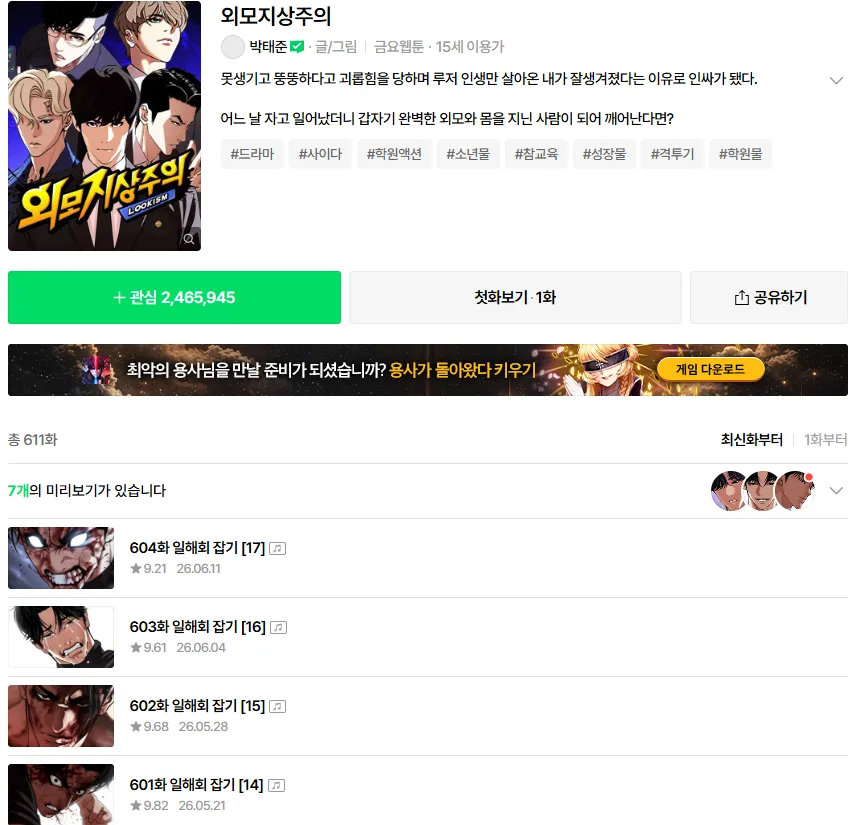
The Learning Vibe: Lookism is one of the most well-known Korean webtoons, focusing on appearance-based discrimination, school life, and social hierarchy. The story follows a high school student who suddenly gains a second body, exploring two completely different lives shaped by appearance and social perception. From a language learning perspective, this webtoon offers a mix of everyday conversational Korean and more intense, emotionally charged dialogue. You will encounter school-related slang, informal speech between peers, and more aggressive or confrontational expressions depending on the situation. While the storyline becomes progressively complex, the early chapters are surprisingly accessible and grounded in real-life school interactions. This makes it useful for learners who are ready to move slightly beyond beginner material but still want contextual support from visual storytelling.
Language Takeaway: This webtoon helps learners understand more realistic and sometimes harsh everyday Korean used among teenagers, including slang, confrontation language, and informal peer communication. It is especially useful for bridging the gap between beginner Korean and more natural native-level dialogue.
High-Frequency Expressions:
-
뭐라고? (What did you say?)
-
장난해? (Are you kidding?)
-
미쳤어? (Are you crazy?)
-
가자 (Let’s go)
-
끝이야 (It’s over)
Why It Works for Beginners: This webtoon works well for learners transitioning out of beginner level because it combines simple conversational structures with more realistic and varied emotional contexts, helping learners adjust to natural Korean speech intensity.
Hidden Gems: Bonus Webtoons for Extra Korean Practice
These four bonus webtoons are not part of the main ranking, but they are excellent additional resources for learners who want more exposure to natural Korean in relaxed, low-pressure reading environments. Compared to the 12 main picks, these titles focus more on slice-of-life storytelling, emotional reflection, and everyday dialogue. They are perfect for reinforcing vocabulary and sentence patterns you’ve already encountered in the main list.
Independent Life Diary (독립일기)
Difficulty: Beginner
Best for: Daily life Korean expressions, Internal monologue style reading, Modern casual vocabulary
Where to Read: NAVER Webtoon (Korean), WEBTOON (English)
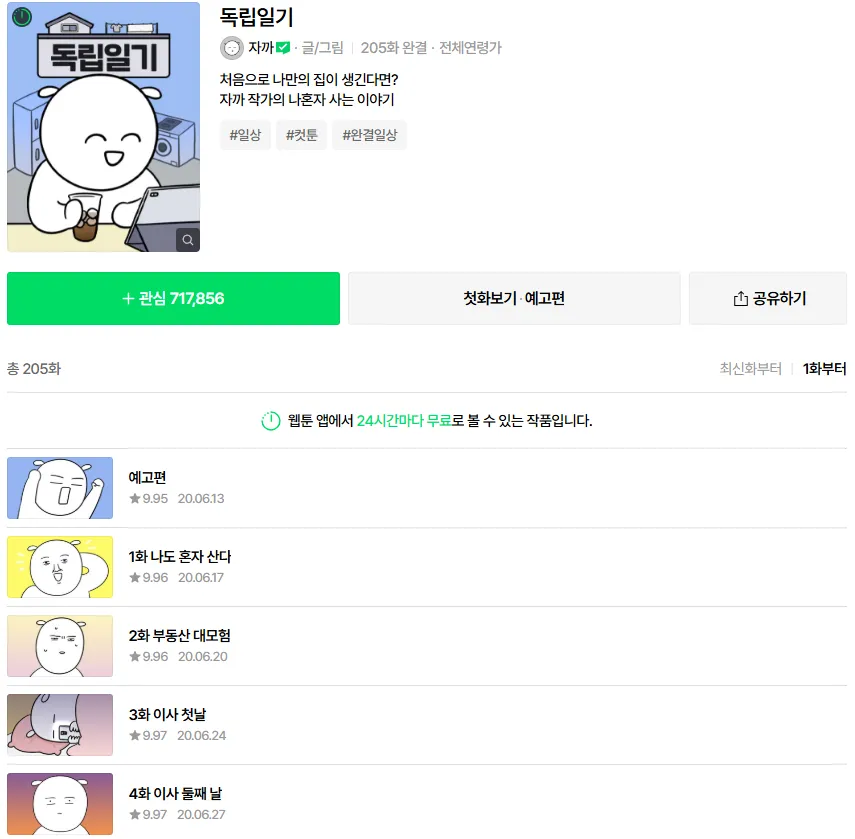
The Learning Vibe: Independent Life Diary follows the everyday life of someone living alone for the first time. It captures small routines, personal thoughts, and relatable modern lifestyle moments using simple and natural Korean.
Why It Works for Beginners: It is ideal for beginners because it reflects real-life thinking patterns using short, highly contextual sentences that are easy to understand.
A Deadbeat’s Meal (백수세끼)
Difficulty: Beginner
Best for: Food-related Korean vocabulary, Daily survival expressions, Casual slice-of-life dialogue
Where to Read: NAVER Webtoon (Korean), WEBTOON (English)
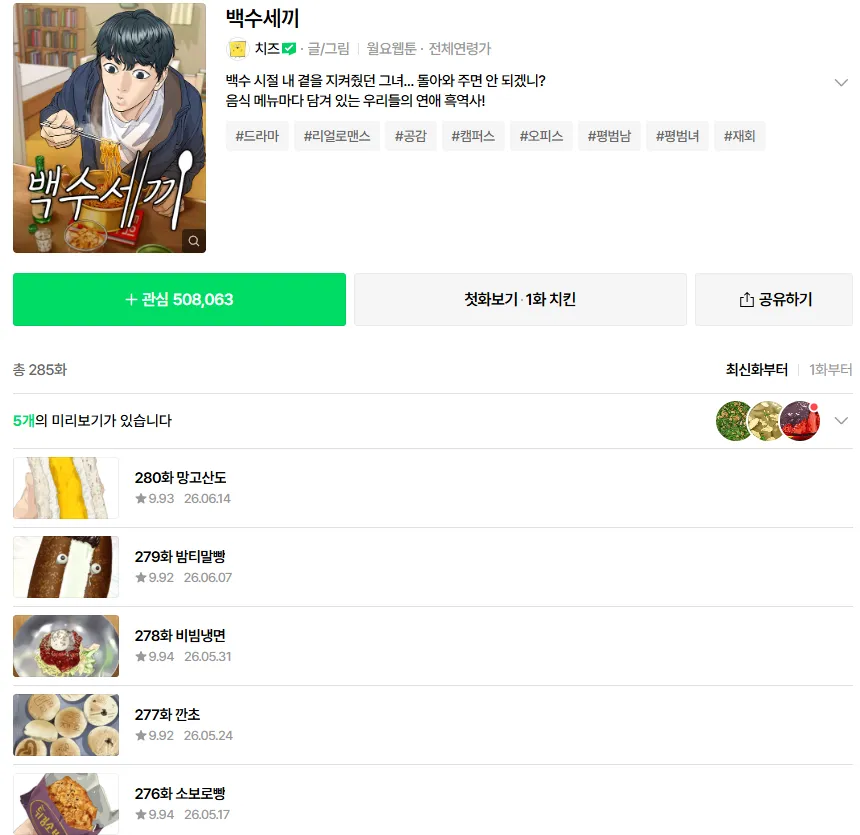
The Learning Vibe: A Deadbeat's Meal focuses on an unemployed protagonist who uses food as a way to cope with daily life. The story is light, relatable, and filled with practical everyday situations like cooking, eating, and ordering food.
Why It Works for Beginners: It helps learners naturally absorb food-related vocabulary and simple conversational Korean through highly repetitive daily scenarios.
My Kitty and Old Dog (내 어린고양이와 늙은개)
Difficulty: Beginner
Best for: Emotional Korean expressions, Gentle storytelling language, Simple narrative reading
Where to Read: NAVER Webtoon (Korean), WEBTOON (English)
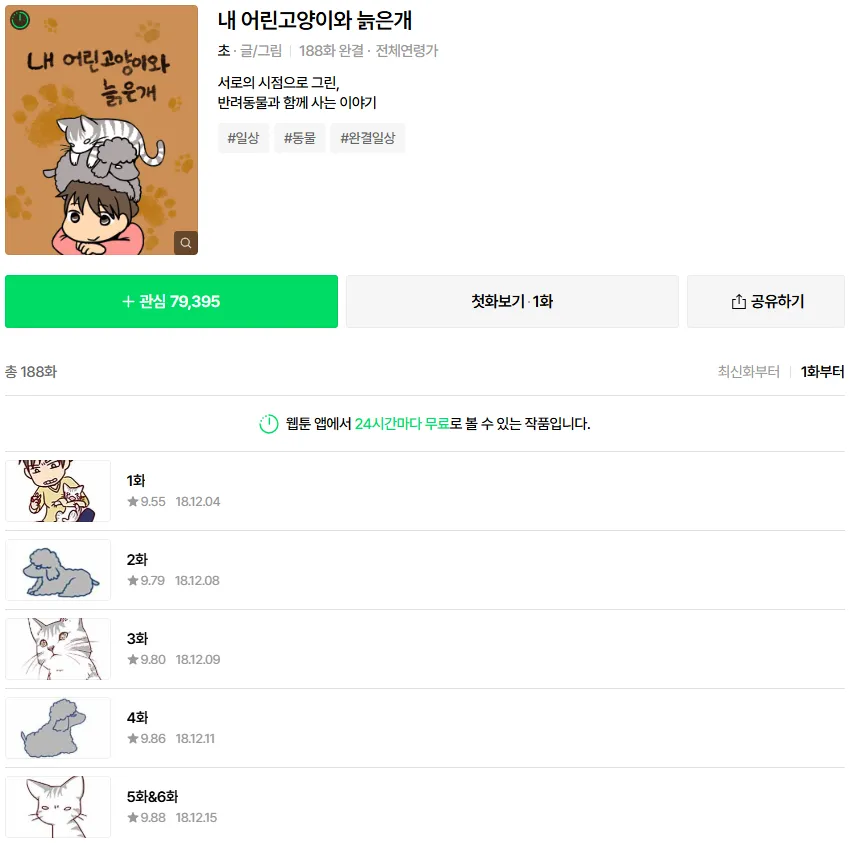
The Learning Vibe: My Kitty and Old Dog tells a touching story about companionship, aging, and emotional bonds between pets and humans. The dialogue is minimal, slow, and emotionally clear.
Why It Works for Beginners: Its simple language and strong emotional context make it easy for beginners to understand meaning without needing full translation.
Yesterday, Today and Tomorrow (어제, 오늘, 그리고 내일)
Difficulty: Beginner
Best for: Diary-style Korean reading, Basic sentence patterns,Slow-paced comprehension practice
Where to Read: NAVER Webtoon (Korean)
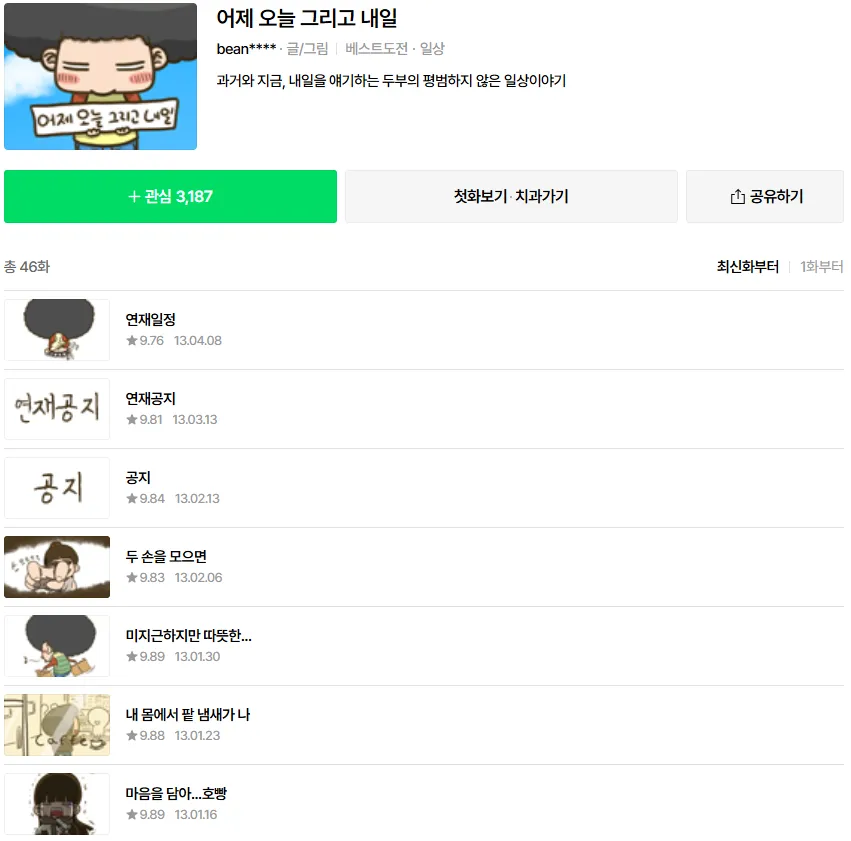
The Learning Vibe: Yesterday Today and Tomorrow feels like reading a personal diary, focusing on everyday thoughts and small life moments. The language is extremely simple and slow-paced.
Why It Works for Beginners: It is perfect for beginners because it reinforces basic grammar structures through repetition and highly predictable daily vocabulary.
Frequently Asked Questions
1. Can You Really Learn Korean by Reading Webtoons?
Yes—but webtoons work best as a supplement rather than a replacement for structured study. They help you absorb natural sentence patterns, modern slang, everyday expressions, and cultural context that traditional textbooks often miss. Combined with basic grammar knowledge, regular webtoon reading can significantly improve your vocabulary and reading comprehension.
2. Which Webtoon Is Easiest for Complete Beginners?
For absolute beginners, the most approachable choices are Independent Life Diary, Yumi’s Cells, and My Cat and Old Dog. These series use simple sentence structures, everyday vocabulary, and strong visual storytelling that makes unfamiliar words easier to understand from context.
3. Should I Read Webtoons in Korean or English First?
If you're just starting out, try reading the English version first and then revisiting the same episode in Korean. Once you reach an upper-beginner level, switch to reading Korean first and use English only when necessary. This approach gradually trains your brain to process Korean directly instead of constantly translating.
4. How Many Webtoon Episodes Should I Read Per Day?
Consistency matters more than volume. Reading just 1–3 episodes per day (about 15–20 minutes) is enough to build vocabulary and improve reading speed over time. The goal is regular exposure to Korean, not rushing through hundreds of chapters.
5. Which Webtoon Is Best for Learning Real Conversational Korean?
Yumi’s Cells, Romance 101, Odd Girl Out, and Daily JoJo are among the best choices for everyday conversational Korean. Their dialogue closely resembles how modern Koreans actually speak, making them excellent resources for learning natural expressions and common speech patterns.
6. Are Webtoons Better Than K-Dramas for Learning Korean?
Not necessarily—they serve different purposes. Webtoons are better for improving reading skills because you can move at your own pace and easily look up unfamiliar words. K-dramas are better for listening practice, pronunciation, and understanding real-life speech speed. Using both together is often the most effective learning strategy.
Conclusion: Turn Your Favorite Webtoons Into a Korean Classroom
Learning Korean does not have to mean spending every night buried in grammar drills and vocabulary lists. While textbooks provide the foundation, webtoons offer something equally important: exposure to the language as it is actually used by real people.
Whether you start with the relatable inner monologues of Yumi’s Cells, the campus conversations of Romance 101, or the everyday humor of Daily JoJo, each series on this list can help you build vocabulary, improve reading fluency, and develop a more natural feel for modern Korean.
The key is consistency. Read a few episodes each day, focus on understanding the overall meaning rather than translating every word, and gradually challenge yourself with more difficult titles as your skills improve.
Before long, you may discover that what began as a casual webtoon binge has quietly become one of the most effective Korean-learning habits you've ever built. Happy reading—and 즐거운 한국어 공부 되세요!