
Anime is one of the most enjoyable ways to immerse yourself in Japanese. For many learners, it becomes their first real exposure to natural pronunciation, conversational rhythm, and everyday expressions outside of textbooks. However, not every anime is suitable for beginners. Some series are packed with fantasy terminology, exaggerated speech patterns, military vocabulary, or extremely fast dialogue that can quickly overwhelm N5–N4 learners. The best beginner-friendly anime usually share a few important traits, such as clear pronunciation, everyday vocabulary, repetitive sentence patterns, natural conversation flow, and slower pacing. In this guide, we’ve carefully selected 12 of the best anime for learning Japanese at the beginner level, organized into different learning tiers based on difficulty and practical language value. We’ll also cover where to stream them, how to enable Japanese subtitles, and how to turn anime into an effective long-term study tool.
How to Choose Anime for N5–N4 Learners?
Before jumping into recommendations, it’s important to understand what actually makes an anime useful for beginner-level Japanese learners. A popular series is not always a good study resource, and some anime can become frustratingly difficult long before they become helpful. For N5–N4 learners, the goal is not to understand every single word. Instead, the focus should be on building listening familiarity through repeated exposure to natural sentence patterns, everyday vocabulary, and realistic conversational flow. The best beginner-friendly anime usually share several important characteristics.
1. Prioritize Everyday Vocabulary
Anime centered around school life, family interactions, friendships, cafés, or daily routines tends to be far more useful than action-heavy fantasy series. These settings naturally repeat common expressions used in everyday Japanese, including greetings, reactions, casual questions, and conversational fillers. For example, beginner-friendly series like Shirokuma Cafe and Barakamon constantly reinforce practical expressions such as: 大丈夫? 本当に?お疲れ様 どうしたの?. Because these phrases appear repeatedly across different situations, they become much easier to remember naturally.
2. Choose Anime with Clear Pronunciation
One of the biggest challenges for beginners is processing fast or exaggerated dialogue. Many action anime feature overlapping voices, shouting, dramatic delivery, or chaotic sound design that makes listening difficult even for intermediate learners. Instead, beginners should look for anime with: slower pacing, calm conversations, clean pronunciation, less background noise during dialogue etc.. Anime such as Laid-Back Camp and Chi's Sweet Home are especially effective because the dialogue is relaxed, easy to follow, and emotionally clear.
3. Slice-of-Life Anime Usually Works Best
Slice-of-life anime is often the best genre for language immersion at the beginner level. Unlike fantasy or battle-focused shows, slice-of-life series rely heavily on familiar situations and repeated conversational patterns. Characters regularly talk about school, food, hobbies, weather, relationships, and everyday problems — exactly the kind of vocabulary beginners need most. Anime like K-On! and Sweetness and Lightning are strong examples because they reinforce vocabulary naturally through repetition rather than exposition-heavy dialogue.
4. Repetitive Dialogue Helps Listening Memory
Repetition is one of the most powerful parts of language learning, and some anime are surprisingly good at it. In Teasing Master Takagi-san, short conversational phrases appear repeatedly throughout the series in slightly different emotional contexts. This makes it much easier for learners to recognize sentence structures and internalize pronunciation patterns. You will constantly hear expressions like: ね?バレた?本当?しょうがないな. This kind of repeated exposure helps develop listening intuition far more effectively than memorizing isolated vocabulary lists.
5. Avoid Heavy Fantasy & Historical Anime Early On
Many beginners naturally want to learn Japanese through popular shonen anime, but these series are often much harder than they appear. Shows filled with fantasy terminology, military strategy, supernatural powers, or historical speech patterns can overwhelm N5–N4 learners very quickly. Anime that are generally more difficult for beginners include:
| Anime | Why It’s Difficult |
|---|---|
| Naruto | Ninja terminology and fantasy vocabulary |
| Attack on Titan | Military language and intense dialogue |
| Jujutsu Kaisen | Fast-paced battle conversations |
| Gintama | Heavy wordplay and cultural references |
These anime can still become valuable later, but they are usually not ideal starting points for beginner immersion.
6. Realistic Conversation Flow Matters
Some anime may use simple vocabulary but still sound unnatural because of exaggerated acting or overly theatrical dialogue. For listening improvement, realistic conversational rhythm matters just as much as vocabulary difficulty. Series like Tsuki ga Kirei and Horimiya are particularly useful because the characters speak in a more natural and modern way, including: pauses, incomplete sentences, hesitation, casual contractions, softer emotional delivery. This helps learners become more comfortable with how real Japanese conversations actually sound outside of textbooks.
12 Best Anime to Learn Japanese for Beginners (N5–N4)
Not all beginner-friendly anime offer the same learning experience. Some are excellent for building listening comprehension through slow, repetitive dialogue, while others are better for transitioning into more natural conversational Japanese. To make the recommendations easier to follow, the anime below are organized into different learning tiers based on difficulty, conversational realism, vocabulary usefulness, pacing, and overall value for JLPT N5–N4 learners.
S Tier — Best Core Anime for N5–N4 Beginners
These anime offer the strongest foundation for beginner learners thanks to their clear pronunciation, slower pacing, repetitive sentence patterns, and highly practical daily-life vocabulary.
| Anime | Difficulty | Best For | Key Strength |
|---|---|---|---|
| Shirokuma Cafe | N5–N4 | Listening & shadowing | Extremely clear pronunciation |
| Teasing Master Takagi-san | N5–N4 | Casual conversation | Repetitive short phrases |
| Laid-Back Camp | N4 | Relaxed listening | Calm conversational pacing |
| Barakamon | N4 | Everyday expressions | Natural daily-life dialogue |
| Chi's Sweet Home | N5 | Absolute beginners | Extremely simple vocabulary |
A Tier — Best for Natural Conversation & N4 Progression
These anime remain beginner-friendly while introducing more realistic speech patterns, modern casual Japanese, and slightly more natural conversational pacing.
| Anime | Difficulty | Best For | Key Strength |
|---|---|---|---|
| K-On! | N4 | School vocabulary | Casual student conversations |
| Horimiya | N4+ | Modern casual Japanese | Realistic teen speech |
| Flying Witch | N4 | Polite everyday Japanese | Gentle conversational flow |
| Sweetness and Lightning | N4 | Family vocabulary | Natural home interactions |
| Tsukigakirei | N4+ | Realistic dialogue pacing | Natural pauses & hesitation |
B Tier — Best for Expanding Listening Skills
These anime are still approachable for N5–N4 learners while introducing slightly broader vocabulary, mixed speech styles, and more varied conversational situations.
| Anime | Difficulty | Best For | Key Strength |
|---|---|---|---|
| SPY × FAMILY | N4+ | Mixed speech styles | Family interaction & humor |
| Doraemon | N5 | Core beginner vocabulary | Everyday repeated expressions |
Rather than ranking anime purely by popularity, these tiers focus on how effective each series is specifically for beginner-level Japanese immersion, listening practice, and long-term language retention.
Detailed Beginner-Friendly Anime Recommendations
The anime below are not just popular series — they are some of the most effective choices for building beginner-level Japanese listening skills naturally. From slow slice-of-life dialogue to realistic everyday conversations, each recommendation offers different strengths for N5–N4 learners, including shadowing practice, casual speech exposure, vocabulary repetition, and conversational rhythm.
1. Shirokuma Cafe (Polar Bear Cafe)
Difficulty: N5–N4
Best for: Shadowing, Listening Comprehension, Everyday Reaction Phrases
Where to Streaming: Crunchyroll
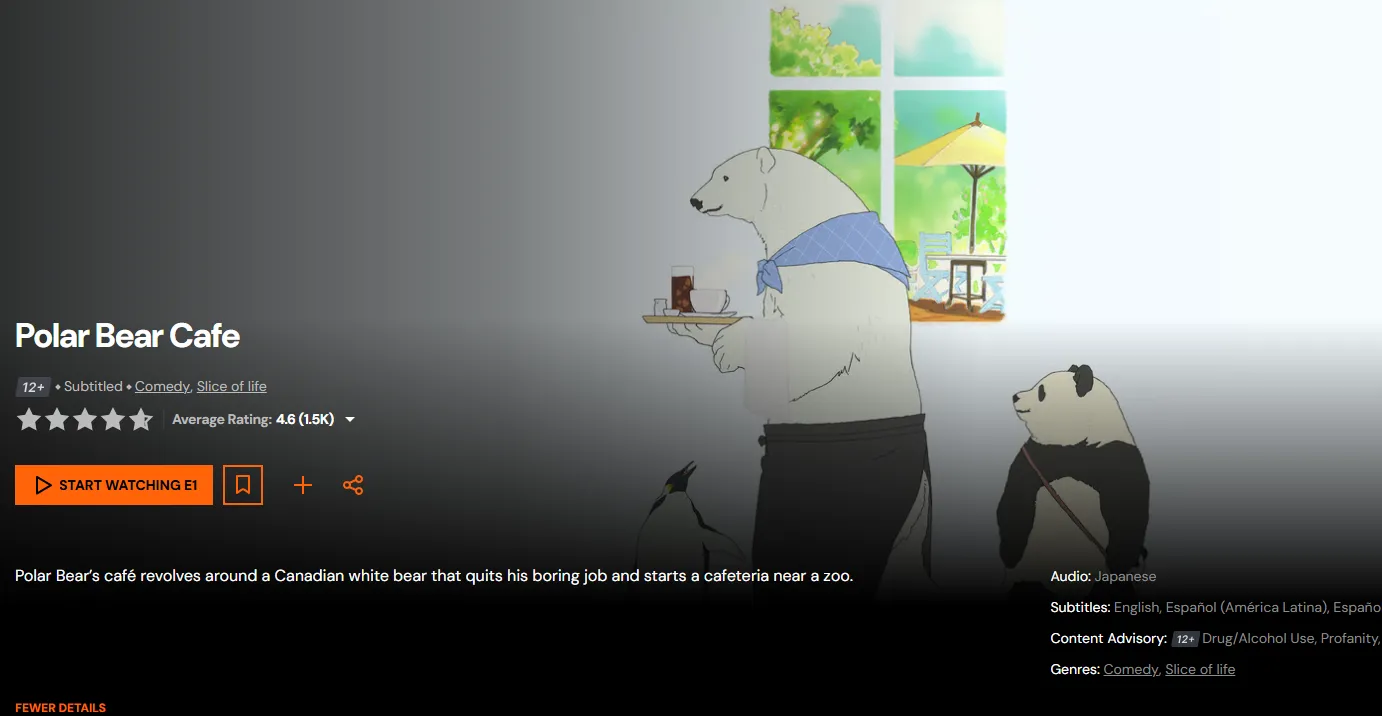
The Learning Vibe: Shirokuma Cafe is widely considered one of the best beginner anime for Japanese learners. The series focuses almost entirely on slow, calm everyday conversations between café regulars discussing work, hobbies, and daily life. The voice acting is exceptionally clear, with very little overlapping dialogue or loud action scenes, making it much easier for beginners to follow compared to most anime.
Language Takeaway: The series is also famous for its pun-based humor (dajare), which can help learners become more sensitive to pronunciation differences and repeated word patterns in Japanese.
High-Frequency Phrases:
-
大丈夫? (Daijoubu? — Are you okay?)
-
お疲れ様 (Otsukaresama — Good work)
-
なるほど (Naruhodo — I see)
2. Teasing Master Takagi-san
Difficulty: N5–N4
Best for: Casual Conversation, Repetitive Sentence Patterns, Everyday School Japanese
Where to Streaming: Crunchyroll, Netflix (region dependent)
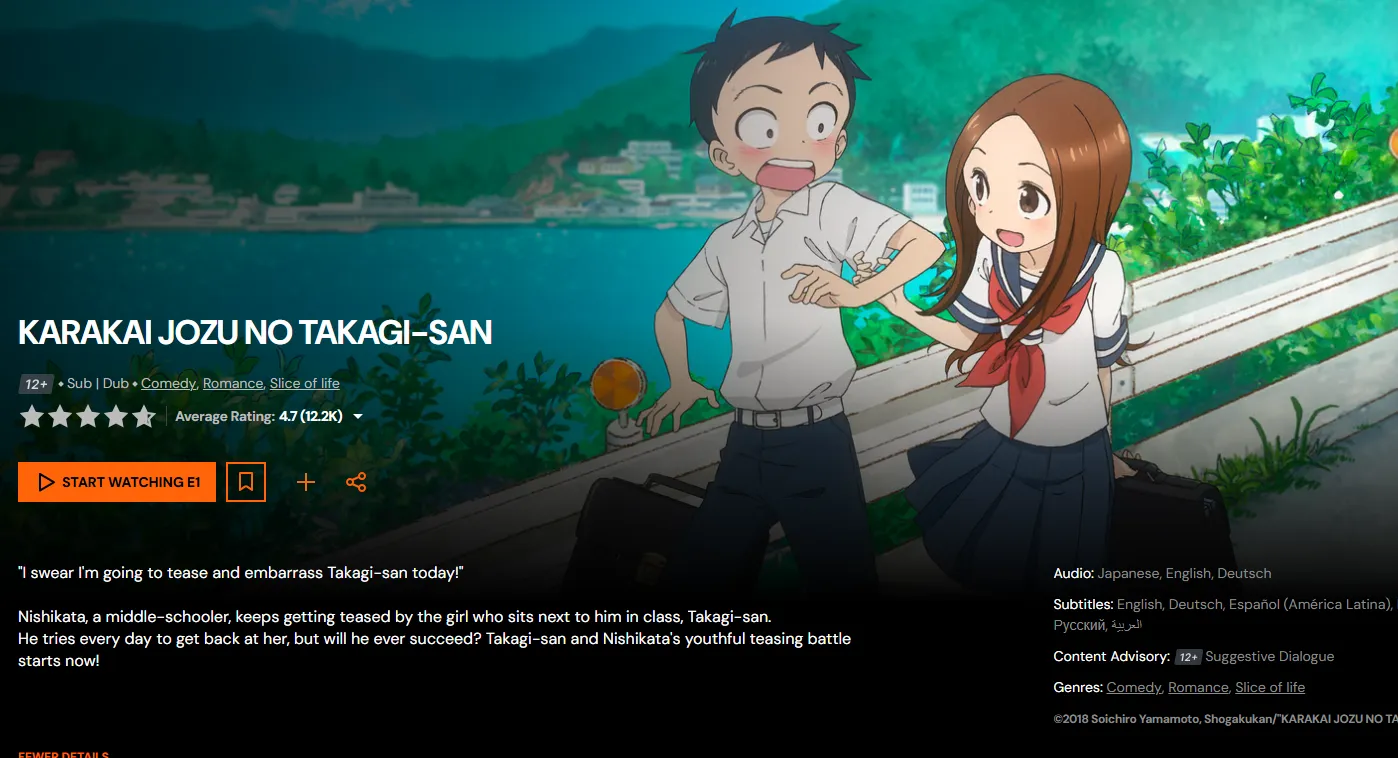
The Learning Vibe: Teasing Master Takagi-san is one of the best anime for learning natural casual Japanese through repetition. Most episodes revolve around short conversations between two middle school students, making the dialogue easy to follow and highly repetitive in a useful way. Because the teasing format repeats constantly, learners hear the same conversational structures again and again with slight emotional variations. This helps beginners naturally recognize patterns without feeling like they are studying grammar directly. The pacing is also much calmer than most comedy anime, which makes listening practice far less overwhelming for N5–N4 learners.
Language Takeaway: The series is excellent for picking up natural reaction phrases, casual questions, playful teasing, and everyday school conversation patterns commonly used by younger speakers. It is especially useful for improving listening intuition and conversational rhythm.
High-Frequency Phrases:
-
ね? (Ne? — Right?)
-
バレた? (Bareta? — You figured it out?)
-
本当? (Hontou? — Really?)
-
どうしたの? (Doushita no? — What’s wrong?)
3. Laid-Back Camp
Difficulty: N4
Best for: Relaxed Listening Practice, Natural Pronunciation, Everyday Conversation Flow
Where to Streaming: Crunchyroll
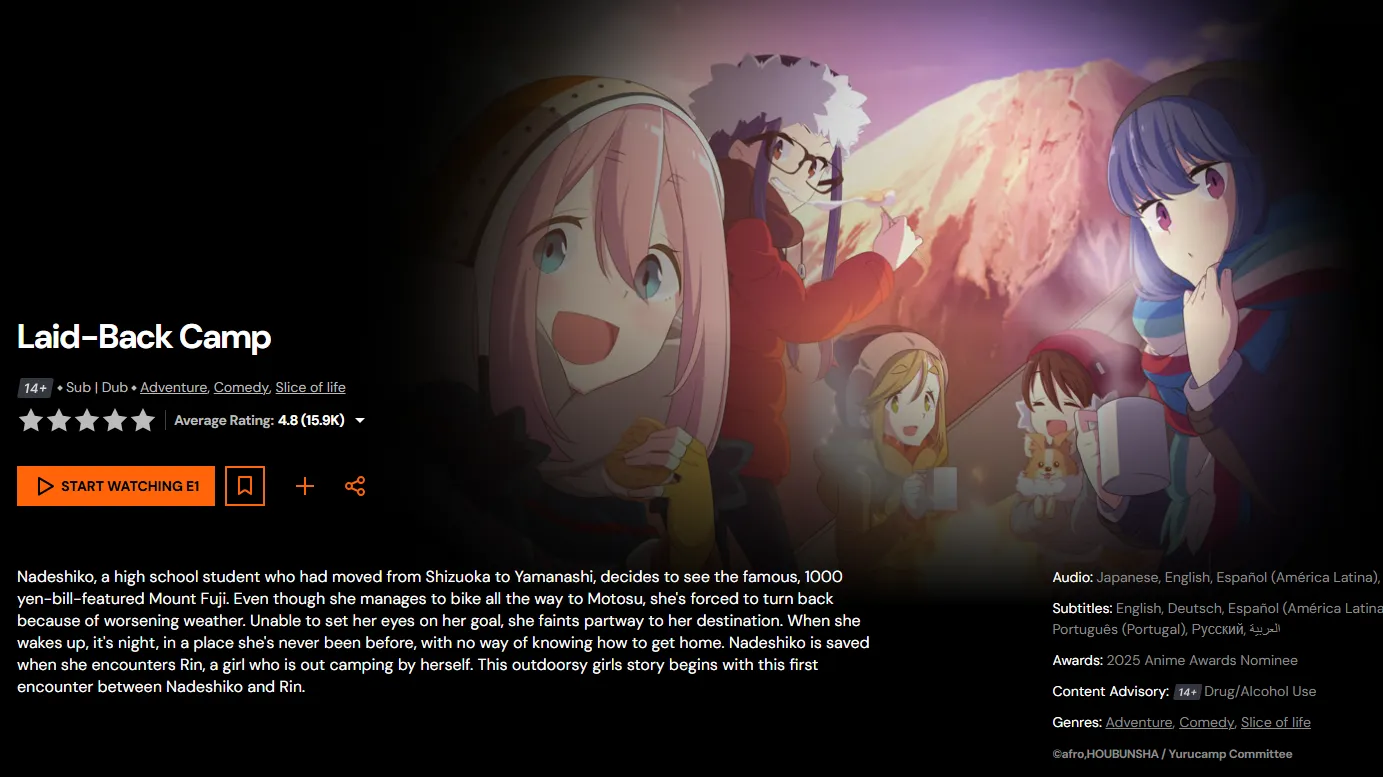
The Learning Vibe: Laid-Back Camp is one of the most relaxing anime for Japanese learners. Unlike fast-paced school comedies or action-heavy series, the dialogue here feels calm, natural, and emotionally grounded. Most conversations revolve around camping trips, food, weather, hobbies, and everyday interactions between friends. Characters speak clearly without sounding overly exaggerated, making the listening experience much closer to real conversational Japanese. The slower pacing also gives learners more time to process sentence structure and pronunciation naturally.
Language Takeaway: The anime is especially useful for developing listening comfort and conversational rhythm. Because the dialogue feels soft and realistic, it works extremely well for immersion-style learning and shadowing practice. It also introduces a lot of practical vocabulary related to travel, food, outdoor activities, and casual social interaction.
High-Frequency Phrases:
-
いいね (Ii ne — Sounds good / Nice)
-
寒いね (Samui ne — It’s cold, huh?)
-
大丈夫? (Daijoubu? — Are you okay?)
-
行こう (Ikou — Let’s go)
4. Barakamon
Difficulty: N4
Best for: Everyday Expressions, Emotional Reactions, Natural Daily-Life Japanese
Where to Streaming: Crunchyroll
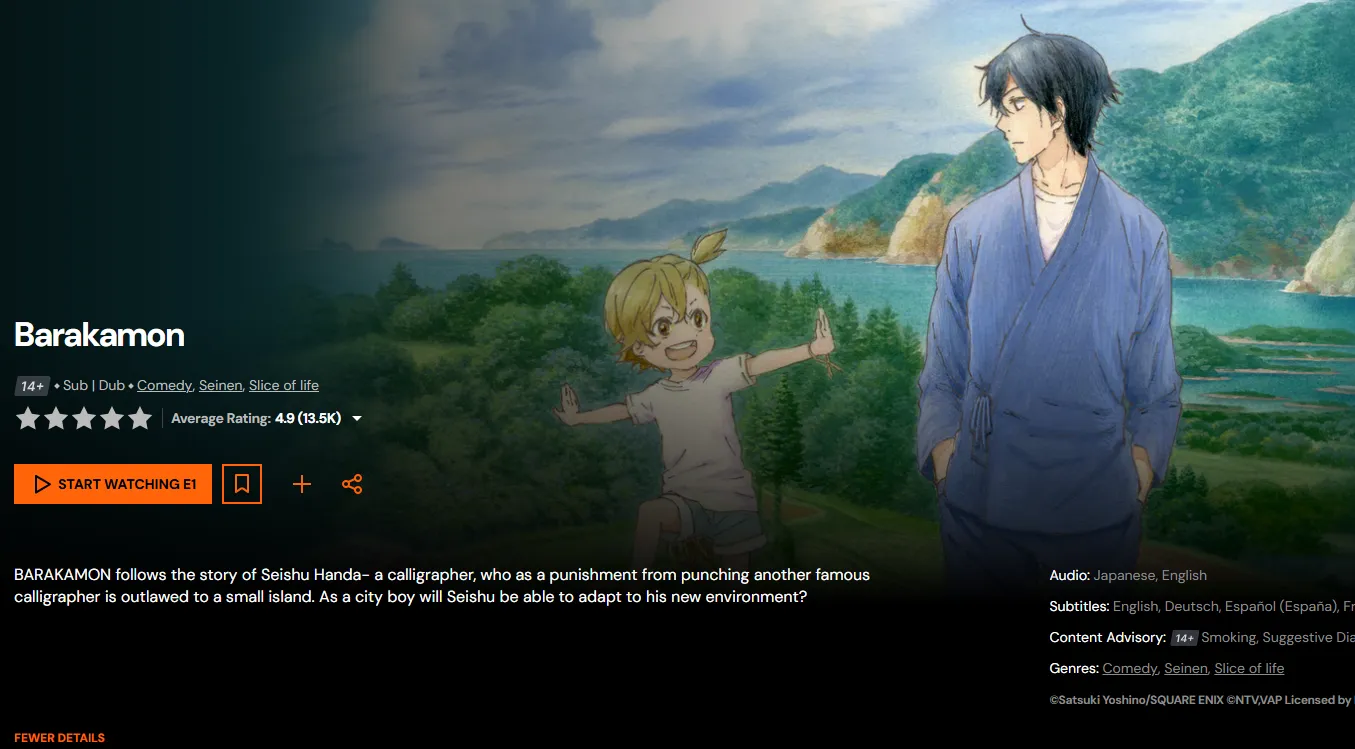
The Learning Vibe: Barakamon is one of the most natural-sounding slice-of-life anime for Japanese learners. The story follows a young calligrapher adjusting to life in a quiet rural village, leading to many relaxed conversations about daily routines, community life, and personal growth. The dialogue feels casual and authentic without becoming too fast or overly dramatic. Characters regularly use everyday reactions, emotional expressions, and informal speech patterns that are genuinely useful in real conversations. Although the series contains some regional dialect elements, most of the Japanese remains accessible for N4 learners.
Language Takeaway: Barakamon is especially good for learning how emotions are expressed naturally in Japanese conversation. It also helps learners become more comfortable with informal speech, conversational fillers, and realistic social interactions. The anime balances clear pronunciation with conversational realism better than many beginner recommendations.
High-Frequency Phrases:
-
しょうがない (Shouganai — It can’t be helped)
-
元気? (Genki? — How are you?)
-
すごい (Sugoi — Amazing)
-
やっぱり (Yappari — Just as I thought)
5. Chi's Sweet Home
Difficulty: N5
Best for: Absolute Beginners, Basic Vocabulary, Low-Stress Listening Practice
Where to Streaming: Crunchyroll, Netflix
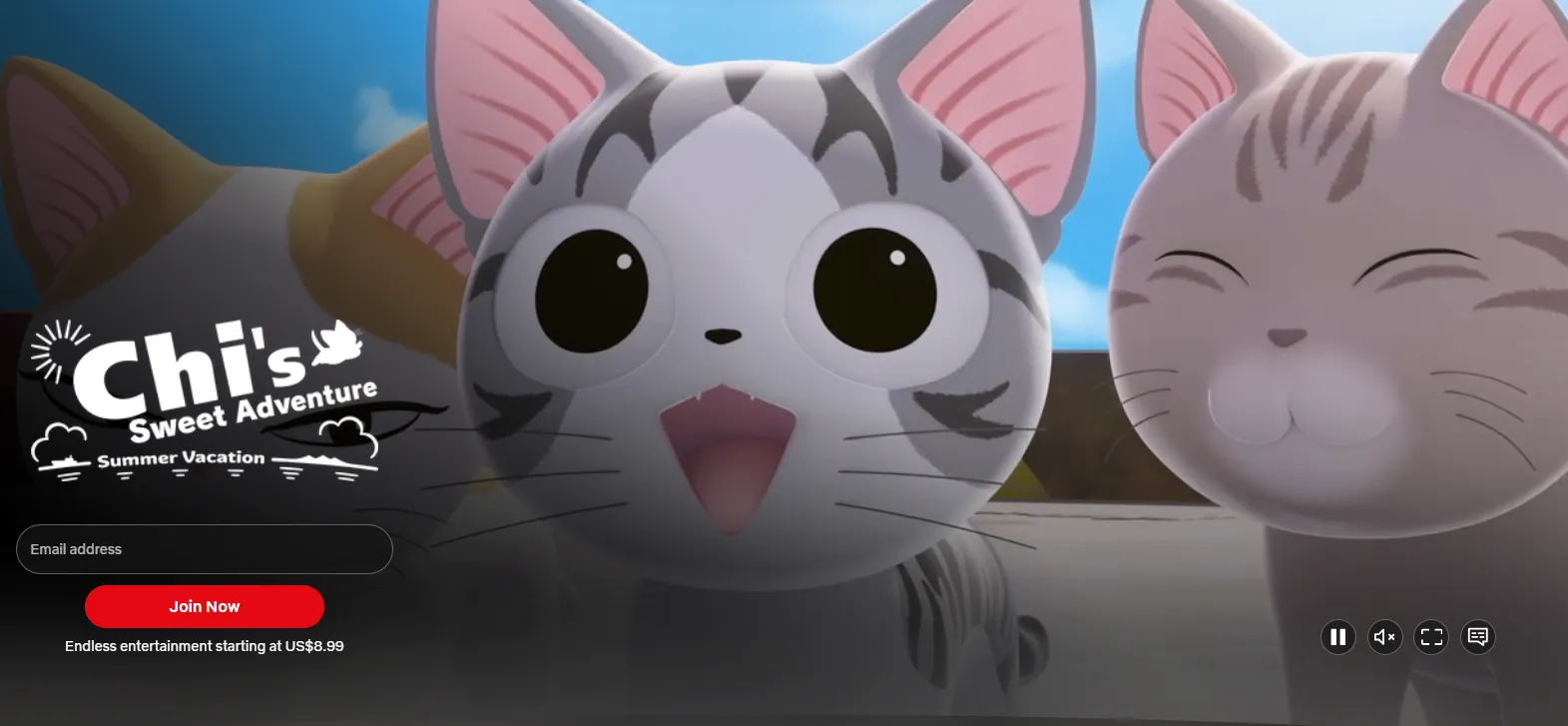
The Learning Vibe: Chi’s Sweet Home is one of the easiest anime for complete Japanese beginners. Episodes are only a few minutes long, the vocabulary is extremely simple, and many phrases repeat constantly throughout the series. Because the story follows the daily life of a kitten and its family, the conversations focus heavily on basic everyday situations like eating, going outside, cleaning, and expressing emotions. The short episode length also makes the anime much less intimidating for learners who are just starting listening practice.
Language Takeaway: The series is excellent for building early listening confidence. Beginners can repeatedly rewatch episodes without feeling overwhelmed, which helps reinforce pronunciation, common sentence endings, and core daily-life vocabulary naturally. It is especially helpful for learners transitioning from textbook Japanese into real spoken dialogue for the first time.
High-Frequency Phrases:
-
だめ! (Dame! — No! / Don’t!)
-
ごはん (Gohan — Meal / Rice)
-
かわいい (Kawaii — Cute)
-
どこ? (Doko? — Where?)
6. K-On!
Difficulty: N4
Best for: School Vocabulary, Casual Friend Conversations, Everyday Social Japanese
Where to Streaming: HIDIVE, Prime Video
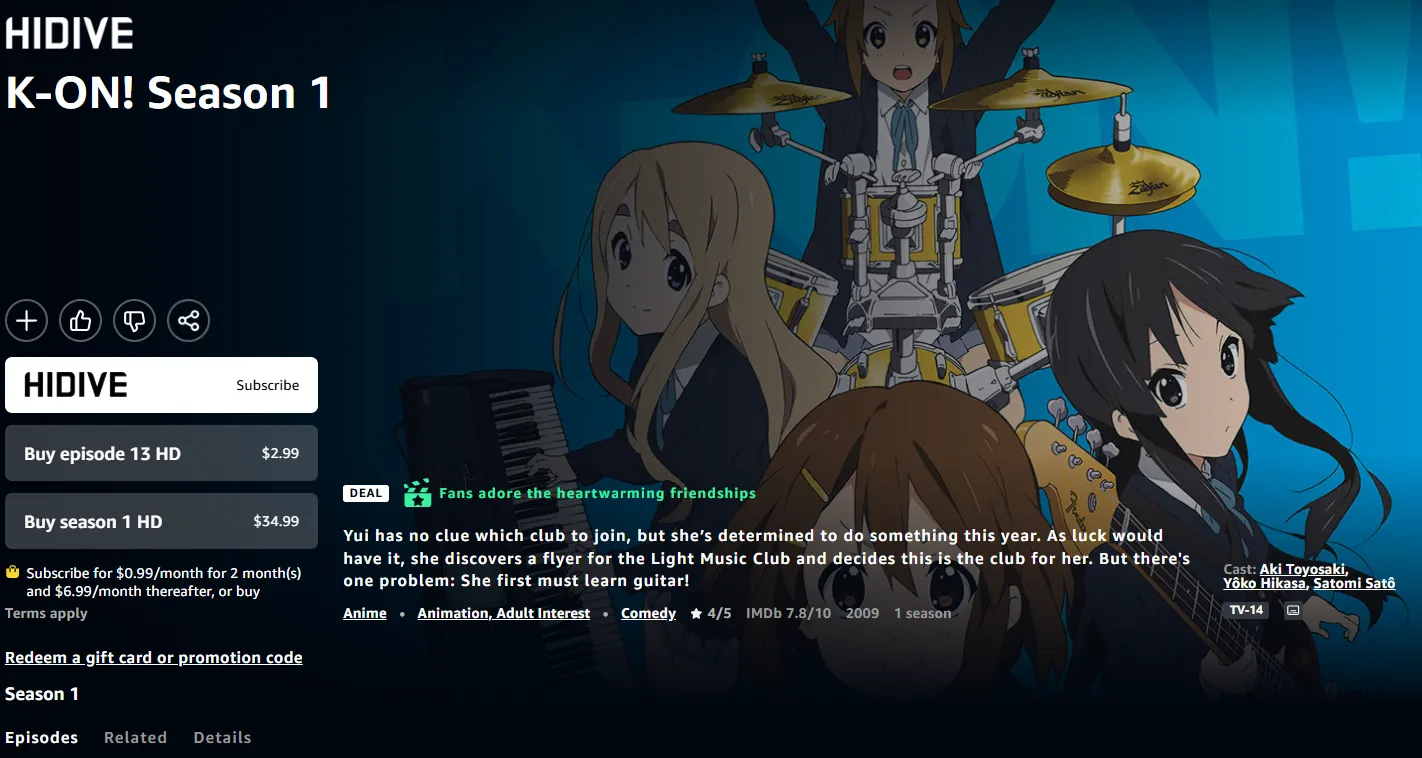
The Learning Vibe: K-On! is one of the most accessible school slice-of-life anime for Japanese learners. Most of the series revolves around everyday conversations between high school friends in the light music club, which naturally creates lots of repeated school-related vocabulary and casual social interaction. The dialogue feels energetic but rarely overwhelming, making it a comfortable step up from slower beginner anime like Shirokuma Cafe or Chi’s Sweet Home. Because the characters spend so much time chatting casually, learners are exposed to realistic friendship dynamics, reaction phrases, and conversational fillers commonly used in everyday Japanese.
Language Takeaway: K-On! is especially useful for learning casual student speech and understanding how young people naturally interact in group conversations. The anime also contains many repeated expressions related to school life, hobbies, food, and social activities, making vocabulary easier to absorb through repetition.
High-Frequency Phrases:
-
すごい! (Sugoi! — Amazing!)
-
いいよ (Ii yo — Sure / It’s fine)
-
行こう! (Ikou! — Let’s go!)
- 楽しい! (Tanoshii! — This is fun!)
7. Horimiya
Difficulty: N4+
Best for: Modern Casual Japanese, Teen Speech Patterns, Realistic Conversations
Where to Streaming: Crunchyroll, Hulu
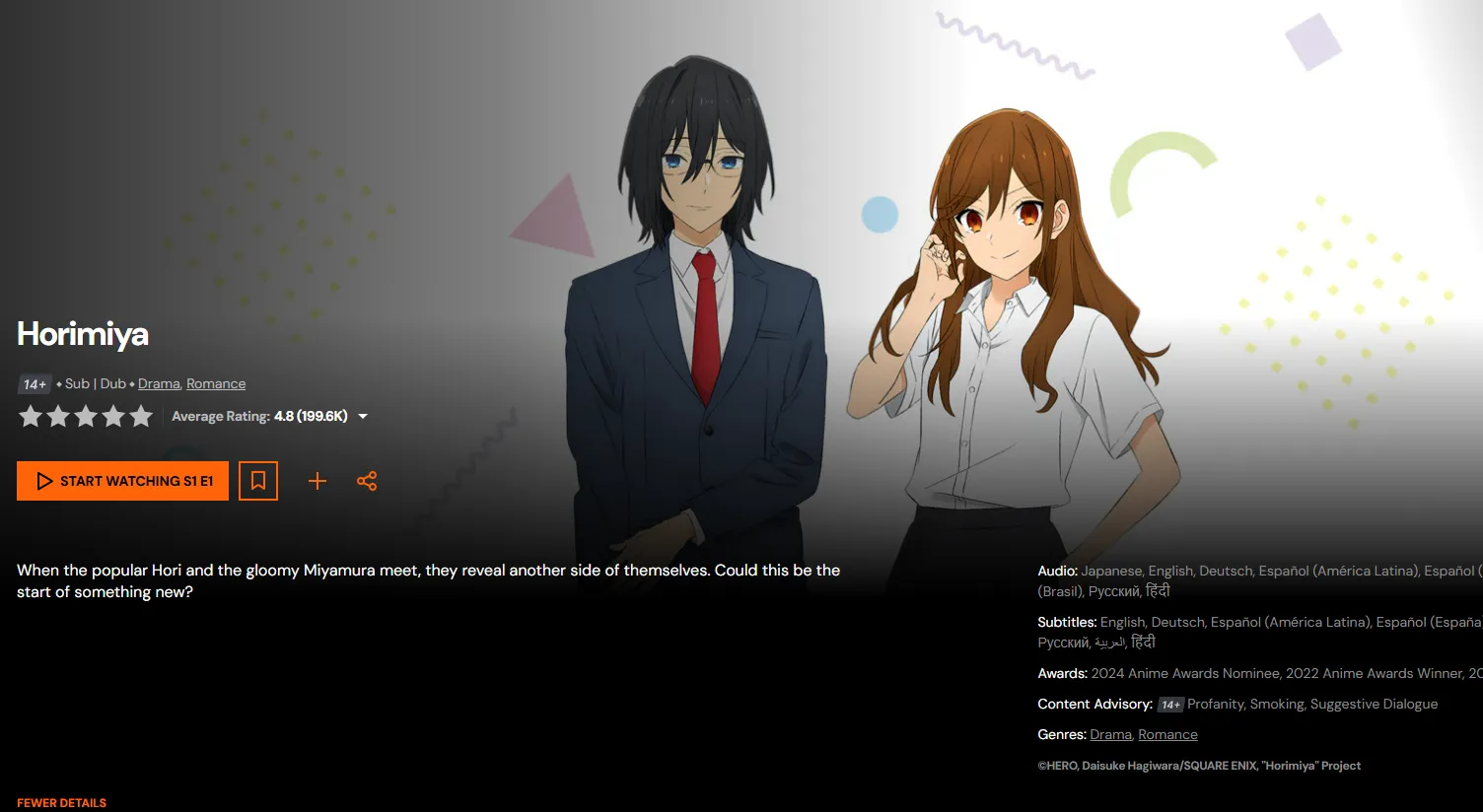
The Learning Vibe: Horimiya is one of the best anime for learners who want exposure to modern, natural-sounding casual Japanese. Unlike older school anime that sometimes feel exaggerated or overly theatrical, the conversations here sound much closer to how younger people actually speak in everyday life. The dialogue includes casual contractions, relaxed sentence endings, and realistic emotional pacing, which makes it especially useful for learners moving beyond textbook Japanese. While the speaking speed is slightly faster than beginner-focused series like Shirokuma Cafe, the conversations remain relatively easy to follow because the situations are grounded in everyday school and relationship life.
Language Takeaway: Horimiya is excellent for understanding modern conversational flow and natural casual interaction between friends, classmates, and couples. It also helps learners become more familiar with shortened expressions and softer conversational delivery commonly heard in real Japanese speech.
High-Frequency Phrases:
-
マジで? (Maji de? — Seriously?)
-
そうなんだ (Sou nan da — I see)
-
大丈夫? (Daijoubu? — Are you okay?)
-
ちょっと待って (Chotto matte — Wait a second)
8. Flying Witch
Difficulty: N4
Best for: Polite Everyday Japanese, Relaxed Listening, Gentle Conversational Flow
Where to Streaming: HIDIVE
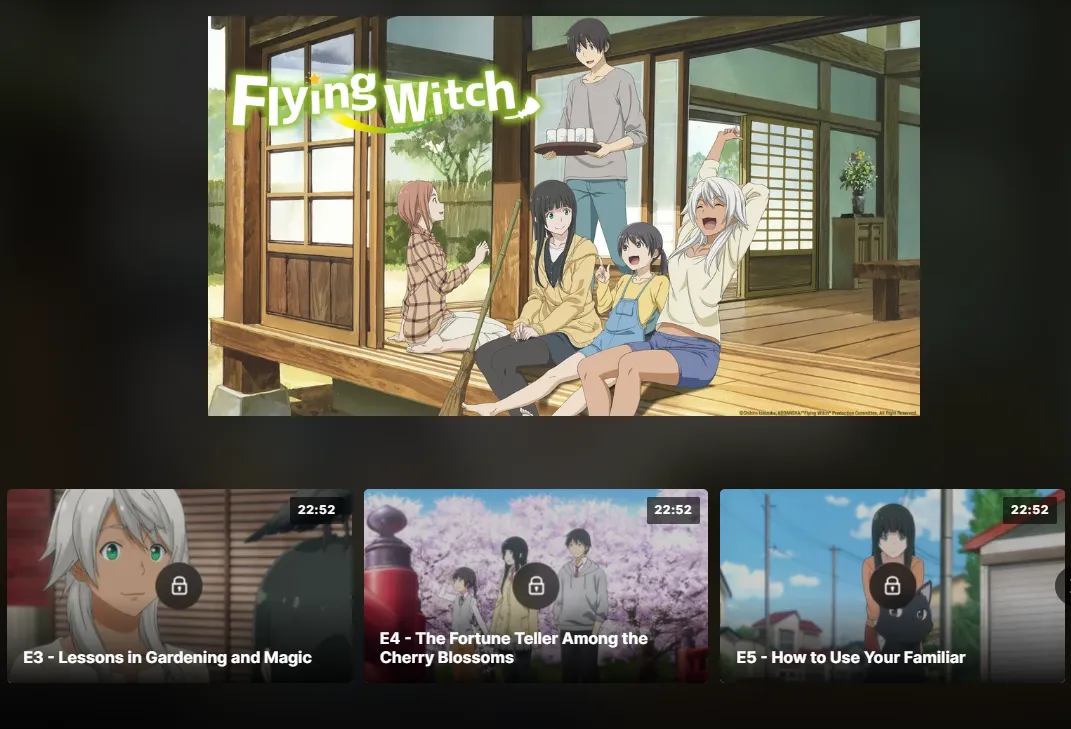
The Learning Vibe: Flying Witch is one of the calmest and most beginner-friendly slice-of-life anime for Japanese learners. Although the series contains light fantasy elements, the dialogue itself stays grounded in everyday conversation and daily routines. Characters speak softly, clearly, and at a comfortable pace, making the listening experience much less stressful than fast-paced comedy or action anime.The rural setting also introduces many natural conversations about cooking, shopping, family life, weather, and local culture, all of which are useful topics for beginner immersion.
Language Takeaway: The anime is especially good for learners who want more exposure to polite Japanese and gentle conversational pacing. Because the emotional tone stays relaxed throughout the series, it becomes easier to focus on pronunciation, sentence structure, and conversational rhythm without feeling overwhelmed by dramatic scenes.
High-Frequency Phrases:
-
おはよう (Ohayou — Good morning)
-
そうですね (Sou desu ne — That’s true / I see)
-
大丈夫です (Daijoubu desu — It’s okay)
- ありがとう (Arigatou — Thank you)
9. Sweetness and Lightning
Difficulty: N4
Best for: Family Vocabulary, Food Expressions, Natural Emotional Conversation
Where to Streaming: Prime Vedio
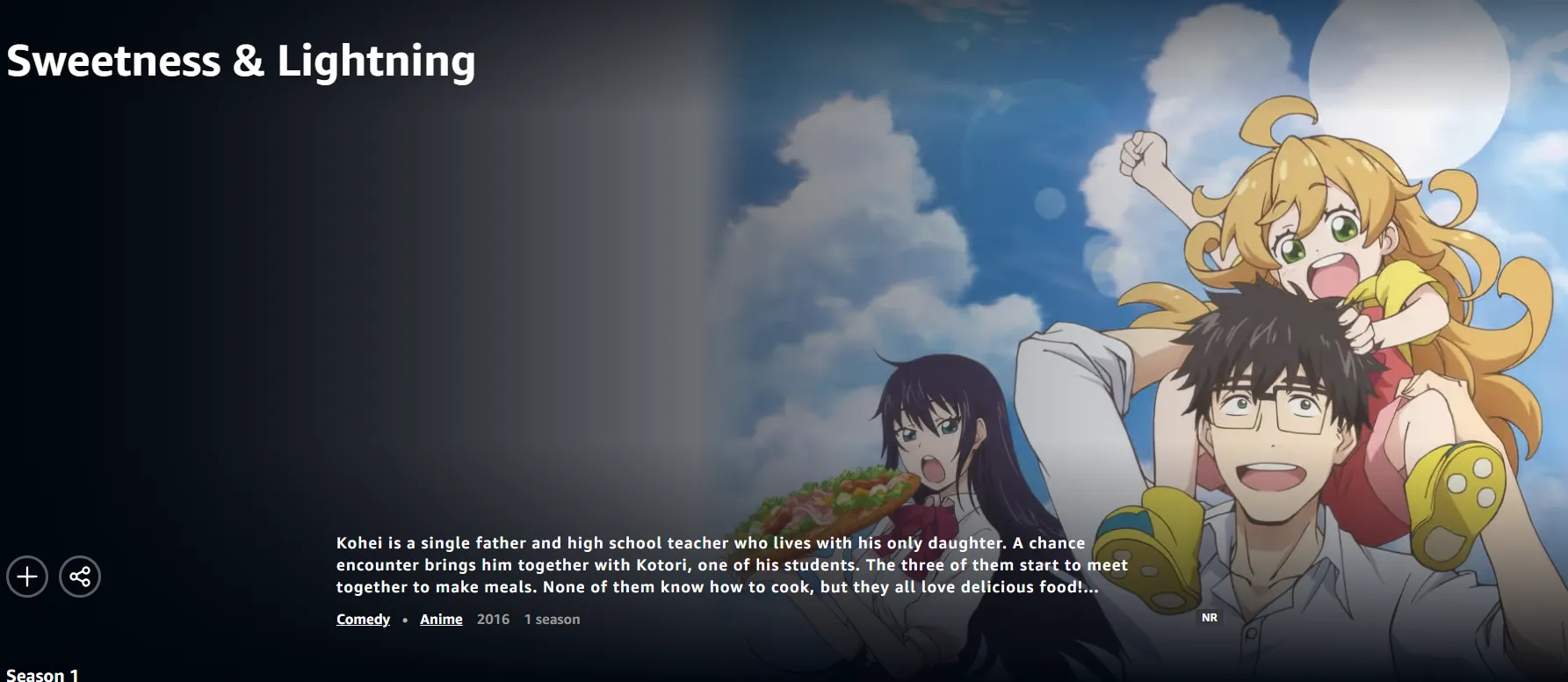
The Learning Vibe: Sweetness and Lightning is one of the best anime for learning warm, everyday family Japanese. The story centers around a teacher learning to cook for his young daughter, which creates many natural conversations about food, home life, emotions, and daily routines. The dialogue feels soft and realistic without becoming overly dramatic, making it easy for N4 learners to follow. Because cooking is such a major part of the series, learners are also exposed to a large amount of practical vocabulary related to meals, ingredients, and family interaction that rarely appears in textbooks.
Language Takeaway: The anime is especially useful for understanding emotional nuance and gentle conversational Japanese used between family members and close friends. It also reinforces many common expressions related to eating, gratitude, encouragement, and daily household life.
High-Frequency Phrases:
-
いただきます (Itadakimasu — Let’s eat)
-
おいしい! (Oishii! — Delicious!)
-
大丈夫? (Daijoubu? — Are you okay?)
- がんばって (Ganbatte — Do your best)
10. Tsukigakirei
Difficulty: N4+
Best for: Realistic Conversation Flow, Natural Pauses, Everyday Relationship Japanese
Where to Streaming: Amazon (Blu-ray)
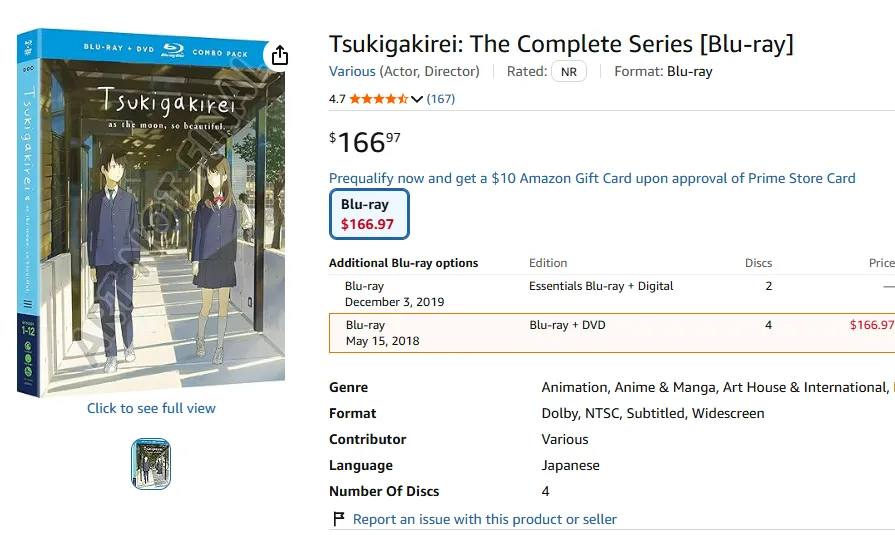
The Learning Vibe: Tsuki ga Kirei stands out for how realistic its conversations feel compared to most romance anime. Instead of exaggerated reactions or overly dramatic dialogue, the characters often hesitate, pause mid-sentence, speak awkwardly, or struggle to express themselves clearly — much closer to real-life Japanese conversation. This realism makes the anime especially valuable for learners who want to improve listening comprehension beyond textbook-style speech. The pacing is quiet and emotionally grounded, which also gives learners more time to process natural conversational rhythm and subtle emotional tone.
Language Takeaway: The series is excellent for understanding how Japanese people naturally communicate in everyday social situations, especially during awkward or emotional moments. Learners are exposed to softer speech patterns, incomplete sentences, conversational hesitation, and realistic emotional pacing that are rarely emphasized in traditional study material.
High-Frequency Phrases:
-
えっと… (Etto… — Umm…)
-
そうなんだ (Sou nan da — I see)
-
ごめん (Gomen — Sorry)
- またね (Mata ne — See you later)
11. SPY × FAMILY
Difficulty: N4+
Best for: Mixed Speech Styles, Family Conversations, Listening Variety
Where to Streaming: Crunchyroll, Netflix, Hulu (region dependent)

The Learning Vibe: SPY×FAMILY is not the easiest anime on this list, but it is one of the most entertaining ways for beginners to expand their listening exposure while staying engaged. Although the series includes spy and action elements, much of the dialogue revolves around family life, school activities, social situations, and everyday interaction between the main characters. The anime also exposes learners to multiple speaking styles, from Anya’s simple childlike speech to Loid’s polite adult Japanese and Yor’s softer conversational tone.
Language Takeaway: SPY×FAMILY is especially useful for learning how Japanese changes depending on age, personality, and social context. Because the series balances comedy, family interaction, and daily-life dialogue, learners can practice switching between casual speech, polite speech, and emotional reactions more naturally.
High-Frequency Phrases:
-
すごい! (Sugoi! — Amazing!)
-
大丈夫です (Daijoubu desu — It’s okay)
-
お願いします (Onegaishimasu — Please)
-
どうしよう… (Doushiyou… — What should I do…?)
12. Doraemon
Difficulty: N5
Best for: Core Beginner Vocabulary, Everyday Japanese, Repetitive Sentence Patterns
Where to Streaming: Prime Video
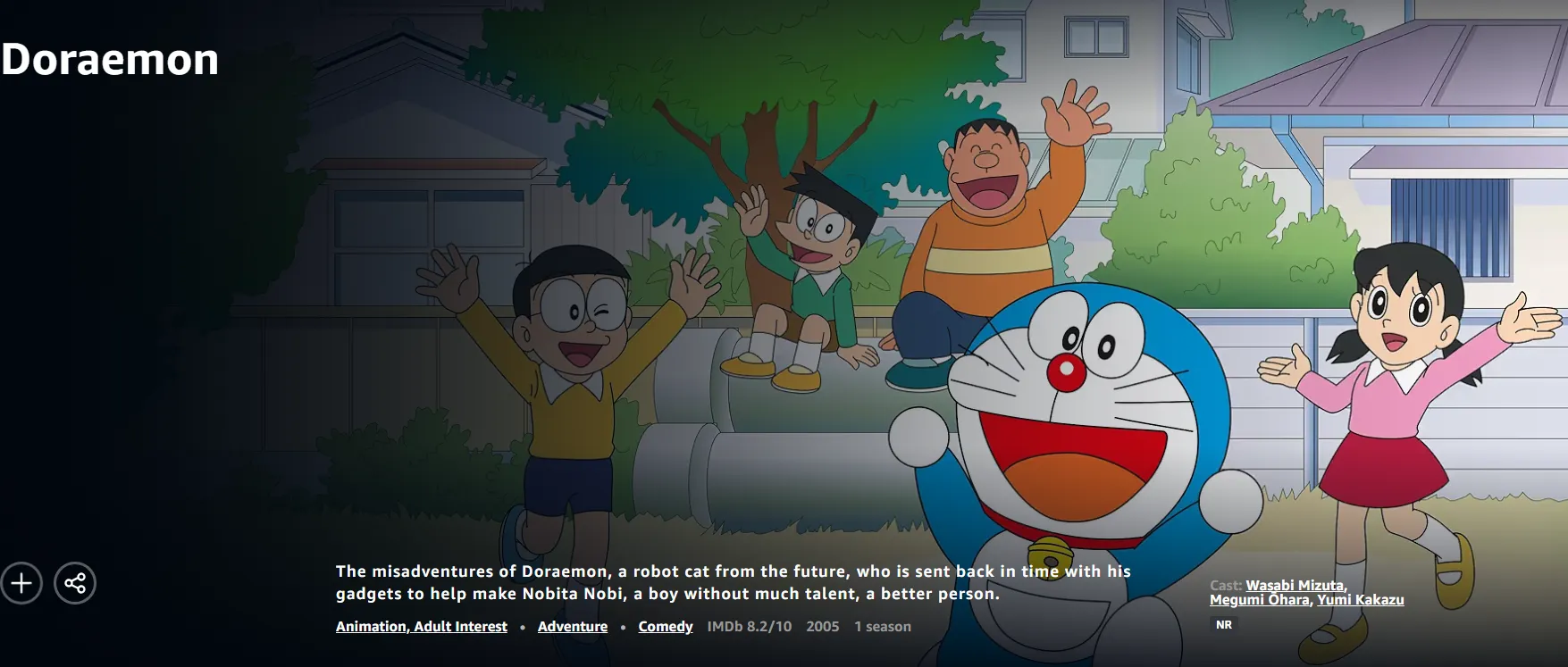
The Learning Vibe: Doraemon has been one of the most recommended anime for Japanese learners for decades, especially for beginners. Because the series is designed for children, the dialogue focuses heavily on simple vocabulary, clear pronunciation, and highly repetitive everyday situations. Most episodes revolve around school life, family interaction, homework, friendships, and small daily problems, making the language surprisingly practical for N5 learners. The pacing is also much easier to follow than modern action-heavy anime.
Language Takeaway: The series is excellent for reinforcing core daily-life vocabulary and beginner grammar patterns through repetition. While the language can feel slightly childish at times, Doraemon remains one of the best anime for building early listening confidence and becoming familiar with natural conversational Japanese in simple contexts.
High-Frequency Phrases:
-
どうしよう! (Doushiyou! — What should I do?!)
-
やった! (Yatta! — I did it!)
-
すごい! (Sugoi! — Amazing!)
-
ダメ! (Dame! — No! / Don’t!)
How to Learn Japanese Effectively with Anime
Watching anime can absolutely improve your Japanese, but only if you approach it as active immersion instead of passive entertainment. Many beginners make the mistake of trying to understand every single word immediately. In reality, language learning through anime works best when you focus on repetition, listening familiarity, and gradual exposure to natural speech patterns over time. Here are some of the most effective ways to study Japanese with anime at the N5–N4 level.
1. Don’t Try to Understand Everything
One of the biggest mistakes beginner learners make is constantly pausing every sentence to search for unknown vocabulary. This usually becomes exhausting very quickly.
-
Focus: Aim to understand the overall meaning and recognize repeated expressions naturally.
-
The Goal: Even if you only understand 40–60% of an episode at first, your listening ability will gradually improve through repeated exposure.
-
Key Concept: Anime immersion is more about pattern recognition than perfect comprehension.
2. Rewatch Episodes Multiple Times
Rewatching is one of the most effective anime study techniques for beginners. A simple three-step method works especially well:
-
Watch with English subtitles for overall understanding.
-
Rewatch with Japanese subtitles (if available).
-
Watch again without subtitles to focus on listening.
Why it works: Beginner-friendly anime repeat similar vocabulary and sentence structures frequently; rewatching reinforces phrases much faster than constantly starting new series.
3. Practice Shadowing
Shadowing means listening to a sentence and repeating it out loud as closely as possible to the original speaker. This is one of the fastest ways to improve:
-
Pronunciation & speaking rhythm.
-
Listening speed & sentence flow.
-
Top Recommendations: Shirokuma Cafe and Laid-Back Camp work especially well because the dialogue is slower and easier to imitate.
4. Focus on High-Frequency Expressions
Beginners often spend too much time memorizing rare vocabulary while ignoring phrases that appear constantly in real conversation. Anime is particularly useful for learning reaction phrases and conversational fillers, such as:
-
大丈夫? (Daijoubu?)
-
本当に? (Hontoni?)
-
そうなんだ (Sou nanda)
-
しょうがない (Shou ga nai)
-
どうしたの? (Doushita no?)
5. Slice-of-Life Anime Is Usually Better for Beginners
While battle shonen anime may feel more exciting, slice-of-life series are usually much more effective for beginner immersion.
-
Practicality: Shows focused on school life, friendships, and daily routines contain more realistic dialogue patterns.
-
Examples: Barakamon, Flying Witch, and Sweetness and Lightning are often easier to learn from than fantasy-heavy action series.
6. Consistency Matters More Than Intensity
Watching anime for 15–20 minutes every day is usually far more effective than studying for several hours once a week.
-
Language immersion works through repeated exposure. The more consistently you hear Japanese sentence patterns, the more natural they become.
-
The Mindset: The goal is not to study perfectly—it is to build long-term listening familiarity over time.
FAQ — Learning Japanese with Anime
1. Can you really learn Japanese from anime?
Yes — anime can be a very effective tool for improving listening comprehension, pronunciation familiarity, and conversational rhythm, especially when combined with active study. However, anime works best as immersion practice rather than a complete replacement for textbooks or grammar study. Beginner-friendly slice-of-life anime are usually much more useful than action-heavy fantasy series.
2. What is the easiest anime for beginner Japanese learners?
For absolute beginners, Shirokuma Cafe and Chi's Sweet Home are often considered two of the best starting points. Both series feature: slower dialogue, clear pronunciation, repetitive sentence patterns, practical everyday vocabulary. They are especially effective for N5–N4 listening practice and shadowing.
3. Should I watch anime with English or Japanese subtitles?
For most beginners, a mixed approach works best. A common method is:
-
Watch first with English subtitles for understanding
-
Rewatch with Japanese subtitles if available
-
Watch again without subtitles to focus on listening
Over time, gradually reducing subtitle dependence helps improve listening comprehension much faster.
4. Is anime Japanese realistic?
It depends heavily on the genre. Slice-of-life anime such as Barakamon, Laid-Back Camp, and Tsuki ga Kirei usually contain more natural conversational Japanese. On the other hand, battle shonen anime often use exaggerated speech, fantasy terminology, or dramatic dialogue that is less useful for beginners.
5. How long does it take to improve Japanese through anime?
Progress depends on consistency more than speed. Watching anime casually may improve listening familiarity slowly, but active immersion — including shadowing, rewatching episodes, and paying attention to repeated phrases — can noticeably improve listening comprehension within a few months. Even 15–20 minutes of daily exposure can make a significant difference over time.
6. What type of anime is best for learning Japanese?
Slice-of-life anime is usually the most effective genre for beginner learners because it focuses on everyday situations and practical conversation. Anime about: school life, family interaction, friendships, hobbies, cooking, daily routines. Typically contain more useful vocabulary and realistic dialogue than fantasy or action series.
Conclusion
Learning Japanese through anime is less about understanding every word perfectly and more about building listening familiarity through consistent exposure over time. For N5–N4 learners, beginner-friendly slice-of-life anime like Shirokuma Cafe, Teasing Master Takagi-san, and Laid-Back Camp can make Japanese feel far more approachable and natural than traditional study methods alone.
Start with slower, dialogue-focused series, pay attention to repeated expressions, and focus on consistency rather than perfection. Even a little anime immersion every day can gradually improve your listening comprehension, pronunciation familiarity, and overall confidence with Japanese.